What is China’s Singles’ Day, and how is AI changing the world’s biggest shopping festival?
Source Entity
The Indian Express
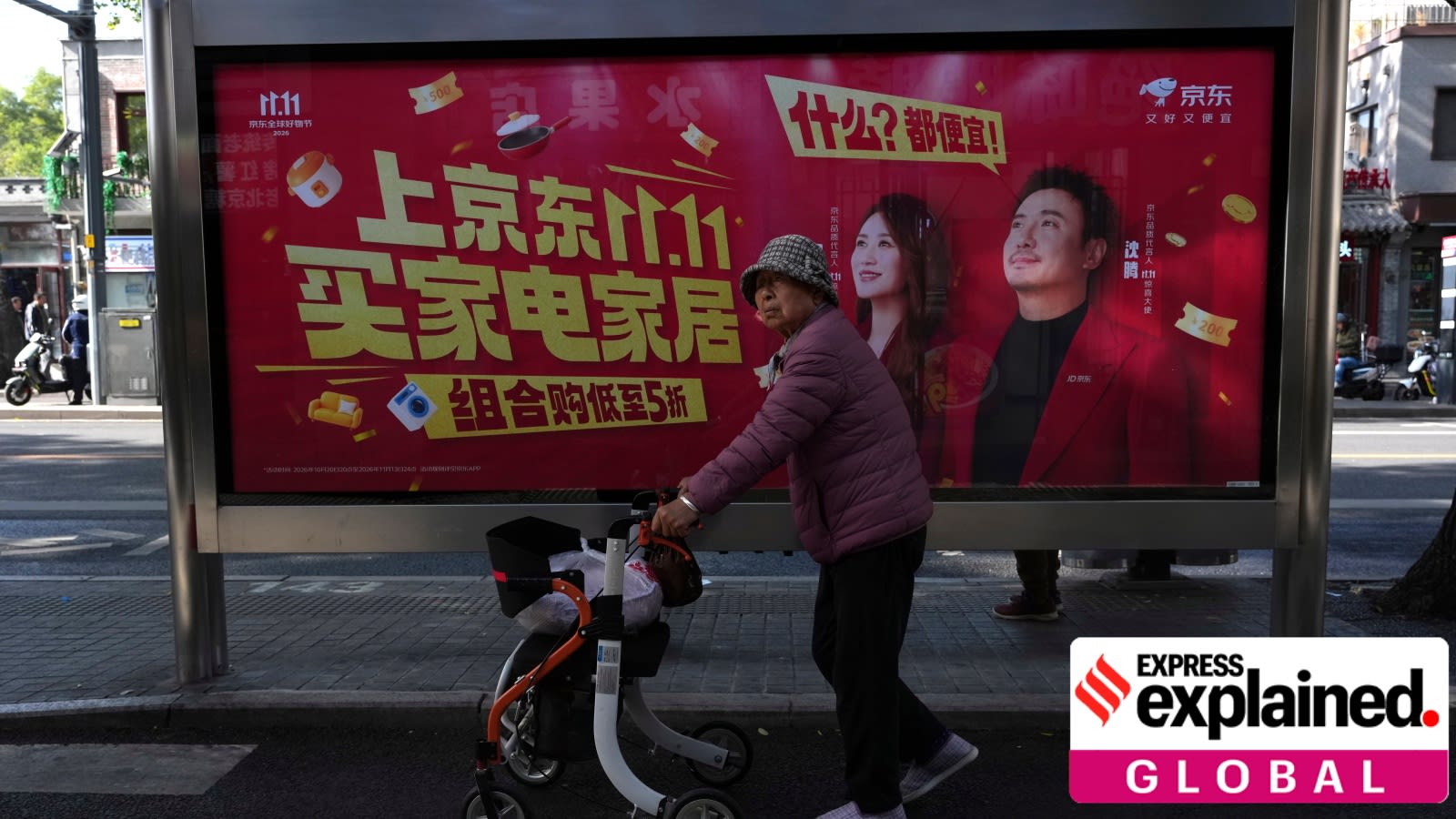
China's Singles' Day, originally a niche celebration for singles, has evolved into a global e-commerce powerhouse now heavily reliant on AI. E-commerce platforms are deploying advanced technology to stimulate consumer spending amid a period of economic caution in China.
The Evolution of Singles' Day: From Campus Tradition to Global Retail Giant
Singles' Day, observed annually on November 11, has undergone a remarkable transformation over the past three decades. Originating as a modest celebration among university students in China to honor their relationship status, the date—selected for its numerical representation of being 'single' (11/11)—has burgeoned into the world's most significant shopping festival. What was once a grassroots cultural phenomenon has been systematically commercialized, drawing millions of consumers into a digital frenzy characterized by massive discounts and high-profile, celebrity-led marketing campaigns.
The Strategic Pivot Toward Artificial Intelligence
As the festival has matured, the mechanisms driving its success have shifted from simple price-slashing to sophisticated technological integration. In an effort to maintain market dominance, major Chinese e-commerce platforms have pivoted toward Artificial Intelligence (AI) to optimize the consumer journey. This technological push is not merely aesthetic; it is a tactical response to the need for higher conversion rates. By utilizing AI-powered chatbots that provide real-time product recommendations, companies are effectively shortening the bridge between consumer intent and the final transaction.
Personalization as a Competitive Edge
Beyond basic customer service bots, the implementation of virtual try-on tools marks a significant leap in the digital shopping experience. These tools provide a personalized, interactive environment that mitigates the uncertainty typically associated with online shopping, particularly in sectors like fashion and beauty. By allowing shoppers to visualize products in a simulated environment, platforms are attempting to recreate the tactile benefits of physical retail, thereby increasing consumer confidence and reducing return rates.
Navigating Economic Headwinds in China
This technological evolution occurs against a backdrop of increasing economic uncertainty in China. Consumers are currently exhibiting heightened caution regarding discretionary spending, a trend exacerbated by a prolonged property market downturn and general fatigue regarding commercial sales events. The reliance on AI is, in many ways, an attempt to combat this 'consumption fatigue' by offering more relevant, hyper-targeted deals that cut through the noise of a saturated market.
Future Trends and Market Implications
Looking forward, the festival’s transition into a month-long sales campaign suggests that the traditional 'single day' model is becoming insufficient for modern retail demands. As platforms continue to leverage AI to predict consumer behavior and personalize the shopping experience, we can expect to see a further blurring of the lines between traditional retail and digital entertainment. The success of this year's event will likely serve as a bellwether for the broader Chinese retail sector, indicating whether technological innovation is enough to stimulate growth in a cooling economy.