‘Don’t play politics with me’: CJP’s Ranka confronts cop, cites Pradhan’s ouster
Source Entity
RAJENDRA SHARMA
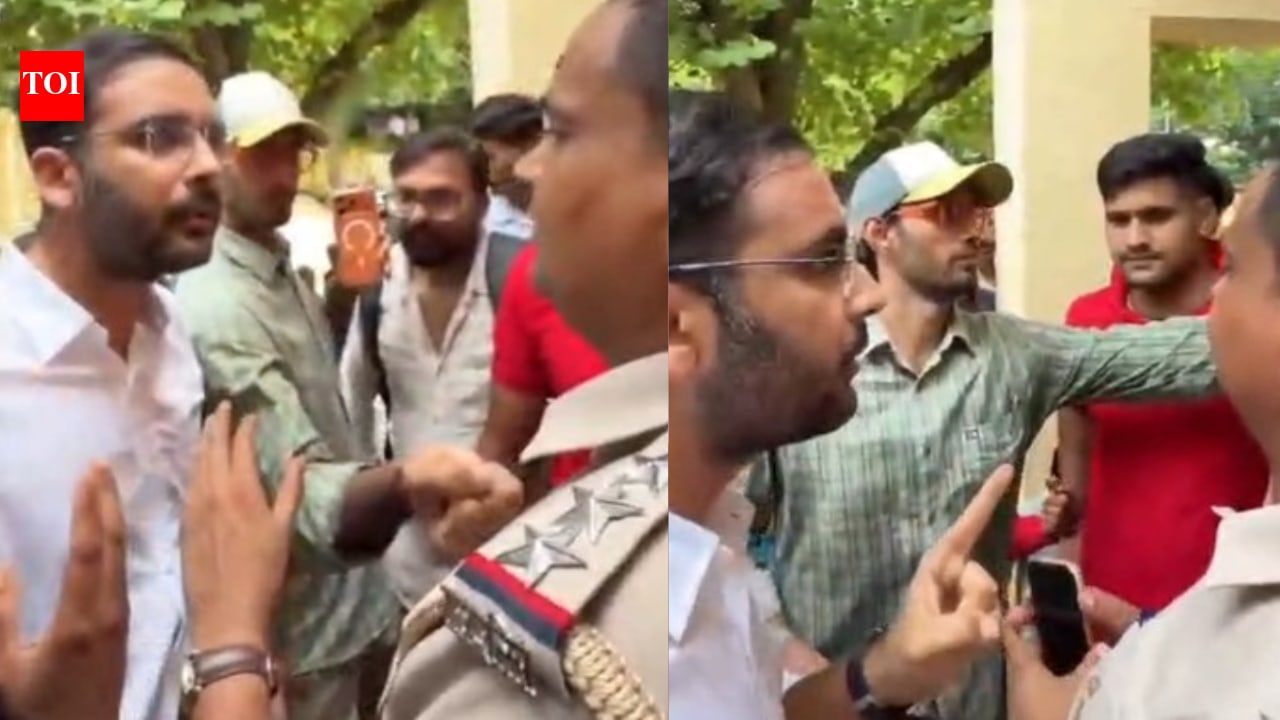
CJP co-convenor Ashutosh Ranka confronted a police officer in Alwar, Rajasthan, while supporting students protesting dangerous school infrastructure. The incident highlights growing political tensions over educational facilities and accountability.
Confrontation in Alwar: Educational Infrastructure Sparks Political Tensions
The Incident in Jodhwas
In the village of Jodhwas, located within the Alwar district of Rajasthan, a localized protest escalated into a high-stakes political standoff. Students gathered to voice their grievances regarding the crumbling infrastructure of their government school, specifically citing a recent building slab collapse that posed a direct threat to their safety. The presence of Cockroach Janta Party (CJP) co-convenor Ashutosh Ranka transformed the student-led demonstration into a broader confrontation with local law enforcement, specifically Thanagazi SHO Mahavir Singh.
Political Rhetoric and Accountability
During the altercation, Ranka did not merely address the immediate safety concerns of the school building. He deliberately elevated the discourse by invoking the resignation of Union Education Minister Dharmendra Pradhan, referencing a previous protest organized by his party at Jantar Mantar. By bridging the gap between a local school repair issue and national-level political accountability, Ranka signaled a strategic attempt to frame rural infrastructure neglect as a systemic failure of the current administration.
The Role of Student Activism
Student protests in rural India often serve as a barometer for public sentiment regarding the efficacy of government services. The fact that these students felt compelled to take to the streets following a structural failure underscores a lack of faith in routine administrative maintenance. By standing in solidarity with these students, the CJP is attempting to capitalize on a grassroots movement to exert pressure on local authorities, warning that further unrest is inevitable should the necessary repairs remain unaddressed.
Law Enforcement and Political Friction
The direct confrontation between Ranka and SHO Mahavir Singh highlights the increasingly blurred lines between civil protest and political maneuvering. The police, tasked with maintaining public order, found themselves at the center of a political narrative that seeks to hold state and central authorities responsible for institutional maintenance. This incident demonstrates how political actors are utilizing local grievances to challenge law enforcement's presence and authority during public demonstrations.
Broader Implications and Future Trends
The situation in Alwar is emblematic of a recurring trend where infrastructure crises are leveraged for political mobilization. As digital engagement grows—evidenced by the thousands of users participating in online polls regarding these school protests—the pressure on political parties to respond to such incidents increases. Looking ahead, we can expect local protests over essential services, such as education and health, to become increasingly politicized, with activists using both physical demonstrations and national-level rhetoric to drive their agenda. The resolution of the Jodhwas school issue will likely serve as a litmus test for how local administrations handle public dissent when it is bolstered by political figures.