CJP’s proposed march on Sep 5 an attempt to create lawlessness before Brics: PIL in SC
Source Entity
DHANANJAY MAHAPATRA
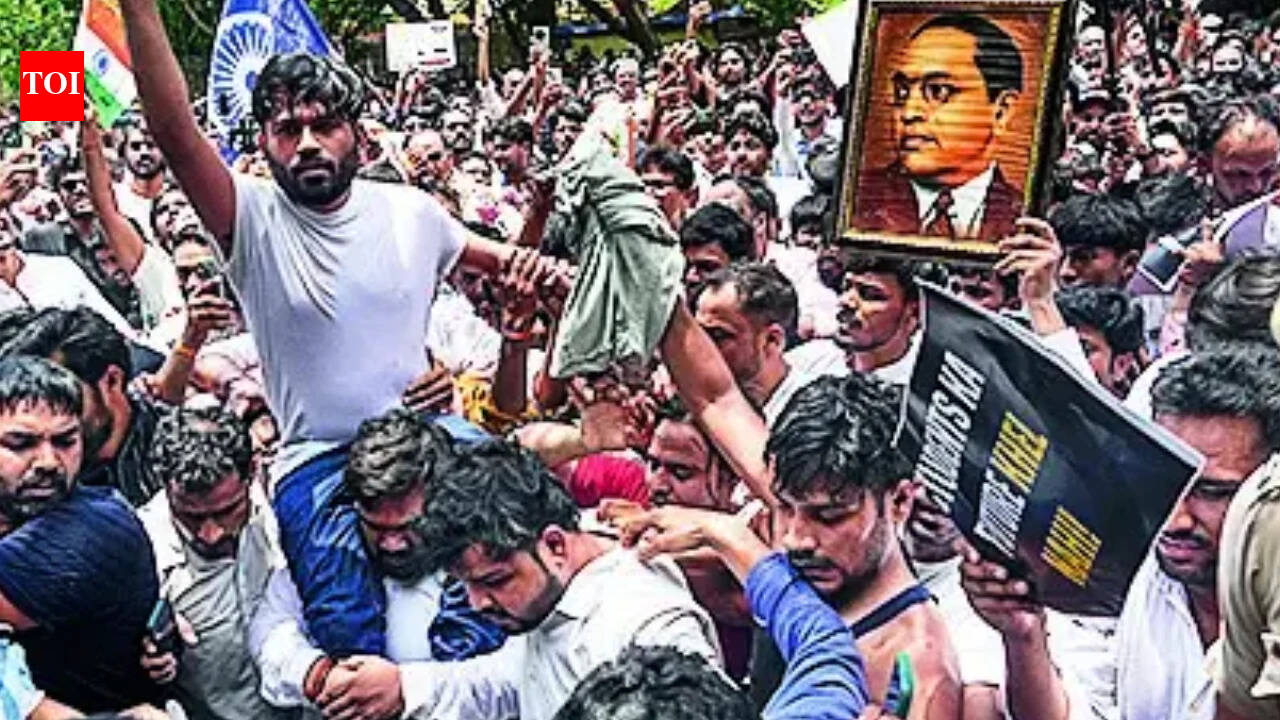
The Cockroach Janta Party (CJP) has officially cancelled its planned September 5 protest march following government assurances to withdraw FIRs related to earlier NEET-UG demonstrations. The Supreme Court, which had been overseeing the legal challenges regarding the protest's impact on the upcoming BRICS summit, acknowledged the resolution.
The Resolution of the CJP Protest Crisis
The decision by the Cockroach Janta Party (CJP) to call off its scheduled September 5, 2026, protest march marks a significant de-escalation in a volatile period of civil unrest. The protest, which was intended to voice grievances stemming from the NEET-UG paper leak controversy, had become a focal point of intense legal scrutiny due to its proximity to the high-profile BRICS summit in Delhi, scheduled for September 12-13. The cancellation follows a series of direct negotiations and court-monitored assurances provided by the Centre.
The Role of the Supreme Court
The Supreme Court of India played a pivotal role in managing the potential for lawlessness. Faced with Public Interest Litigations (PILs) that sought to postpone the march to prevent disruptions to the BRICS summit, the CJI-led bench maintained a position of constitutional balance. By refusing to issue immediate interim orders while simultaneously insisting that law enforcement agencies act strictly in accordance with the law, the Court pressured both the government and the protesters to find a diplomatic resolution rather than a confrontational one.
Government Assurances and Legal Relief
The primary driver behind the cancellation was the government's commitment to address the grievances of the protesters. Solicitor General Tushar Mehta, representing the Centre, provided critical assurances to the Supreme Court regarding the withdrawal of First Information Reports (FIRs) filed between July 20 and July 25, 2026. These FIRs were linked to the intense NEET-UG protests in July, which saw significant police crackdowns. By agreeing to remove these legal barriers and discussing compensation for those affected, the government effectively neutralized the immediate justification for the September 5 march.
Implications for Civil Liberty and Public Order
This event highlights the delicate tension between the right to protest and the state's obligation to maintain security during international diplomatic events. The CJP’s decision to withdraw the march suggests an acknowledgment that the legal and political channels, facilitated by the judiciary, offered a more viable path to justice than street-level agitation. The withdrawal underscores the effectiveness of judicial mediation in preventing potential chaos that could have marred India's international standing ahead of the BRICS summit.
Future Trends and Conclusion
Moving forward, the resolution of this conflict sets a precedent for how the state handles protest movements that coincide with global events. The focus now shifts toward the actual implementation of the government’s promises, specifically the modalities of the compensation scheme and the formal withdrawal of the specified FIRs. As the nation prepares for the BRICS summit, the peaceful resolution of the NEET-UG protest saga serves as a critical step in ensuring that domestic policy issues are addressed without compromising the stability of international diplomatic engagements.
Multiple Citing Sources