CJP Tiranga rally: Movement around Connaught place likely to be affected, says Delhi Traffic police
Source Entity
India Latest News: Top National Headlines Today & Breaking News | The Hindu
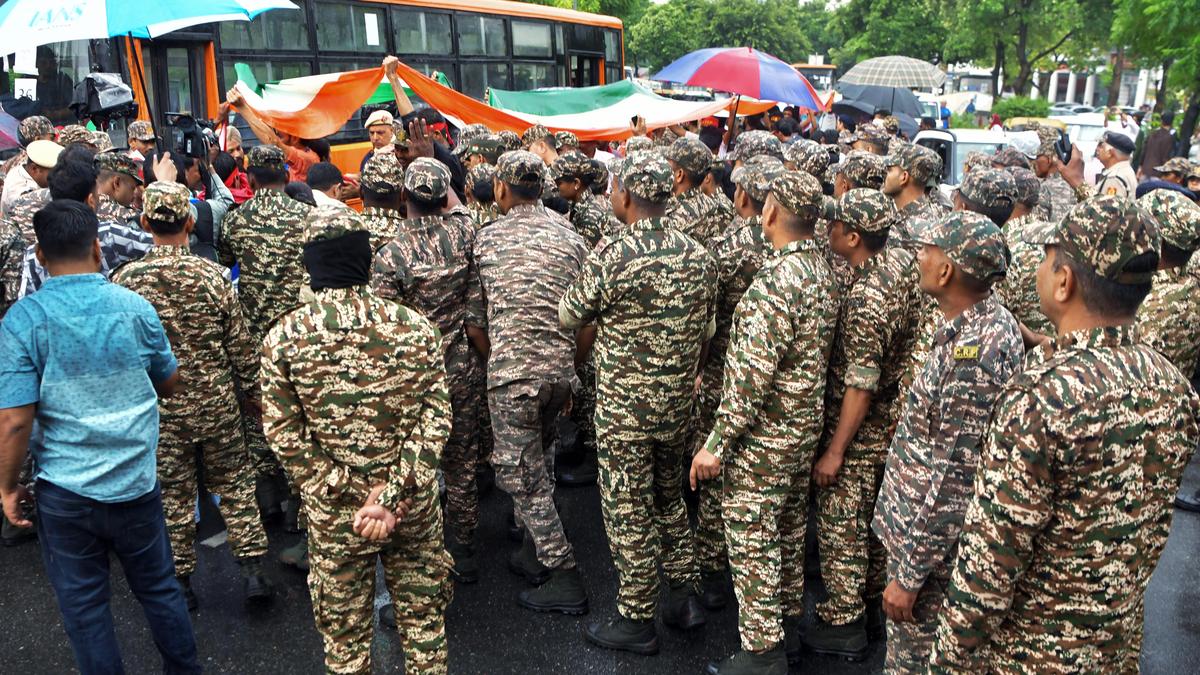
CJP leader Abhijeet Dipke and student activists have accused the Indian government of suppressing protests against CEC Gyanesh Kumar through mass detentions and severe restrictions. The group alleges electoral manipulation via the deletion of 13 crore voters, sparking a confrontation between civil society and state authorities.
The Crisis of Electoral Integrity and Civil Dissent
The political landscape in Delhi has been gripped by intense friction following allegations of systemic electoral manipulation and the subsequent crackdown on public dissent. Abhijeet Dipke, founder of the Cockroach Janta Party (CJP), has leveled serious accusations against the central government, claiming that the state is utilizing extreme administrative measures to protect Chief Election Commissioner (CEC) Gyanesh Kumar from public accountability. These protests, which have persisted for over two weeks, highlight a growing chasm between civil society organizations and the election commission regarding the perceived neutrality of the body.
The Allegation of Voter Erasure
At the heart of the protest movement is the explosive claim by Dipke that over 13 crore voters have been struck off the electoral rolls. This allegation, framed by Dipke as a potential "setting" to influence electoral outcomes, has galvanized student unions and opposition figures. By suggesting that the deletion of such a massive number of voters is a deliberate strategy rather than an administrative error, the CJP has shifted the narrative from a mere protest against an official to a fundamental challenge regarding the sanctity of the democratic process in India.
State Response and Civil Liberties
In response to the demonstrations, the government has implemented what activists describe as "extraordinary restrictions" across the capital. Reports indicate that Metro stations have been shuttered and rail services suspended to hinder the reach of the protestors. The inclusion of prominent opposition leaders—including former Chief Ministers Mamata Banerjee, Arvind Kejriwal, and Pinarayi Vijayan—in the list of those detained underscores the scale of the state's intervention. The imagery of students and political figures being forcibly removed from Jantar Mantar has sparked a heated debate regarding the limits of peaceful assembly in the national capital.
Suppression of Media and Student Voices
The press conference held by Dipke, alongside leaders from the All India Students' Association (AISA), Students' Federation of India (SFI), and the All India Students' Federation (AISF), was marked by chaos and public outcry. Neha Bora of AISA specifically raised alarms regarding the treatment of journalists covering the protests, suggesting that the state's efforts to control the narrative extend to the intimidation of the press. The presence of public figures like actor Prakash Raj at these forums indicates that the anti-CEC movement is gaining traction beyond traditional political circles, drawing in voices from the cultural and intellectual spheres.
Broader Implications for Democracy
This standoff serves as a critical juncture for Indian democratic institutions. When a significant portion of the opposition and civil society voices the view that the Chief Election Commissioner is effectively being shielded by the state apparatus, the perceived legitimacy of future elections faces a significant risk. The demand for the resignation of Gyanesh Kumar is not merely a localized protest but a symptom of a deeper crisis of confidence in the independence of constitutional bodies. The government’s reliance on law enforcement to quell these protests, rather than addressing the substantive claims regarding voter deletions, may only serve to deepen public skepticism.
Future Trends and Outlook
The coming weeks will likely see an intensification of this struggle as student groups and opposition parties attempt to sustain the momentum of their movement. If the government continues to prioritize the suppression of demonstrations over providing a transparent explanation for the alleged voter deletions, the volatility in Delhi’s political climate is expected to rise. Future trends suggest that international observers and human rights watchdogs may begin to take a closer look at the intersection of administrative restrictions and political speech in India, potentially framing this event as a litmus test for the country's commitment to democratic discourse.
Multiple Citing Sources
Verification Required?