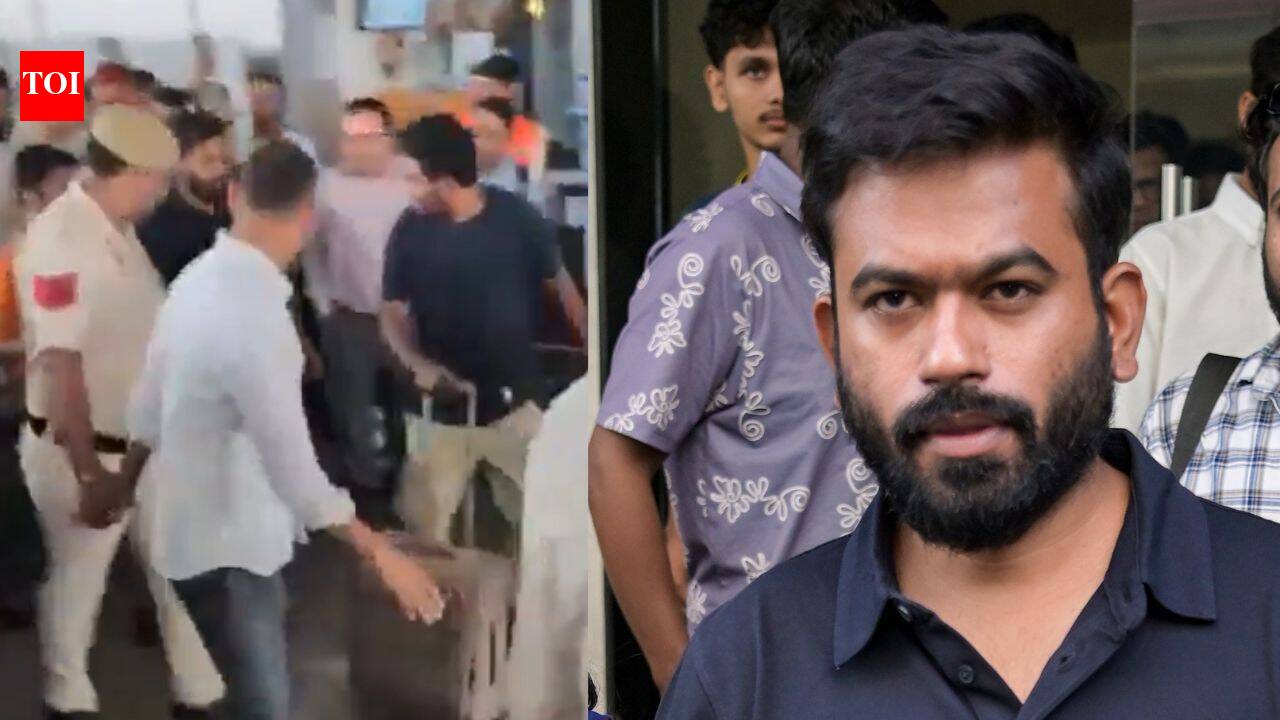
'Why are you ruining nation?' Dipke heckled, called 'CIA agent' at Delhi airport
Source Entity
RAJEEV SINGH
Delhi Police have filed an FIR against Cockroach Janta Party (CJP) leaders for trespassing into the denotified Jantar Mantar protest site. The leaders were detained and face charges for breaching a peace bond while demanding the resignation of CEC Gyanesh Kumar.
Delhi Police Take Legal Action Against CJP Leaders Following Jantar Mantar Protest
The Incident at Jantar Mantar
On Tuesday, the Delhi Police initiated legal proceedings by filing a First Information Report (FIR) against key leaders of the Cockroach Janta Party (CJP), including Saurav Das, Ashutosh Ranka, and national organization in-charge Ajinkya Shinde. The action stemmed from the leaders' unauthorized entry into the Jantar Mantar area, a site that had recently been denotified as an official protest venue. The situation escalated when these individuals were observed climbing over locked security gates to gain access to the barricaded area.
Breaches of Law and Peace Bonds
Beyond the primary charge of trespassing into a restricted zone, authorities have emphasized that the CJP leaders allegedly violated a previously signed peace bond. By entering the site and raising slogans, the protesters directly challenged administrative orders regarding the use of public space. The police response was swift, with the individuals being placed under preventive arrest, a move that the CJP legal team, led by Ratna Singh, initially characterized as a formal arrest before official police clarification suggested otherwise.
Political Motivations and Demands
The core driver of this protest was the CJP's vocal demand for the resignation of Chief Election Commissioner (CEC) Gyanesh Kumar. The demonstrators utilized the high-visibility location of Jantar Mantar to amplify their message against the Election Commission. This act of civil disobedience highlights a growing trend of political organizations utilizing disruptive tactics to force public discourse on institutional accountability, despite the tightening of security protocols in sensitive areas of the capital.
Escalation and Security Tensions
The detention of these leaders led to further unrest, as evidenced by reports of heightened security at the Jaffarpur Kalan Police Station. As the CJP prepared for their members to be produced before a special executive magistrate, the incident served as a flashpoint for broader tensions between political agitators and law enforcement. The heavy barricading of Jantar Mantar indicates a proactive, albeit controversial, administrative stance to limit public gatherings in historically significant protest hubs.
Broader Implications and Future Trends
This event underscores a significant friction point in Indian democratic expression: the intersection of the right to protest and the state's authority to regulate public venues. As authorities continue to denotify or strictly manage traditional protest sites, political groups are increasingly resorting to high-stakes confrontations to maintain visibility. Moving forward, we can expect continued legal battles over the usage of public spaces and the enforcement of peace bonds, as both the state and opposition groups test the limits of permissible dissent in urban environments.
Multiple Citing Sources