Could Sept. 15 Open the Institutional DeFi Floodgates? Former Lawmakers Say CLARITY Act Is the First Step
Source Entity
Yahoo Finance
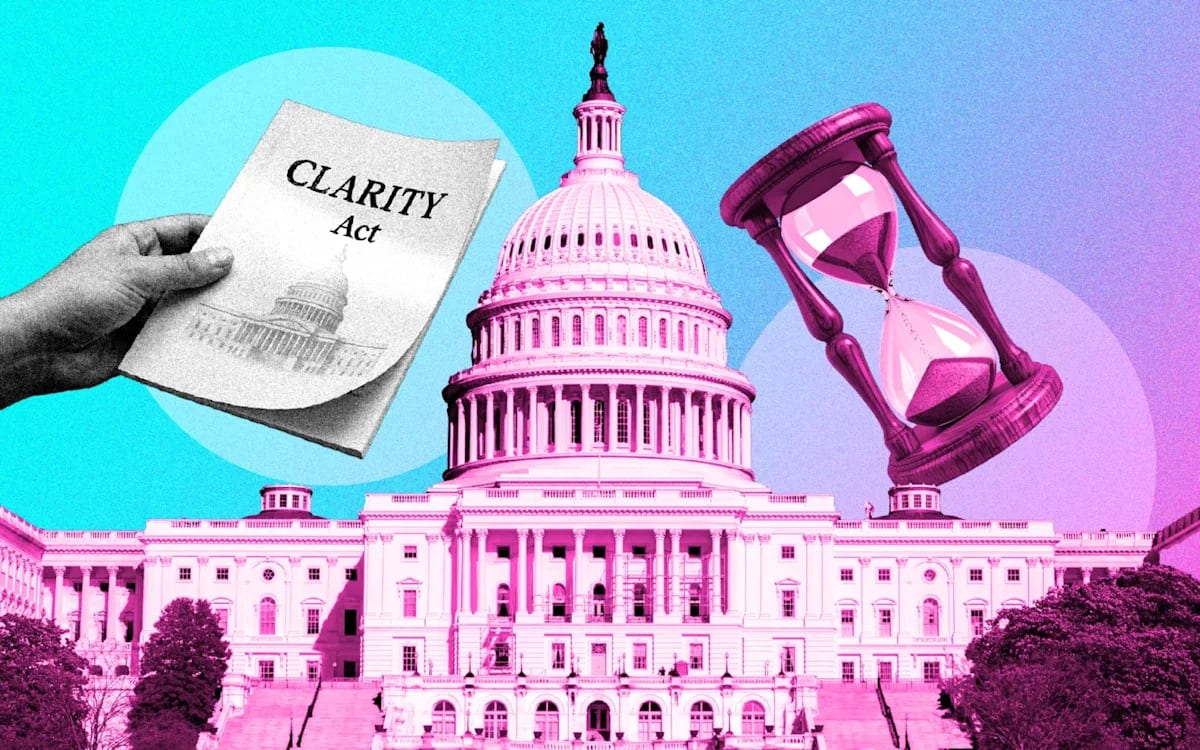
The upcoming CLARITY Act vote on September 15 is viewed by former lawmakers as a potential catalyst for institutional DeFi adoption. While the act may boost confidence, experts warn that regulatory clarity remains the primary hurdle for onchain financial growth.
The CLARITY Act and the Future of Institutional DeFi
The upcoming September 15 vote on the CLARITY Act represents a pivotal moment for the intersection of traditional finance and decentralized finance (DeFi). Former U.S. lawmakers Tim Ryan and David McIntosh have highlighted this legislative move as a foundational step toward improving institutional confidence in digital asset ecosystems. By seeking to address the regulatory ambiguity that has long hampered the sector, this act aims to provide a clearer framework for institutions looking to integrate onchain infrastructure into their operations.
The Path Toward Onchain Financial Assets
David McIntosh suggests that the institutional movement into DeFi will likely follow a structured trajectory, beginning with the tokenization of U.S. Treasuries. This initial phase serves as a low-risk entry point for legacy financial players, allowing them to leverage the efficiency of blockchain technology for highly liquid, stable assets. Over the long term, however, the focus is expected to shift toward private credit and a broader spectrum of real-world assets (RWAs), which represent a massive, untapped opportunity for onchain capital deployment.
The Urgency of Regulatory Clarity
Despite the optimism surrounding the CLARITY Act, Tim Ryan offers a cautionary perspective regarding the current pace of U.S. regulation. He warns that the ongoing uncertainty in Washington could inadvertently trigger a "brain drain" and capital flight. As other international jurisdictions continue to implement robust, clear digital-asset frameworks, the United States risks losing its competitive edge in financial innovation, potentially forcing domestic developers and infrastructure providers to move their operations overseas.
Institutional Adoption vs. Legislative Velocity
Interestingly, the institutional shift toward onchain finance is already occurring independently of legislative finality. Firms like Virtu Financial, M1X Global, and Tradeweb have already begun exploring or engaging with onchain environments, signaling that the private sector is not waiting for a complete rulebook before testing the technology. This demonstrates a growing consensus among major financial players that blockchain is the inevitable future of market infrastructure, regardless of the current regulatory friction.
Long-Term Implications and Market Trends
Looking ahead, the success of the CLARITY Act will be measured not just by the vote itself, but by the effectiveness of its eventual implementation. The true catalyst for institutional adoption will be the ability of regulators to translate high-level legislation into actionable, stable rules that protect investors without stifling technological progress. As institutions become more comfortable with the security and efficiency of onchain systems, the transition from traditional, siloed databases to transparent, decentralized ledgers will likely accelerate, fundamentally reshaping the global financial landscape.