‘Samudra Manthan' scheme designed to benefit Adani, says Congress
Source Entity
India Latest News: Top National Headlines Today & Breaking News | The Hindu
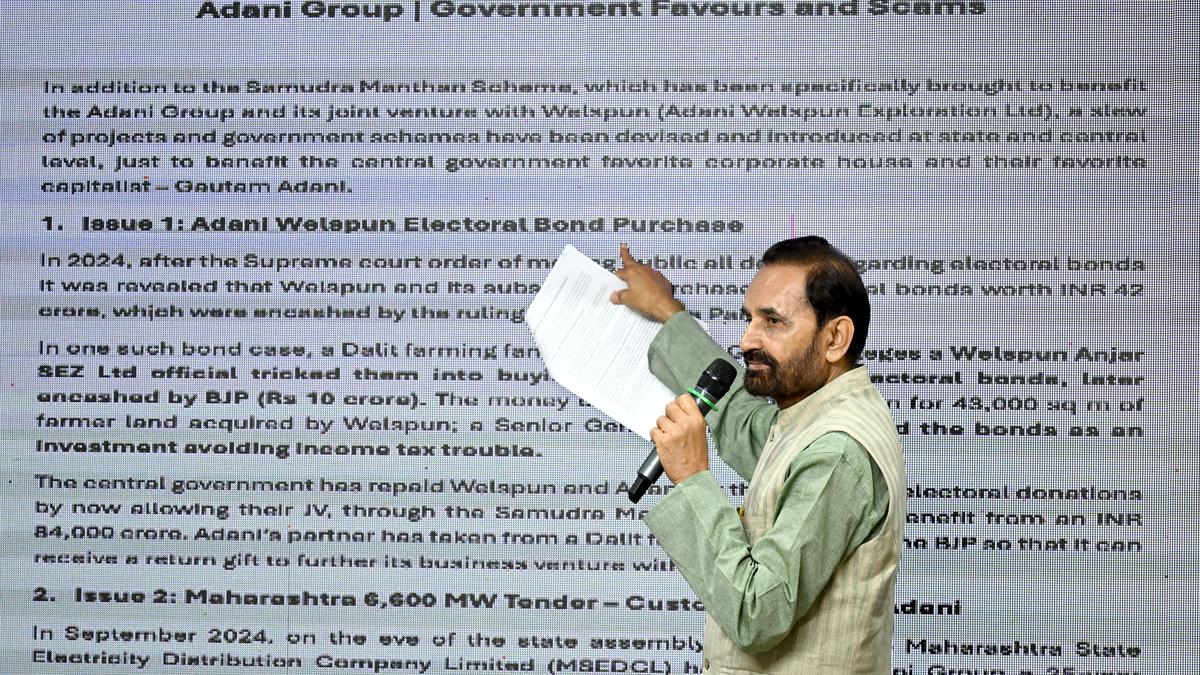
The Congress party has accused the government of favoring the Adani Group through the newly approved ₹84,084-crore Samudra Manthan offshore exploration scheme. They are demanding that the funds be redirected to the public sector entity ONGC to ensure national interest.
The Samudra Manthan Controversy: A Critical Analysis
The Indian political landscape has been stirred by allegations from the Congress party regarding the newly approved 'Samudra Manthan' scheme. With an ambitious outlay of ₹84,084 crore, the initiative is designed to bolster offshore hydrocarbon exploration. However, the opposition, led by spokesperson Shaktisinh Gohil, has characterized the project as a vehicle for corporate favoritism, specifically targeting the Adani Group.
The Core Allegations and Corporate Nexus
At the heart of the controversy is the claim that the current framework of the Samudra Manthan scheme inherently favors private players over public sector institutions. The Congress alleges that the policy structure allows companies such as Adani-owned Well Spun Exploration Limited (AWEL) to benefit from substantial government financial support. This has reignited long-standing debates regarding the intersection of government policy-making and private sector expansion in India's energy sector.
The Role of ONGC in Offshore Exploration
Congress has explicitly questioned why the Oil and Natural Gas Corporation (ONGC), India’s state-owned oil and gas giant, was not designated as the primary beneficiary and executor of this scheme. Historically, ONGC has been the backbone of India's offshore exploration efforts. By sidelining a public sector entity with deep institutional expertise in favor of a framework that includes private entities, the government faces scrutiny over its commitment to state-led energy security.
Policy Implications and Financial Transparency
The sheer scale of the ₹84,084-crore budget necessitates a high degree of transparency. The Congress demand to either scrap the scheme or reallocate its entire outlay to ONGC highlights a broader ideological divide regarding how India should manage its strategic natural resources. The opposition argues that such significant public funding should remain within the public sector to ensure that profits and operational control remain under state oversight.
Future Trends and Political Fallout
As the government moves forward with the implementation of the first phase of Samudra Manthan, this issue is likely to become a recurring theme in parliamentary debates. The demand for an investigation into the framework's design suggests that the government will be pressured to justify the inclusion of private players like AWEL. If the government fails to provide a clear rationale for the current policy structure, it may face continued obstruction and public skepticism regarding its economic policies.
Conclusion
In summary, the Samudra Manthan scheme represents a pivotal moment in the discourse surrounding India's energy policy. The tension between supporting private sector participation to accelerate exploration and maintaining the traditional dominance of public entities like ONGC reflects a significant ideological struggle. The resolution of this controversy will depend on the government's ability to demonstrate that the scheme is truly designed for national benefit rather than the enrichment of specific corporate entities.
Verification Required?