Haldwani ‘purification’ row: Day after FIR against Rahul, BJP, Cong trade barbs
Source Entity
TNN
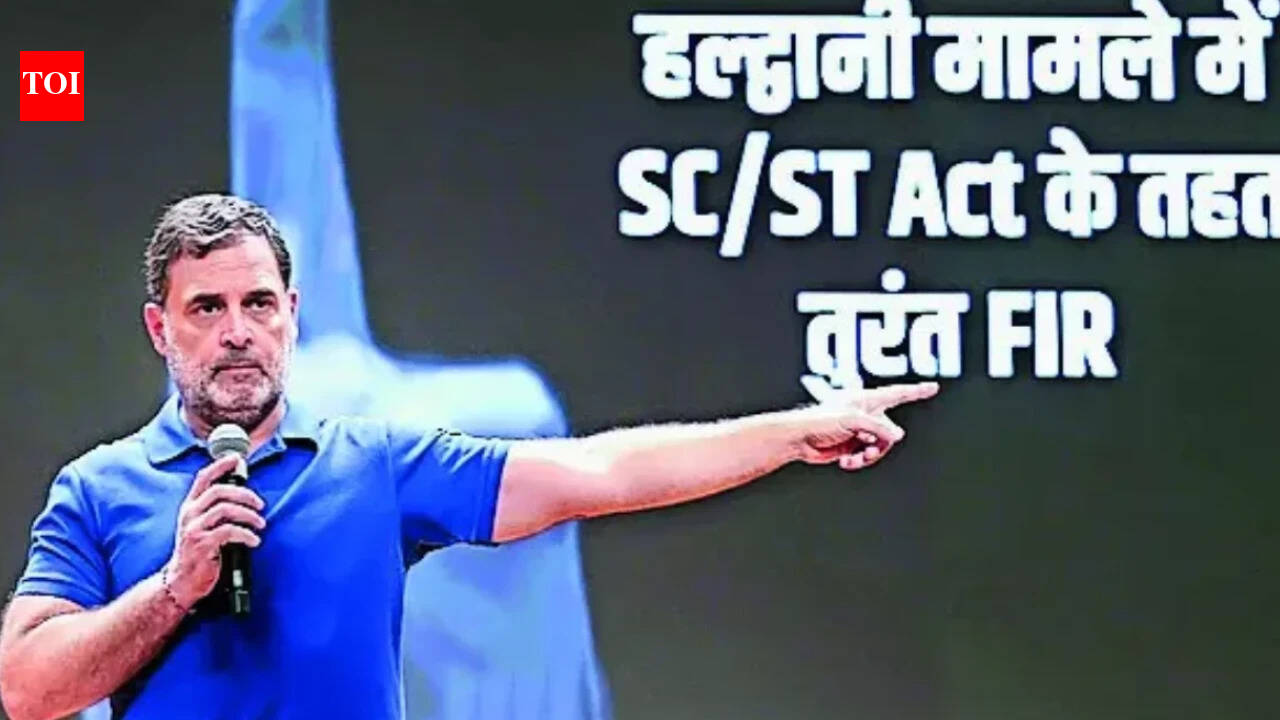
A political standoff has erupted between the BJP and Congress following an FIR against Rahul Gandhi over his criticism of a 'purification' ritual. The ritual, performed after Mallikarjun Kharge's rally in Haldwani, has sparked intense debate over caste discrimination and legal accountability.
The Haldwani 'Purification' Controversy: A Deep Dive
The Incident at Ramlila Ground
The current political firestorm began following a Congress rally held by party president Mallikarjun Kharge at the Ramlila Maidan in Haldwani on August 8. Two days after the event, members of the Shri Ram Sena reportedly conducted a “shuddhikaran” (purification) havan at the same venue. The Congress party has alleged that this ritual was specifically targeted at Kharge due to his identity as a Dalit, framing the act as a regressive display of caste-based prejudice.
Rahul Gandhi’s Stance and Legal Demands
Leader of the Opposition Rahul Gandhi took a strong public stand against the ritual, arguing that it constitutes a clear violation of the Scheduled Castes and Scheduled Tribes (Prevention of Atrocities) Act. Gandhi asserted that performing a purification ritual after a Dalit leader's presence is an offensive act that demands legal repercussions. He subsequently demanded that an FIR be registered under the SC/ST Act against those responsible for the ritual, setting the stage for a major legal and political confrontation.
The BJP Counter-Offensive
The Uttarakhand BJP government responded by registering an FIR against Rahul Gandhi himself. The complainant alleged that Gandhi sought to inject a caste-based angle into routine cleaning work performed at the rally site. Furthermore, the Uttarakhand Chief Minister contended that local residents were unaware of Kharge’s caste, suggesting that the Congress party is manufacturing a controversy for political gain. The BJP argues that Gandhi’s demand for action came only after pressure from party leadership, labeling his intervention as belated.
Keralam Government's Intervention
In support of the Congress leader, Keralam Chief Minister V.D. Satheesan condemned the Uttarakhand government’s decision to file an FIR against Gandhi. Satheesan characterized the state's move as a direct challenge to constitutional values and a worrying trend of criminalizing political dissent. He argued that the underlying issues of dignity and equality raised by Gandhi are substantive and should be addressed through political discourse rather than intimidation or legal silencing.
Broader Implications for Indian Democracy
This standoff highlights the enduring sensitivity of caste politics in India. The debate underscores the tension between the protection of civil rights and the political utilization of social grievances. As both major parties spar over the legality of rituals and the intent behind public statements, the incident serves as a microcosm of the deeper ideological divide regarding social hierarchy and political accountability in the nation.
Future Trends and Outlook
Moving forward, the resolution of the FIR against Rahul Gandhi will likely depend on the judicial interpretation of the SC/ST Act in the context of political speech and public demonstrations. This case may set a precedent for how public officials and political leaders navigate allegations of caste-based discrimination in the future. As legal proceedings unfold, the incident is expected to remain a focal point for debates on freedom of expression and the protection of marginalized communities in the political arena.
Multiple Citing Sources