INDIA bloc challenges SIR process but not its validity
Source Entity
DHANANJAY MAHAPATRA
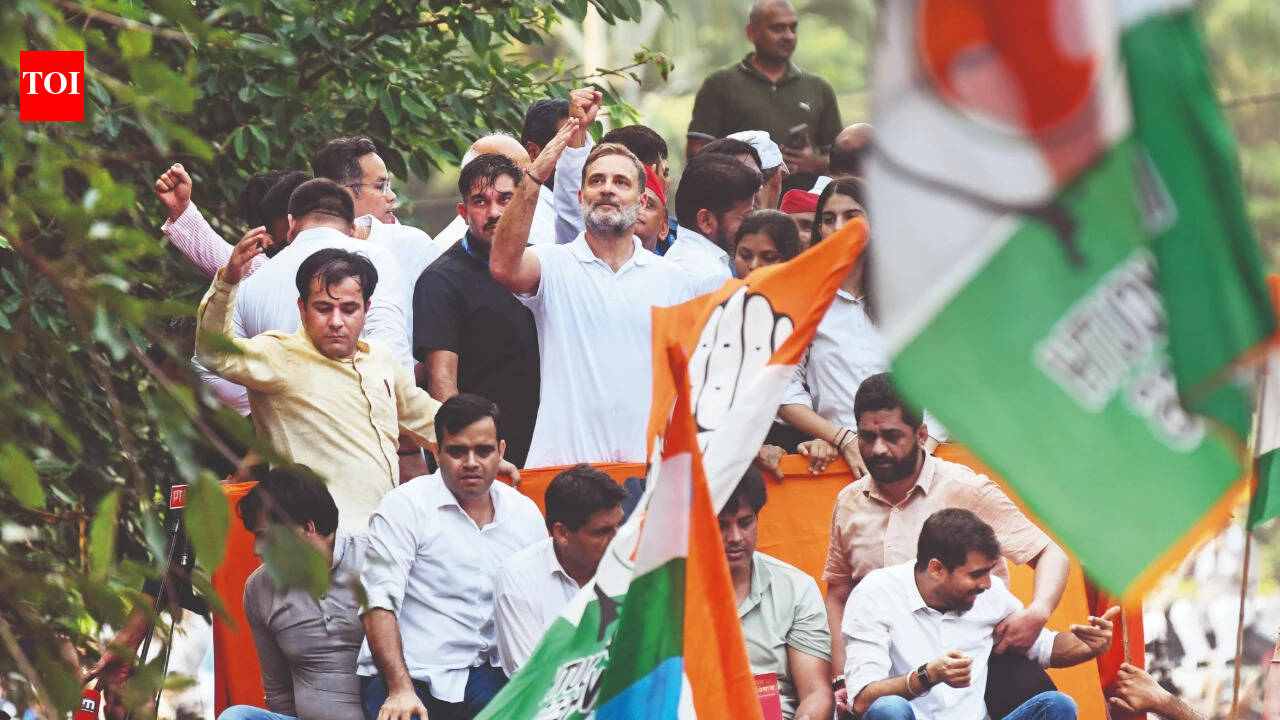
Congress leaders Mallikarjun Kharge and Rahul Gandhi's request for a meeting with CJI Surya Kant to discuss electoral concerns was formally declined. The Chief Justice cited the separation of powers and the sub judice nature of the issues as primary reasons for the refusal.
The Constitutional Standoff: Congress and the Judiciary
In a development reflecting deep friction within India’s democratic framework, Congress President Mallikarjun Kharge and Leader of the Opposition Rahul Gandhi recently sought a formal audience with the Chief Justice of India (CJI), Surya Kant. The primary objective of this intended meeting was to present concerns regarding the perceived erosion of constitutional institutions, specifically targeting the functional integrity of the Election Commission. Kharge’s rhetoric, which includes allegations of "vote chori" (vote theft) and claims of an "undeclared Emergency," highlights the escalating tension between the ruling dispensation and the INDIA bloc.
The Basis of the Opposition’s Grievances
The Congress leadership’s move was driven by a desire to bring institutional transparency to the forefront of national discourse. By characterizing the current political climate as an "undeclared Emergency," the party is attempting to frame their electoral grievances as a broader struggle for the preservation of democratic norms. Their focus on the Election Commission suggests that the opposition views the administrative handling of elections as a core threat to their political viability and the fairness of the democratic process, prompting them to seek the highest judicial authority in the land to intervene.
The Judiciary’s Stance on Separation of Powers
CJI Surya Kant’s decision to decline the meeting, conveyed via an official email, underscores the strict adherence to the doctrine of the separation of powers. The refusal serves as a firm boundary-setting exercise by the judiciary. By declining to engage in a direct dialogue with political leaders on matters of governance, the CJI’s office is reinforcing the principle that the judiciary must remain a neutral arbiter. The judiciary maintains that it cannot, and should not, intervene in the administrative or executive functions of the state unless specific legal challenges are properly brought before the court.
Legal Implications of the 'Sub Judice' Status
One of the critical factors in the rejection of the meeting was the fact that many of the issues raised by the Congress leadership are already sub judice. When matters are currently pending before a court of law, it is standard judicial practice to avoid extra-judicial discussions that could be perceived as influencing the outcome. This ensures that the judicial process remains insulated from political pressure and public posturing, thereby maintaining the integrity of the legal system.
Future Trends in Institutional Relations
This event signals a potentially turbulent period for relations between the political opposition and the judiciary. As the opposition seeks to utilize constitutional avenues to challenge government actions, they risk hitting the wall of judicial restraint. Conversely, the judiciary faces the ongoing challenge of addressing public concerns about institutional independence without overstepping its constitutional mandate. We can expect future interactions between these bodies to be increasingly characterized by formal, written communication rather than direct meetings, as both sides navigate the delicate balance of their respective roles in Indian democracy.
Multiple Citing Sources