Anti-CEC protests LIVE: Supreme Court registry points out 10 defects in Rahul Gandhi's plea in SIR case
Source Entity
India Latest News: Top National Headlines Today & Breaking News | The Hindu
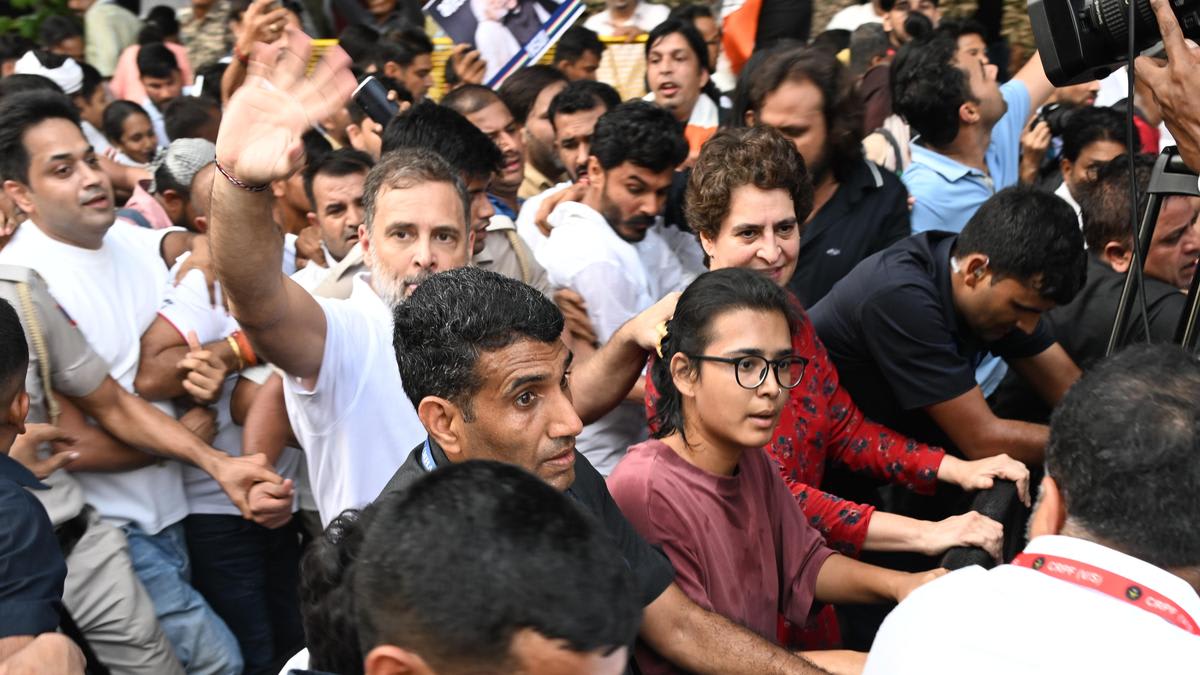
Congress leaders Mallikarjun Kharge and Rahul Gandhi's attempt to meet the Chief Justice of India regarding electoral concerns was officially declined. The CJI cited the separation of powers and the sub judice nature of the issues as primary reasons for the refusal.
The Constitutional Standoff: Congress Leaders and the CJI
In a development reflecting the intensifying friction between India's political opposition and the judiciary, Congress President Mallikarjun Kharge and Leader of the Opposition Rahul Gandhi recently sought a formal meeting with the Chief Justice of India (CJI) Surya Kant. The primary objective of this proposed engagement was to voice grievances regarding the functioning of constitutional institutions, specifically the Election Commission of India. The Congress leadership explicitly labeled the current political environment an "undeclared Emergency," citing concerns over electoral malpractice, which they termed "vote chori."
The Rationale Behind the Request
The move by the INDIA bloc leaders was driven by a belief that the independence of constitutional bodies is currently under threat. By framing their concerns around the integrity of the electoral process and new legislative frameworks, the Congress party sought to elevate these issues to the highest judicial office. This strategy underscores the opposition's attempt to leverage the judiciary as a check on what they perceive as executive overreach, attempting to bring public discourse on "electoral malpractice" directly into the sphere of constitutional oversight.
The Judiciary's Response: Separation of Powers
Chief Justice of India Surya Kant declined the request for a meeting, a decision communicated formally via email to the opposition leaders. The refusal was not an arbitrary dismissal but was grounded in the fundamental principle of the separation of powers. The CJI's office clarified that the judiciary cannot intervene in the administrative functioning of the state, nor can it engage in political consultations that might compromise the neutrality of the court. This boundary is essential for maintaining the judiciary's role as an impartial arbiter rather than a participant in political debates.
The 'Sub Judice' Factor
Beyond the structural arguments regarding the separation of powers, the CJI’s office noted that the issues the opposition intended to raise were already sub judice. In the Indian legal system, the principle of sub judice prevents authorities from discussing or intervening in matters currently being litigated in court. By attempting to meet the CJI while cases are active, the opposition risked violating judicial decorum. The court’s decision to decline the meeting reinforces the established protocol that legal disputes must be resolved through established courtroom procedures rather than executive or administrative lobbying.
Broader Implications for Indian Democracy
This incident highlights a growing trend of political polarization where constitutional institutions are increasingly becoming the focal point of contestation. When political leaders shift their focus from legislative chambers to the judiciary to resolve grievances about election conduct, it signals a deeper crisis of confidence in the standard political mechanisms. The refusal of the meeting serves as a reminder that the judiciary must remain insulated from political pressure to preserve its credibility as the final guardian of the Constitution.
Future Trends and Conclusion
Looking ahead, this event sets a firm precedent regarding the limits of judicial-political interaction. Future efforts by political parties to engage with the judiciary will likely face similar scrutiny, as the courts continue to prioritize institutional independence over political expediency. As the nation moves forward, the reliance on formal legal channels—rather than direct meetings with the Chief Justice—will remain the primary avenue for addressing electoral concerns, ensuring that the separation of powers remains a pillar of Indian democracy.
Multiple Citing Sources
Verification Required?