'Urdu mein Tiranga pehna': Congress' 'Ireland' dig at PM Modi's Independence Day pocket square
Source Entity
Latest News: Todays Latest News Headlines from India & World | Hindustan Times | Hindustan Times
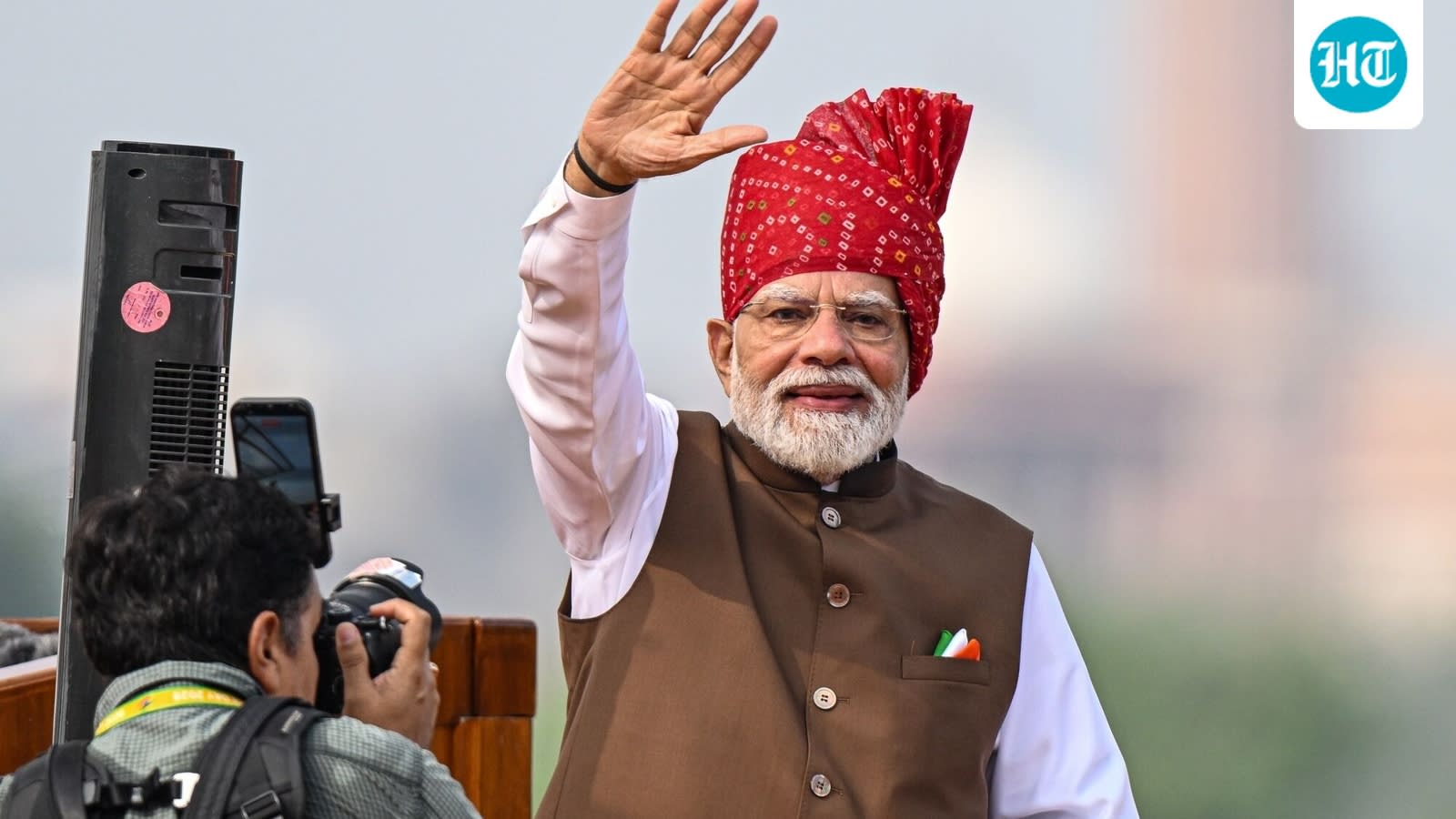
Congress party leaders have mocked PM Narendra Modi for wearing a pocket square with an incorrect Tricolour sequence during his 80th Independence Day address. The opposition claimed the design resembled the Irish flag, sparking a political debate over the Prime Minister's attire.
The Controversy of the Tricolour Pocket Square
During India's 80th Independence Day celebrations, Prime Minister Narendra Modi delivered his 13th consecutive address from the historic Red Fort. While the speech focused on the theme of 'Dreaming Big,' the discourse quickly shifted toward the Prime Minister's sartorial choices. Specifically, a pocket square worn by the PM became the center of a political firestorm, with opposition leaders from the Congress party highlighting an apparent error in the sequence of the colours representing the Indian national flag.
The 'Ireland' Allegation
Congress MP Pawan Khera took to the social media platform X to criticize the Prime Minister's attire. Khera posted a video of the pocket square, suggesting that the sequence of the stripes—which did not align with the traditional Saffron, White, and Green order of the Indian Tricolour—more closely resembled the flag of Ireland. He remarked, "Lagta hai sahib ne Urdu mein Tiranga pehna hai. Ya phir Bharat ki jagah Ireland ka Independence Day mana rahay hain," implying that the Prime Minister was either displaying the flag in a reversed 'Urdu-style' reading order or inadvertently celebrating the wrong nation's independence.
Symbolism and Political Optics
In the context of Indian politics, national symbols carry immense weight. The Tiranga (Tricolour) is not merely a flag but a representation of the nation's struggle for freedom and its constitutional values. For a leader frequently associated with a nationalist political agenda, any perceived deviation from the correct display of national symbols becomes a high-stakes issue. The Congress party's decision to weaponize this fashion choice reflects a broader strategy to challenge the Prime Minister's nationalist credentials by questioning his attention to the very symbols he champions.
Historical Context of PM Modi's Attire
Prime Minister Modi is well-known for his deliberate and often elaborate sartorial choices during public appearances, particularly on national days. Over the past decade, his evolution of headgear—ranging from varied styles of turbans like the Rajasthani safa to other regional caps—has often been interpreted as a gesture of pan-Indian cultural inclusion. However, this history of calculated dressing makes the current controversy over the pocket square more notable, as it contrasts with the meticulous planning usually associated with his public persona.
Broader Implications for Political Discourse
This incident underscores how modern political discourse in India has shifted toward the hyper-scrutiny of visual media. In an era of viral social media posts, a minor wardrobe detail can overshadow a major policy address. By focusing on the 'Ireland' comparison, the opposition aims to shift the narrative away from the content of the Prime Minister's speech toward a critique of his competence and cultural awareness. This event serves as a case study in how symbolic errors can be leveraged to create a perception of disconnect between the leadership and national identity.
Conclusion
Ultimately, while the controversy may seem trivial to some, it highlights the intense scrutiny under which India's political leaders operate. As the country moves forward, the intersection of fashion, symbolism, and political criticism will likely remain a potent tool for opposition parties. Whether this incident will have any lasting impact on the Prime Minister's public image remains to be seen, but it certainly demonstrates that in the digital age, every detail—even the sequence of stripes on a pocket square—is subject to intense public debate.
Verification Required?