BJP says Sonia opposed full Vande Mataram; Cong says she was seeking chair for Kharge
Source Entity
TOI NEWS DESK
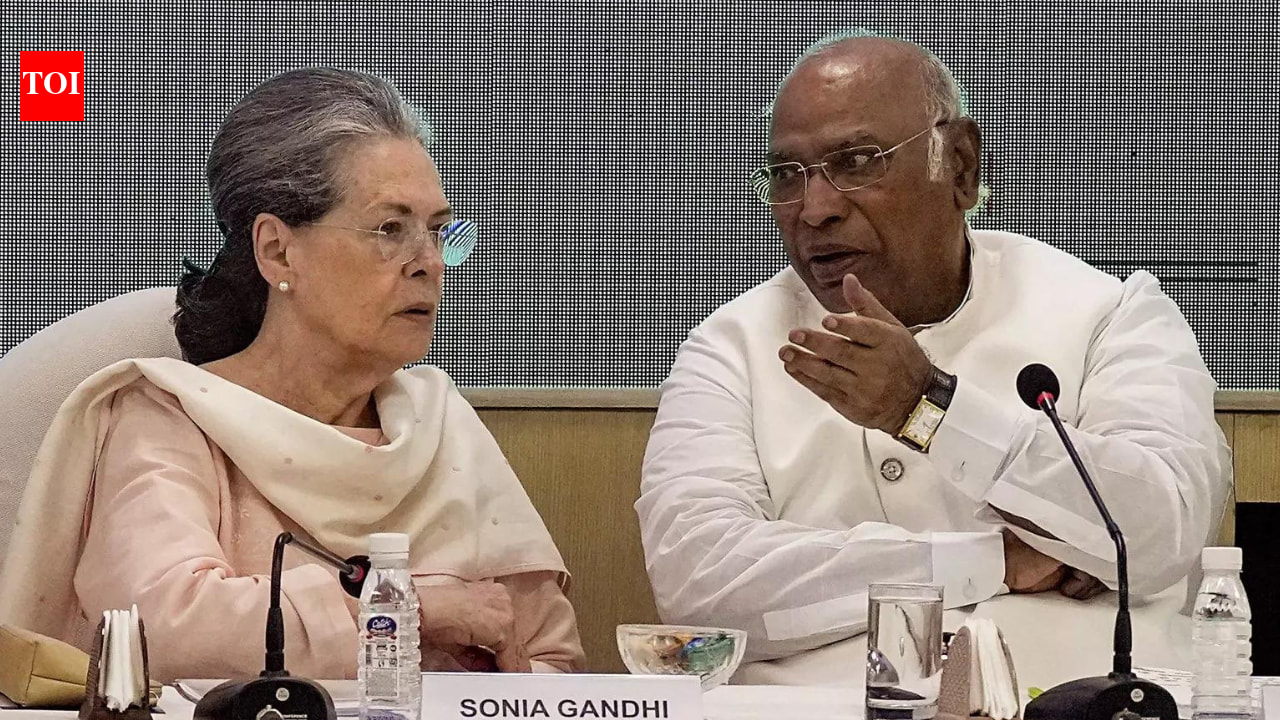
A political controversy has emerged after the BJP accused Sonia Gandhi of opposing the full rendition of Vande Mataram at a Congress event. The Congress has strongly denied these claims, stating that Gandhi was merely requesting a chair for party president Mallikarjun Kharge.
Political Polarization Over National Symbols
A fresh political confrontation has erupted between the Bharatiya Janata Party (BJP) and the Indian National Congress following an Independence Day event held at Indira Bhawan. The conflict centers on a video snippet in which former Congress president Sonia Gandhi appears to interact with party workers during the singing of the national song, Vande Mataram. The BJP has leveraged this footage to allege that the Congress leadership holds a deep-seated aversion to the full rendition of the song, framing the incident as a continuation of historical ideological differences.
The BJP’s Narrative and Accusations
Senior BJP leadership, including national general secretary (organisation) B.L. Santhosh, utilized social media platforms to escalate the issue. By sharing the footage, the BJP aimed to characterize the Congress party as being disconnected from patriotic fervor. The rhetoric employed by the BJP suggests that the party views this incident not as an isolated moment of confusion, but as evidence of a specific mindset that purportedly persists within the opposition, drawing parallels to pre-1947 political divisions in India.
The Congress Party’s Clarification
The Congress party has categorically rejected these allegations, labeling them as false and politically motivated. According to party representatives, the interaction captured on camera was entirely benign. They assert that Sonia Gandhi was not objecting to the music or the lyrics of Vande Mataram, but was instead attempting to secure a chair for party president Mallikarjun Kharge, who had been standing for a prolonged period during the proceedings. The party maintains that the BJP is distorting a routine gesture of courtesy into a manufactured controversy.
The Role of Digital Media in Political Discourse
This incident highlights the growing trend of 'clip-based politics,' where short, context-free video segments are disseminated on social media to drive specific political narratives. In the modern Indian political landscape, such videos often bypass traditional media gatekeepers, forcing parties into immediate defensive or offensive postures. The rapid spread of the BJP’s claim and the subsequent rebuttal from the Congress demonstrate how digital platforms have become the primary battlegrounds for symbolic and ideological warfare.
Broader Implications for Indian Democracy
Beyond the immediate claims and counter-claims, this row reflects the intense scrutiny placed on national symbols and their usage in political events. Vande Mataram, holding a significant place in India’s struggle for independence, remains a potent touchstone for national identity. Consequently, any perceived hesitation or disruption during its performance is frequently weaponized to question the patriotism of political opponents. This trend suggests that symbolic politics will continue to dominate the discourse as parties strive to define their respective brands of nationalism.
Conclusion
As the dust settles on this particular exchange, the event serves as a reminder of the fragility of political consensus in the current era. While the BJP continues to challenge the Congress on its ideological commitments, the Congress remains focused on refuting these claims by emphasizing the context of the incident. Ultimately, the episode underscores the deep-seated rivalry between India's two largest political entities, where even the most mundane gestures can be swiftly transformed into high-stakes political theater.