Opinion: Opinion | Why The Congress-SP 'Merger' Fantasy Could Be Opposition's Biggest Self-Goal
Source Entity
NDTV News Search Records Found 1000
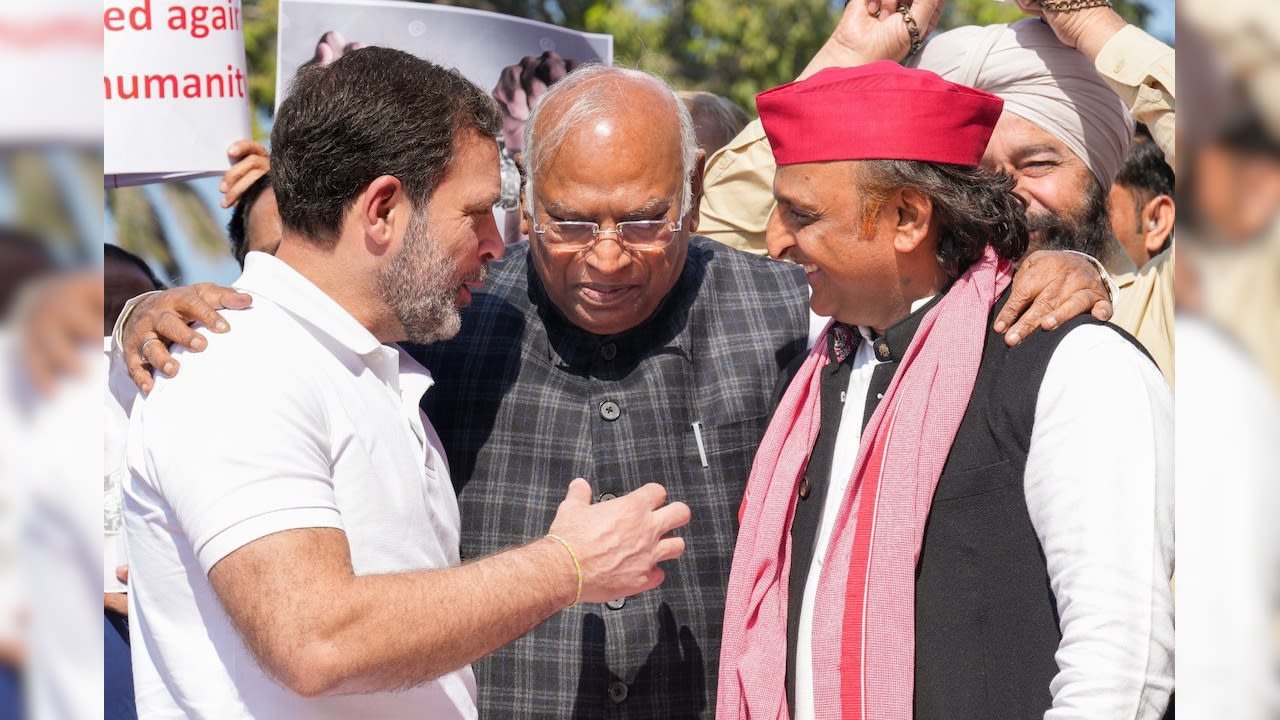
The political alliance between Rahul Gandhi and Akhilesh Yadav relies on maintaining distinct identities rather than a formal merger. A unified approach is seen as more effective than homogenization for the opposition's electoral strategy.
The Strategic Paradox of Opposition Consolidation
The recent discourse surrounding the political relationship between Rahul Gandhi of the Congress party and Akhilesh Yadav of the Samajwadi Party (SP) has sparked intense debate regarding the efficacy of opposition unity in India. While some factions within the political ecosystem have speculated about a potential formal 'merger' of these entities, the reality suggests that such a move would be a strategic miscalculation. The strength of the current opposition framework lies not in the creation of a singular, monolithic party, but in the nuanced coordination of distinct political ideologies and regional bases.
The Value of Distinct Political Identities
Rahul Gandhi and Akhilesh Yadav represent two very different political lineages and voter bases. By attempting to merge these identities, the opposition risks alienating the core supporters who are attracted to the specific platforms of the Congress or the Samajwadi Party. History has shown that in Indian coalition politics, parties that retain their individual character while collaborating on a common minimum program or electoral seat-sharing arrangement are often more resilient. The current consensus is that these leaders do not need to become one another; rather, they must focus on refining their unique value propositions.
Avoiding the 'Self-Goal' of Homogenization
A formal merger could inadvertently create a 'self-goal' for the opposition by blurring the lines of accountability and ideological clarity. When parties with disparate regional influences merge, they often struggle with internal power dynamics and the dilution of their primary messaging. By remaining separate entities, both Gandhi and Yadav can continue to leverage their specific strengths—Gandhi’s national narrative and Yadav’s regional stronghold in Uttar Pradesh—to create a symbiotic effect that is far more potent than a singular, potentially fractured entity.
The Necessity of Collaborative Autonomy
The path forward for the opposition appears to be one of 'collaborative autonomy.' This involves maintaining separate organizational structures while aligning on broader national goals. This strategy allows for a more flexible and responsive political machine that can adapt to local electoral challenges while maintaining a unified front against the ruling government. The effectiveness of this approach is contingent upon the leaders’ ability to balance their individual political ambitions with the collective necessity of the alliance.
Future Trends in Coalition Dynamics
Looking ahead, the success of the Congress-SP dynamic will likely serve as a blueprint for other opposition alliances across the country. If they successfully demonstrate that they can work together without losing their individual identities, it may encourage other regional parties to form similar, non-merger-based coalitions. This model of cooperation, which respects the autonomy of each participant while working toward shared political objectives, is likely to become the standard for future electoral challenges in India’s complex multi-party system.
Conclusion
Ultimately, the 'merger' fantasy serves as a distraction from the real work of political coalition building. Rahul Gandhi and Akhilesh Yadav are most effective when they are better at being themselves, together. By focusing on complementary strengths rather than structural consolidation, the opposition can present a more coherent and formidable alternative that resonates with a wider spectrum of the Indian electorate.
Verification Required?