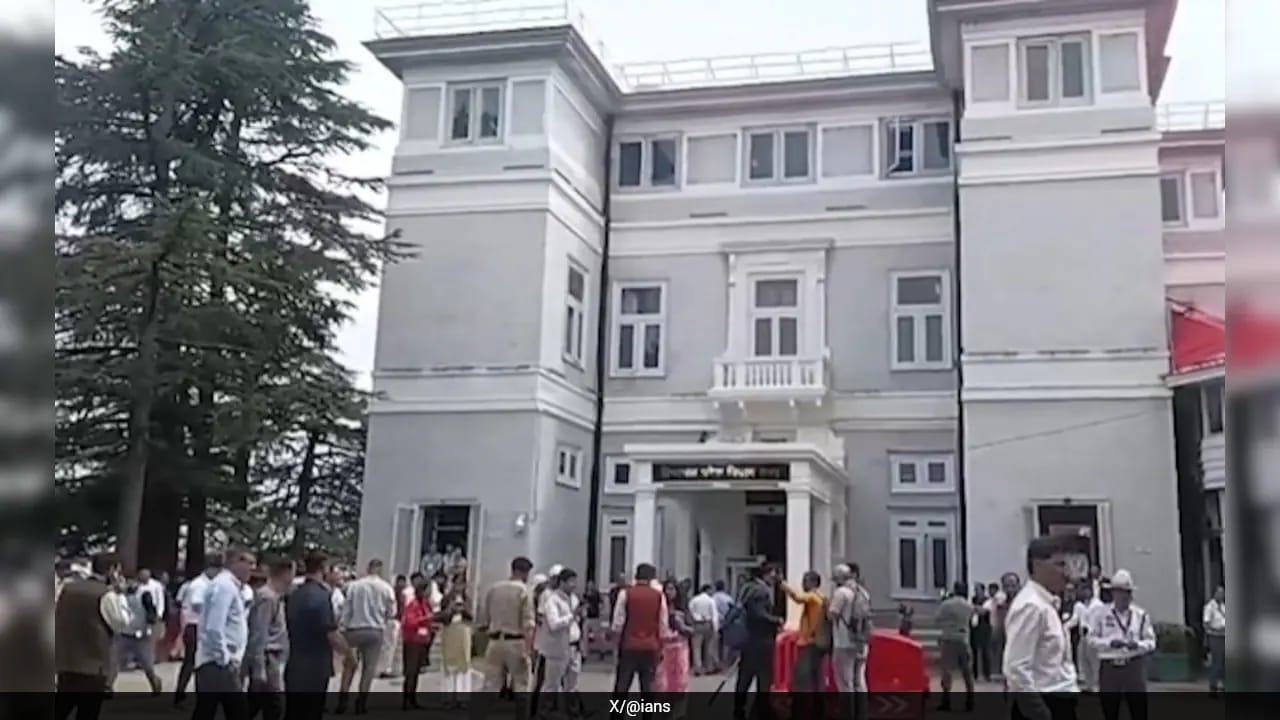
Himachal Assembly Adjourned Within 10 Minutes Over Vande Mataram Row
Source Entity
NDTV News Search Records Found 1000
BJP leaders, including CM Pushkar Singh Dhami and Home Minister Amit Shah, have condemned the Congress Working Committee's decision to sing only two stanzas of Vande Mataram. The move has sparked internal unease within the Congress, with some leaders questioning the political strategy behind this choice.
The Vande Mataram Controversy: A Clash of Ideologies
The recent decision by the Congress Working Committee (CWC) to limit the rendition of Vande Mataram to its first two stanzas has ignited a fierce political firestorm. By reaffirming a stance that mirrors a 1937 resolution, the party has inadvertently provided a platform for the Bharatiya Janata Party (BJP) to level accusations of 'anti-national' sentiment and 'vote-bank appeasement.' This development underscores the enduring tension in Indian politics regarding national symbols and their role in contemporary discourse.
The BJP’s Critical Stance
Union Home Minister Amit Shah and Uttarakhand Chief Minister Pushkar Singh Dhami have led the offensive against the Congress. Both leaders argue that Vande Mataram is inextricably linked to the sacrifices of India's freedom fighters and serves as a vital expression of national identity. By framing the truncated rendition as an affront to national sentiment, the BJP is positioning itself as the sole defender of nationalist values, effectively utilizing the controversy to contrast its ideological framework against what it terms the Congress’s historical tendency toward appeasement.
Historical Context and Legal Nuance
The controversy is rooted in a long-standing historical debate. The Congress leadership’s decision to limit the song references a 1937 resolution, a period when the party navigated complex communal tensions during the freedom struggle. However, in the current climate, this decision has invited scrutiny regarding the legal interpretation of national song renditions. While BJP leaders claim this violates the spirit of parliamentary enactments, internal Congress voices—such as Abhishek Manu Singhvi—have attempted to introduce legal nuance, distinguishing between the requirements of private party functions versus official state events.
Internal Dissent within Congress
There is a palpable sense of unease within the Congress ranks. Many party members are concerned that the leadership’s decision effectively plays into the BJP’s political strengths, allowing the opposition to dominate the narrative on patriotism. This friction is further complicated by the fact that several Congress-ruled states, such as Himachal Pradesh, Karnataka, and Telangana, recently performed the song in its entirety during Independence Day celebrations, highlighting a lack of synchronization between state-level practices and the central party leadership's directive.
Future Implications
Looking ahead, this issue is likely to remain a potent weapon in the political arsenal of the BJP. By framing the Congress's choice as a recurring pattern of 'dividing' national sentiment, the BJP aims to consolidate its nationalist base. For the Congress, the challenge lies in balancing its historical, nuanced approach to national symbols with the need to avoid being perceived as disconnected from mainstream nationalist sentiment. As this debate continues, it serves as a stark reminder of how historical legacy, legal interpretation, and electoral strategy intersect in modern Indian politics.
Multiple Citing Sources
Verification Required?