Uttarakhand CM Dhami criticises Congress decision on truncated rendition of Vande Mataram
Source Entity
Latest News: Todays Latest News Headlines from India & World | Hindustan Times | Hindustan Times
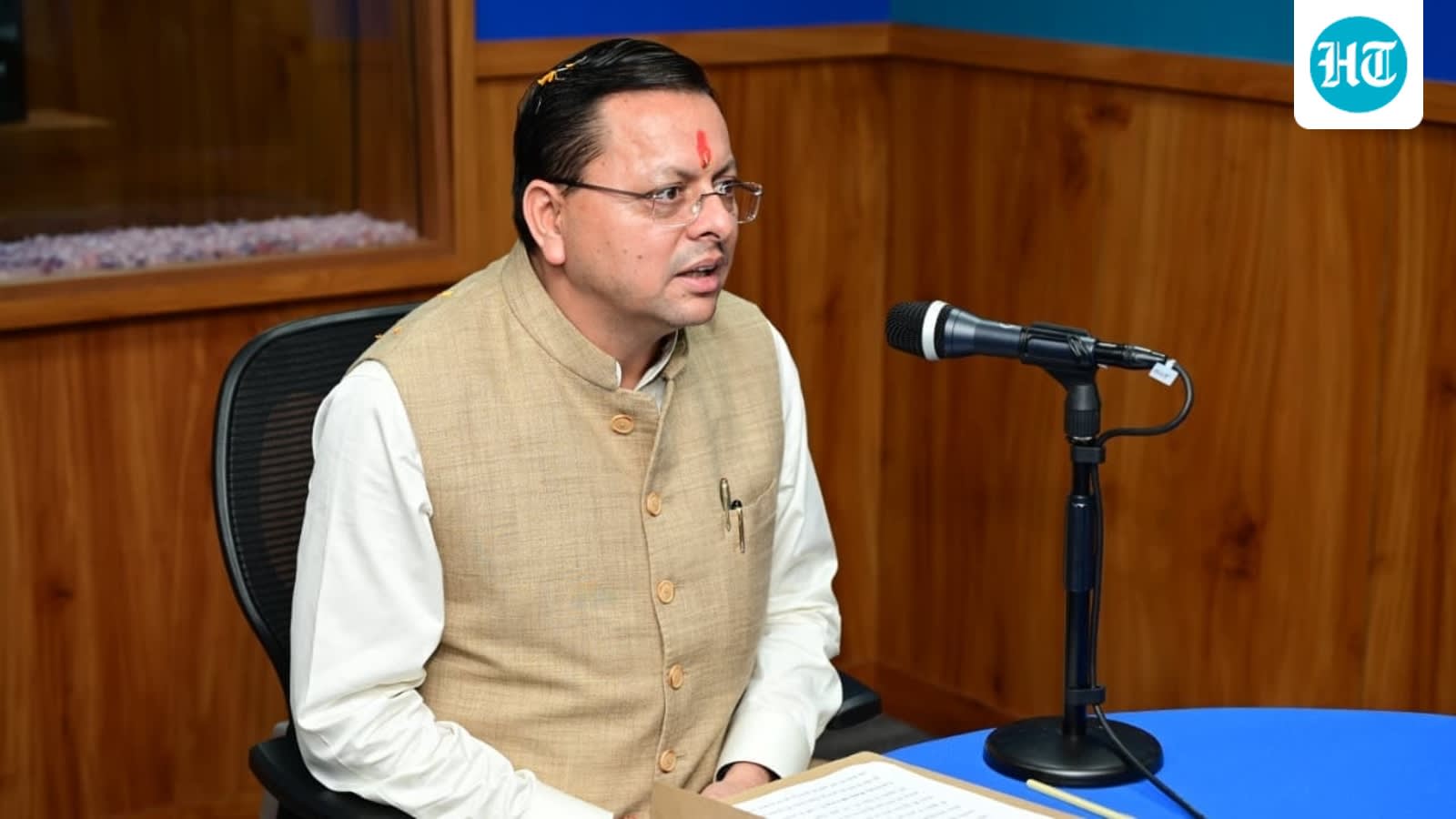
The Congress party's decision to sing only the first two stanzas of Vande Mataram has sparked a heated political row. Union Home Minister Amit Shah labeled the move 'anti-national' and 'vote-bank appeasement,' while internal party dissent and opposition leaders challenged the hypocrisy of the accusation.
The Vande Mataram Controversy: A Political Firestorm
The recent decision by the Congress Working Committee (CWC) to limit the rendition of Vande Mataram to its first two stanzas has ignited a significant political confrontation in India. This move, which the party frames as a continuation of its 1937 historical stance, has been met with severe backlash from the ruling Bharatiya Janata Party (BJP). Union Home Minister Amit Shah spearheaded the criticism, characterizing the decision as both "astonishing" and "anti-national," further alleging that the move is symptomatic of the Congress party's persistent policy of "vote-bank appeasement."
Historical Precedents and Legislative Tension
At the heart of the dispute is a clash between historical interpretation and contemporary political posturing. The Congress leadership cites its 1937 resolution as the guiding principle for its current actions. However, Amit Shah argues that this decision constitutes a violation of the spirit of laws enacted by Parliament regarding the rendition of the national song. The tension is exacerbated by the fact that the song has historically held a symbolic status in the Indian independence movement, making any alteration to its performance a potent trigger for ideological debate.
Internal Dissent and Legal Nuance
Within the Congress party itself, the move has not been met with universal approval. There is a palpable sense of unease among certain party members who believe the leadership failed to handle the sensitive issue with adequate nuance. Abhishek Manu Singhvi, the head of the party's legal wing, reportedly provided a legal opinion that attempted to distinguish between public and private functions. This internal friction is underscored by the inconsistency in practice; ironically, the full version of the song was performed during recent official Independence Day events in Congress-governed states like Himachal Pradesh, Karnataka, and Telangana.
The Counter-Attack: Questioning Consistency
Independent MP Kapil Sibal has emerged as a key voice challenging the BJP's narrative. By directly questioning whether former Prime Minister Atal Bihari Vajpayee or current Prime Minister Narendra Modi—during his tenure as Chief Minister of Gujarat—consistently sang the full version of the song at every function, Sibal has effectively turned the "anti-national" accusation back on the BJP. This line of questioning seeks to expose what the opposition perceives as selective outrage and historical hypocrisy, shifting the debate from a matter of national duty to a matter of political consistency.
Broader Implications for Indian Politics
This controversy is reflective of a larger struggle over symbols, nationalism, and cultural identity in India. The debate over Vande Mataram is not merely about the length of a song; it is a proxy battle for the soul of the country's political discourse. By framing the issue as an "anti-national" act, the BJP seeks to consolidate its nationalist base, while the Congress’s struggle to maintain a unified front highlights the challenges of navigating complex cultural legacies in a highly polarized environment.
Future Trends in Nationalist Discourse
Looking ahead, this event signals that national symbols will continue to be central to political warfare in India. As election cycles intensify, both parties are likely to use such controversies to define their ideological boundaries. The discord within the Congress and the aggressive posturing of the BJP suggest that the debate over what constitutes "respect" for national icons will remain a volatile and recurring theme, likely leading to further legal and public scrutiny regarding the official protocols for national songs and anthems.
Multiple Citing Sources
Verification Required?