‘How will people eat?’: Construction curbs leave Gurugram workers facing a bleak Diwali
Source Entity
Abhimanyu Hazarika
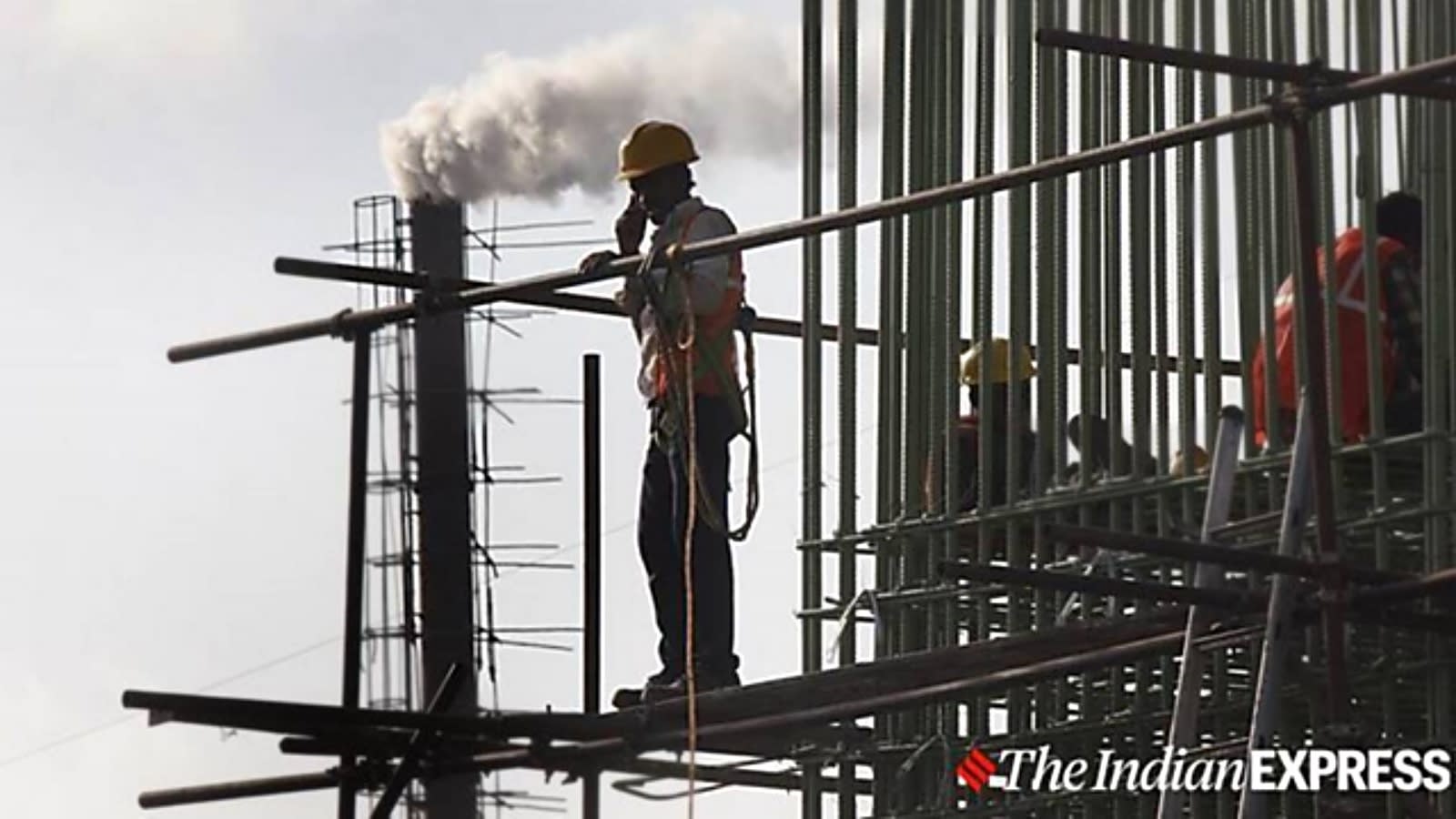
Construction bans in the Delhi-NCR region to combat winter smog have left thousands of daily-wage laborers without income ahead of Diwali. These mandatory restrictions, enforced by the CAQM, highlight the severe economic trade-off between public health initiatives and the survival of the informal workforce.
The Human Cost of Clean Air: Construction Bans in NCR
As winter settles over the National Capital Region (NCR), the seasonal recurrence of hazardous air quality has triggered the implementation of the Graded Response Action Plan (GRAP). The Commission for Air Quality Management (CAQM) has mandated a halt to all dust-generating construction activities beginning November 5. While these measures are essential to mitigate the thick, toxic smog that envelopes the region, they have created a devastating economic vacuum for thousands of daily-wage laborers, exemplified by the plight of 55-year-old worker Virender Kumar.
The Economic Fragility of Daily-Wage Labor
For informal workers like Kumar, who operates across Gurugram and Manesar, the imposition of these restrictions is not merely an environmental policy but a direct threat to basic sustenance. Because the construction sector relies heavily on daily wages, a work stoppage translates immediately into a loss of income. With no financial safety nets or government-mandated compensation packages for these temporary shutdowns, the sudden cessation of labor leaves families in a state of precariousness exactly when they need funds for the festive season.
Balancing Public Health and Livelihoods
The tension between environmental regulation and socioeconomic stability is a defining challenge for the NCR. The CAQM’s mandate is designed to lower particulate matter (PM2.5 and PM10) levels that spike due to construction dust and winter meteorology. However, the lack of a structured mitigation plan for displaced workers means that the burden of this public health initiative is disproportionately carried by the most vulnerable demographic. As Kumar notes, the festive spirit of Diwali is replaced by the anxiety of food insecurity.
The Scale of the Crisis
Estimates suggest that 60-70% of construction laborers in the Gurugram region are currently facing unemployment due to these restrictions. This mass displacement of workers highlights a systemic failure to integrate environmental policy with social welfare. Without a mechanism to support these workers—such as temporary subsidies or the provision of essential rations during the shutdown period—the current approach risks pushing thousands of families further into poverty.
Future Trends and Policy Implications
Looking ahead, the recurring nature of NCR’s winter smog suggests that these construction bans will remain a standard, if not intensifying, feature of the region’s governance. To avoid a repeat of this 'black Diwali' scenario, policymakers must consider a more holistic approach. This might include 'green' construction incentives that allow for work to continue under strict dust-suppression protocols, or the creation of a dedicated welfare fund for laborers impacted by mandatory environmental shutdowns. Without such reforms, the fight for clean air will continue to be viewed by the labor force as an existential threat rather than a public good.