Trade unions, farm outfits join chorus to remove CEC Gyanesh Kumar
Source Entity
India Latest News: Top National Headlines Today & Breaking News | The Hindu
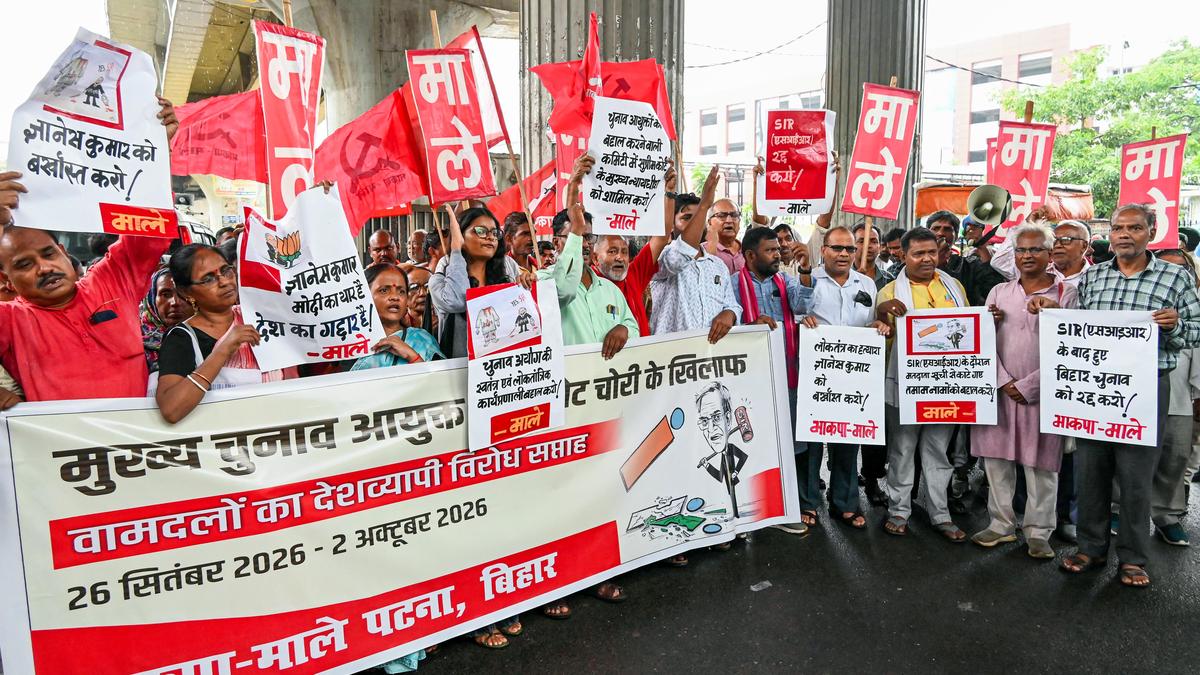
West Bengal BJP chief Samik Bhattacharya's praise for CEC Gyanesh Kumar has sparked a political firestorm. Opposition leaders, including Congress and CPI, have criticized the CEC following allegations of past political bias.
The Growing Controversy Surrounding CEC Gyanesh Kumar
Recent political discourse in India has been dominated by a heated exchange regarding the impartiality of Chief Election Commissioner (CEC) Gyanesh Kumar. The conflict emerged after West Bengal BJP chief Samik Bhattacharya publicly suggested that the CEC deserves a Padma Bhushan for his role in overseeing recent elections, specifically highlighting his contributions to managing voter roll revisions and ensuring a relatively violence-free electoral process in the state.
Opposition Retaliation and Mockery
The praise from the BJP state leadership was met with sharp derision from the Opposition. Congress leader Pawan Khera responded to the suggestion by mocking the scale of the proposed honor, stating that a Padma Bhushan was too minor a gesture and sarcastically suggesting that the CEC should instead be made Prime Minister. This hyperbolic response underscores the deep-seated distrust the Opposition holds toward the current leadership of the Election Commission of India (ECI), which they view as being overly aligned with the ruling party.
Allegations of Historical Bias
The situation escalated significantly following claims made by former Kerala Chief Secretary Jiji Thomson. Thomson alleged that in 2016, while traveling with Gyanesh Kumar, the latter suggested that he contest parliamentary elections on a BJP ticket, implying that such a move could lead to a position as a Union Minister. These claims have provided ammunition to critics who argue that the CEC’s professional history suggests a predisposition toward the current ruling party’s interests.
Demands for Accountability
Following Thomson’s revelation, CPI leader Binoy Viswam issued a formal demand for the resignation of CEC Gyanesh Kumar. Viswam characterized the interaction described by Thomson as proof of 'total subservience' to the BJP, arguing that such conduct is fundamentally incompatible with the neutrality required of an individual serving in the constitutional office of the Election Commission. This demand reflects a broader trend of Opposition parties calling for institutional integrity within India’s democratic oversight bodies.
Broader Implications for Electoral Integrity
The current row is part of a larger ongoing debate regarding the independence of the ECI, which has been the subject of multiple petitions before the Supreme Court. Issues such as the Systematic Voters' Education and Electoral Participation (SVEEP) exercise and various administrative decisions made by the commission have frequently been cited by Opposition figures as evidence of institutional capture. The controversy surrounding the CEC is not merely an isolated political spat; it represents a fundamental tension between the ruling party’s support for the commission and the Opposition’s perception of a compromised electoral referee.
Future Trends in Political Oversight
As India moves forward, the scrutiny of constitutional appointments is likely to intensify. The public nature of these allegations ensures that the Election Commission will remain under a microscope during future election cycles. The trend suggests that institutional trust will remain a central pillar of political debate, with the Opposition likely continuing to leverage individual conduct and historical associations to challenge the legitimacy of ECI decisions.
Multiple Citing Sources
Verification Required?