Bank staffer among three persons held for circulating counterfeit currencies in Vellore
Source Entity
India Latest News: Top National Headlines Today & Breaking News | The Hindu
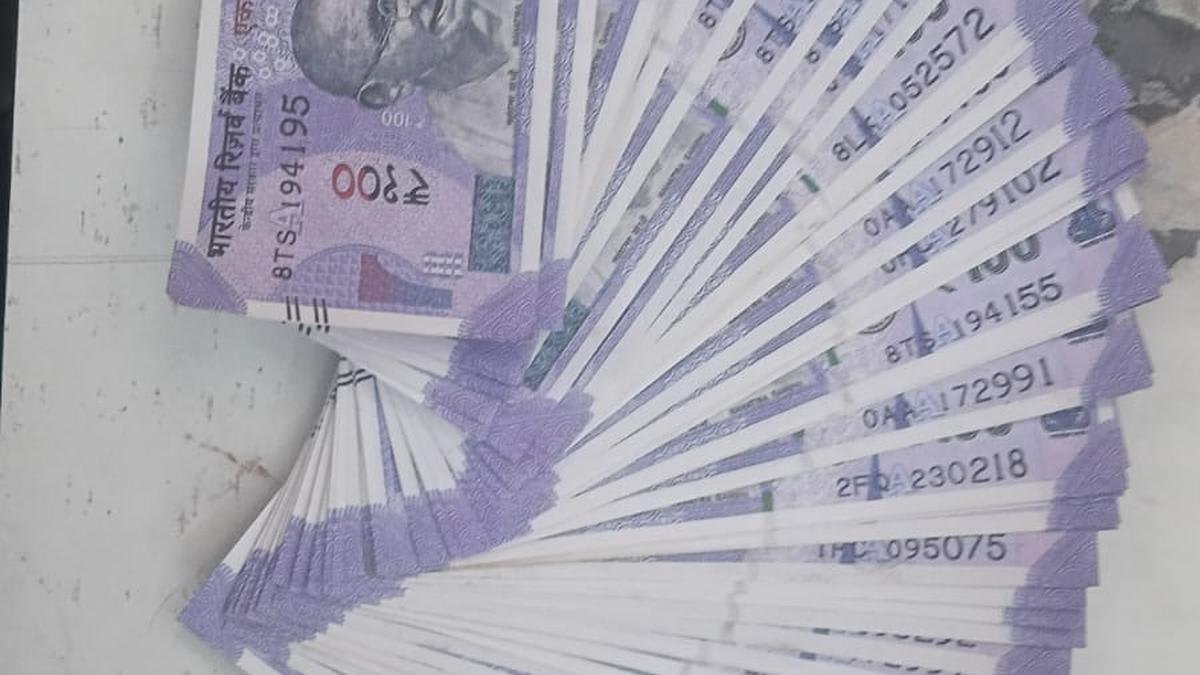
Three individuals, including a bank employee, were arrested in Vellore for circulating counterfeit ₹100 notes. This follows the earlier apprehension of two other gang members, highlighting a coordinated effort to inject fake currency into local retail outlets.
Counterfeit Currency Ring Uncovered in Vellore
The Anatomy of the Arrest
In a significant development for local law enforcement, the K.V. Kuppam police have successfully apprehended three additional individuals suspected of circulating counterfeit Indian currency. The group, which includes a bank staffer identified as 29-year-old G. Velmurugan, along with R. Ganesan and K. Satish, was taken into custody following an investigation into the distribution of fake ₹100 denomination notes. This operation marks an expansion of an earlier probe that resulted in the arrests of K. Mohanraj and M. Murugan, suggesting a broader network operating within the Vellore and Ranipet regions.
Origins of the Investigation
The investigation gained momentum after a specific incident at a Tasmac outlet in Nakkal village near Gudiyatham town. When M. Murugan, a lorry driver, attempted to use counterfeit notes for a transaction, the vigilant staff identified the discrepancy and alerted the authorities. This alert served as the critical catalyst for the police to unravel the supply chain, moving from the point of circulation at the retail level back to the individuals responsible for distributing the illicit tender.
The Role of Financial Insiders
The inclusion of a bank staffer among the accused raises serious concerns regarding the integrity of financial handling processes. While the investigation is ongoing, the presence of an individual with professional banking knowledge suggests a level of sophistication or potential access that could facilitate the movement of fake currency. Authorities are likely scrutinizing how these notes entered circulation and whether the bank staffer utilized their position to legitimize the counterfeit bills or evade detection.
The Economic Implications of Fake Currency
Even though the total amount recovered was relatively small—approximately ₹8,700—the circulation of counterfeit currency poses a systemic risk to local economies. Small-denomination notes, like the ₹100 bills identified in this case, are often used in daily retail transactions where scrutiny is lower than with high-value notes. By targeting small businesses such as local saloons and retail outlets, the perpetrators exploit the trust inherent in everyday cash commerce, which can lead to significant losses for small-scale merchants who lack the equipment to detect sophisticated forgeries.
Law Enforcement and Future Trends
This case underscores the persistent challenge of financial crime in semi-urban and rural areas. As digital payment adoption continues to grow in India, traditional cash-based crimes remain a focus for law enforcement. The collaboration between the K.V. Kuppam police and local businesses demonstrates the effectiveness of community-level reporting. Moving forward, authorities will likely focus on tracing the source of the printing and distribution network to prevent further infiltration of fake notes into the local market. The arrest of these five individuals represents a successful disruption of a localized criminal enterprise that aimed to undermine confidence in the national currency.
Verification Required?