GPT-6 Astra Solves a WWI German Radio Cipher
Source Entity
Hacker News
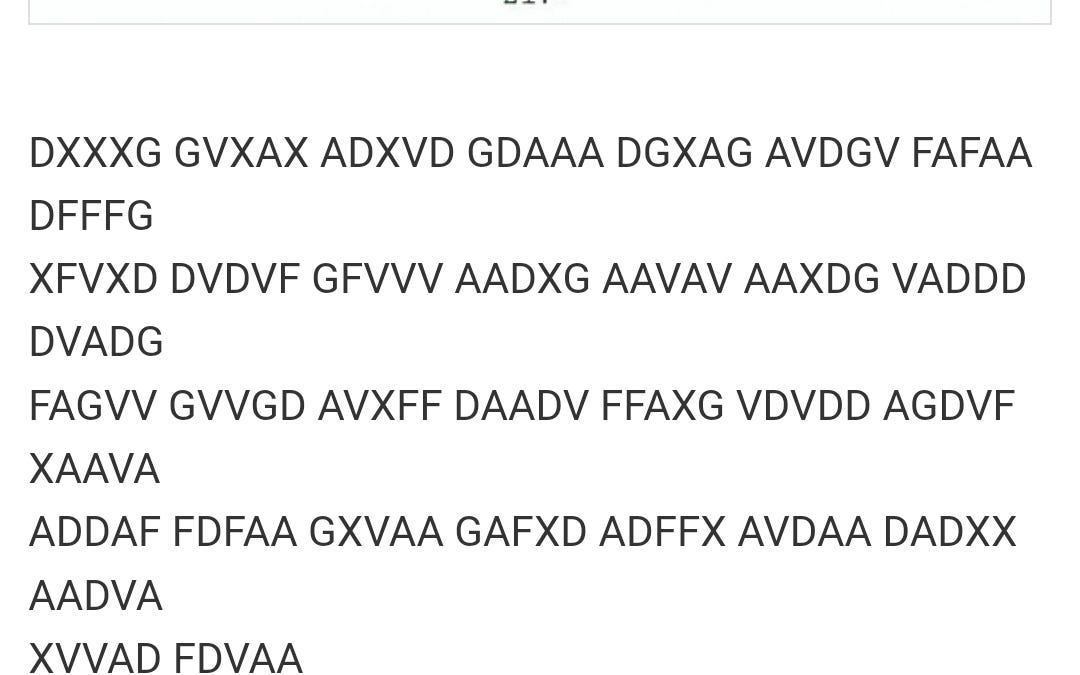
Researchers have successfully utilized advanced computational techniques and AI to decipher historical codes, including a 1542 papal letter and WWI-era German radio messages. These breakthroughs highlight how modern technology can unlock long-hidden secrets from the past.
Unlocking the Past: The Convergence of Cryptography and Modern Computing
Recent breakthroughs in cryptanalysis have demonstrated the profound utility of modern computational techniques in deciphering historical documents. By employing methods such as simulated annealing, researchers have successfully cracked a complex 1542 papal cipher that had long baffled historians. This specific document, originating from the Archivio Apostolico Vaticano, was sent to the court of Charles V in Spain, serving as a critical bridge between the Vatican and the Spanish throne during a period of intense geopolitical maneuvering.
The Mechanics of the 1542 Papal Cipher
The difficulty in translating the 1542 document lies in the inherent ambiguity of the cipher's structure. As researchers discovered, the text transitions mid-line from Italian to a sequence of digits. The primary challenge is not merely identifying the substitution key but determining the boundaries of each code segment. For instance, the number '73' might represent a single letter 'd', whereas '7' and '3' could represent two distinct letters, 'n' and 'm'. The presence of 'null' characters, such as the digit '9' which carries no semantic meaning, further complicates the decryption process, requiring advanced algorithmic filtering to extract coherent language like the phrase 'Dopo la' (after the).
Computational Advances in Cryptology
The application of simulated annealing—a probabilistic technique for finding an approximate global optimum—has proven essential in navigating these complex search spaces. Unlike traditional brute-force attacks, which are often computationally prohibitive, simulated annealing allows researchers to iterate through potential keys efficiently. This methodology is proving to be a game-changer, not only for Renaissance-era documents but also for more modern, structured ciphers that have remained unsolved for decades.
Solving the ADFGVX WWI Ciphers
The efficacy of these computational approaches extends to military history, specifically the infamous ADFGVX ciphers used by the German military during World War I. These ciphers represent a significant hurdle due to their dual-layered security: a grid-based substitution method combined with transposition. By using advanced models like GPT-6 Astra, researchers have demonstrated how modern AI can deconstruct these sophisticated grids. By mapping coordinates like 'FX' or 'GD' back to their original alphabetical values, AI can effectively bypass the historical obfuscation that once protected sensitive military communications.
Broader Implications and Future Trends
These developments signify a paradigm shift in digital humanities and historical research. As AI models become more adept at pattern recognition and linguistic analysis, we can expect a surge in the number of 'unsolved' ciphers being cracked. From the cryptic messages of serial killers to legendary enigmas like the Voynich manuscript, the barrier between historical mystery and clarity is rapidly thinning. The ability to use simulated annealing and neural networks to parse ambiguous digit sequences ensures that the archives of the past are no longer impenetrable, providing us with a clearer window into the strategic communications of our ancestors.