A Cray-1 supercomputer replica from 30 "obsolete" Mac Minis
Source Entity
Nick Indge
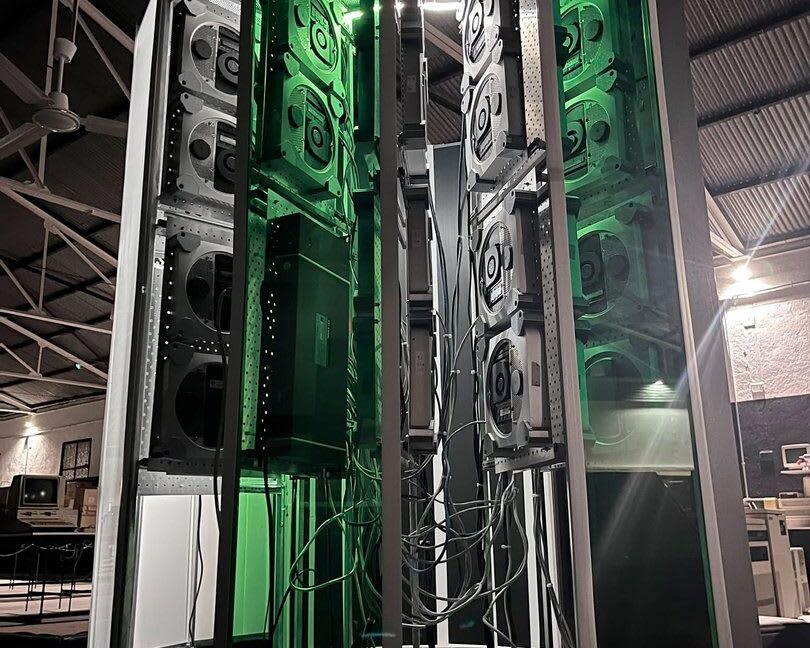
Spain's Museo de Historia de la Computación has built a 1:1 replica of the legendary 1976 Cray-1 supercomputer using 30 networked 2012-era Mac Minis. This creative upcycling project delivers 1.3 teraflops of performance as a tribute to computing history.
A Retro-Modern Engineering Marvel
The Museo de Historia de la Computación in Spain has unveiled a remarkable fusion of computing history and modern upcycling: a 1:1 scale visual replica of the iconic 1976 Cray-1 supercomputer. Rather than attempting to source original, increasingly rare components from the 1970s, the museum’s creative team utilized 30 obsolete 2012-era Mac Minis to power the system. This project, which took 18 months to complete, serves as a dual tribute, marking both the 50th anniversary of the Cray-1’s influence and the founding of Apple.
The Power of Distributed Computing
While individual 2012 Mac Minis are considered legacy hardware by today's standards, their true potential is unlocked through cluster computing. By networking these machines, the team has orchestrated 64 active processing cores to achieve a combined performance of 1.3 teraflops. This demonstration highlights the efficiency of parallel processing, where even aging hardware can be harnessed to perform complex tasks that would have been physically impossible for the original Cray-1, which operated at a significantly lower speed of approximately 160 megaflops.
Challenges in Hardware Longevity
Maintaining a cluster of this nature involves inherent technical hurdles, as evidenced by the project's recent performance fluctuations. The museum previously recorded a peak of 1.5 teraflops utilizing 70 available cores, but the loss of a single node reduced the output to 1.3 teraflops. This reality underscores the fragility of using legacy hardware in high-performance environments, where the failure of one component can impact the aggregate throughput of the entire system.
The Philosophy of Upcycling
Beyond the raw performance metrics, the project serves as a profound statement on electronic waste and sustainability. By repurposing 30 Mac Minis that might otherwise have ended up in a landfill, the museum demonstrates a creative path toward hardware lifecycle extension. It challenges the culture of planned obsolescence, proving that 'obsolete' technology still holds immense utility when viewed through the lens of creative engineering and distributed architecture.
Bridging Eras of Computing
This replica is not merely a visual homage; it is a functioning bridge between the pioneering era of Seymour Cray and the modern consumer-grade hardware revolution. The Cray-1 was a marvel of the 1970s, known for its unique C-shape and massive power requirements. Replicating this design with compact, modern desktop components creates a compelling juxtaposition that educates visitors on the exponential growth of computing power over the last half-century.
Future Trends in Legacy Reuse
Looking forward, this project may inspire other institutions to rethink how they display historical computing artifacts. Rather than static museum pieces, interactive replicas that utilize cluster computing offer a more engaging and educational experience. As high-performance computing becomes more accessible, we may see a rise in 'amateur' supercomputers built from legacy hardware, fostering a new generation of hobbyists interested in the fundamentals of parallel processing and sustainable tech practices.