Corners Don't Look Like That: Regarding Screenspace Ambient Occlusion (2012)
Source Entity
Hacker News
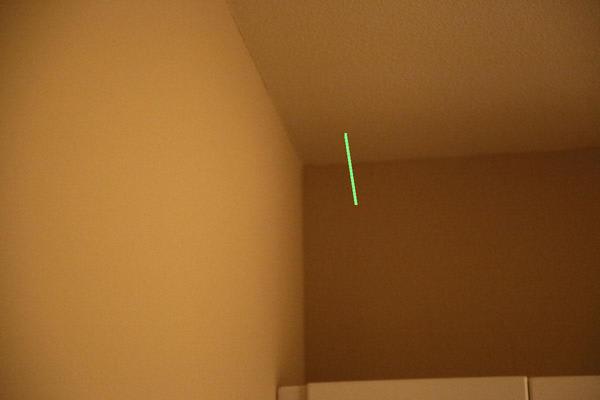
Sean Barrett's 2012 critique highlights the visual inaccuracies of Screen Space Ambient Occlusion (SSAO) in game development. The analysis underscores how common implementations often fail to replicate natural light physics, leading to artifacts and unrealistic shading.
The Illusion of Depth: Critiquing SSAO
In his 2012 technical discourse, Corners Don't Look Like That, developer Sean Barrett provides a critical examination of Screen Space Ambient Occlusion (SSAO) as it was being implemented in the burgeoning era of modern 3D gaming. SSAO, a rendering technique designed to approximate the way light is occluded in crevices and corners, became a staple for developers seeking to add depth to real-time graphics without the massive computational cost of full global illumination. However, Barrett’s analysis argues that the industry's infatuation with the technique led to a widespread disregard for physical accuracy.
The Failure of Heuristic Shading
Barrett highlights a fundamental disconnect between the mathematical shortcuts used in SSAO and the actual behavior of light in physical environments. By referencing the classic Cornell box—a standard model used in computer graphics research since Goral et al.'s 1984 paper on diffuse surface light interaction—Barrett demonstrates that real-world corners do not inherently darken or brighten in the ways SSAO often forces them to. When developers rely on screenspace heuristics rather than physical light simulation, they frequently introduce visual artifacts, such as artificial halos or improper shading at contact points.
Professional and Amateur Pitfalls
The critique extends beyond mere aesthetic preference, pointing out that both amateur and professional developers often fall into the trap of over-applying ambient occlusion. Amateur implementations are noted for producing convex corners that appear unnaturally bright, while professional releases are criticized for visible artifacts, such as ugly shading patterns behind railings or other complex geometry. These errors serve as a testament to the difficulty of balancing performance optimization with visual fidelity in real-time rendering environments.
The Pursuit of Realism
Historically, the challenge of rendering realistic ambient occlusion has been a defining struggle for game engines. Because SSAO is calculated based solely on the information available in the current frame's depth buffer, it lacks global context. This limitation is precisely why it often 'looks wrong' to the trained eye. Barrett’s call for developers to gather better data and prioritize physical accuracy suggests that the industry was, at the time, sacrificing core principles of light transport for the sake of a quick, screen-space solution.
Broader Implications for Graphics Engineering
This 2012 critique remains relevant as a foundational lesson in graphics programming: the danger of prioritizing a 'look' over the underlying physical reality. While newer techniques like HBAO (Horizon-Based Ambient Occlusion) and ray-traced ambient occlusion have since evolved to mitigate these issues, the core problem identified by Barrett—the mismatch between screen-space approximations and actual light physics—remains a hurdle. Understanding these historical critiques helps modern developers appreciate why standardizing physical accuracy is vital for maintaining immersion in 3D digital spaces.