CUDA Shared Memory Swizzling
Source Entity
Hacker News
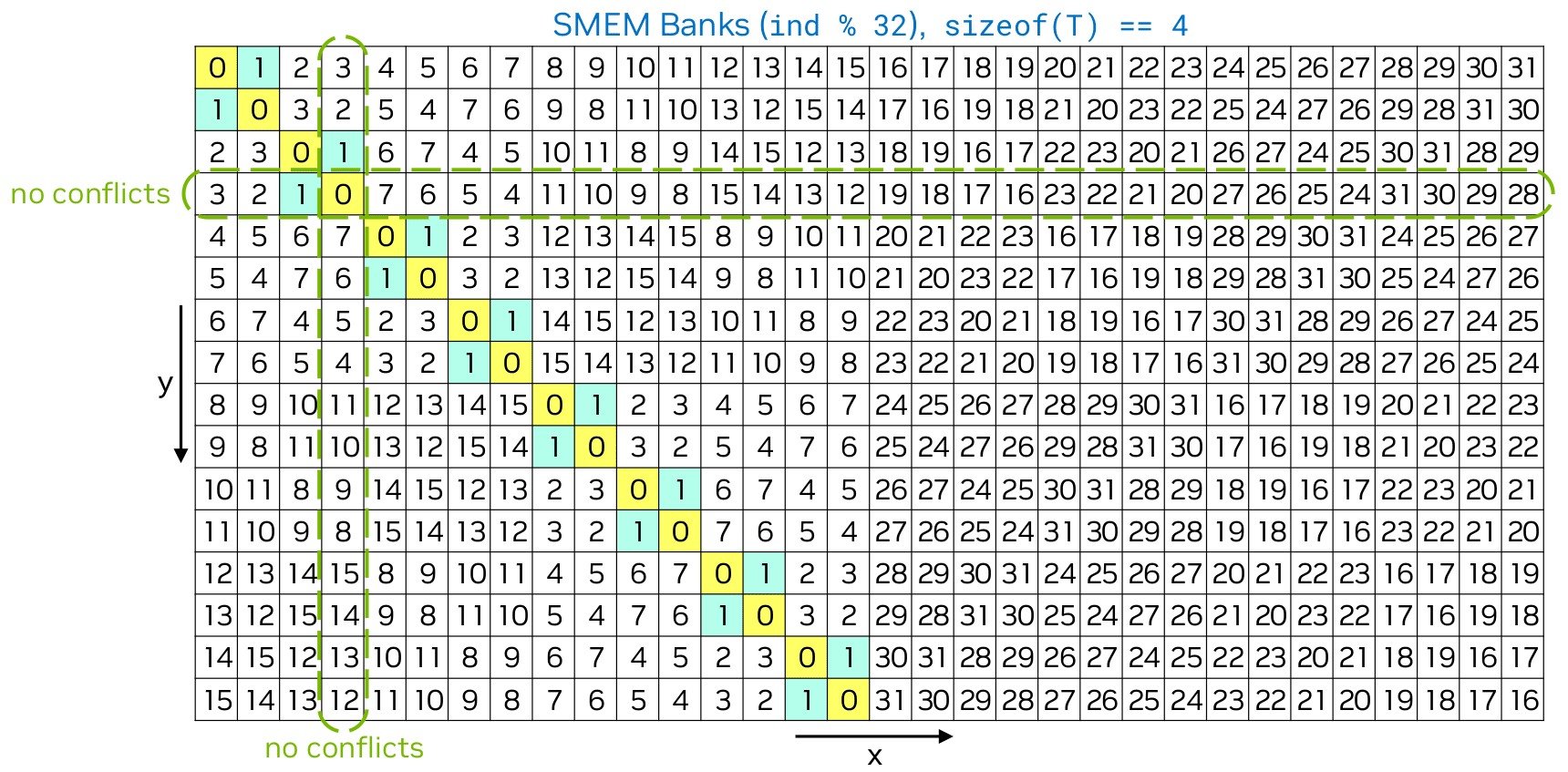
CUDA shared memory swizzling is an advanced optimization technique used to resolve bank conflicts without the memory overhead associated with padding. By restructuring data access patterns, developers can maximize throughput and avoid the performance penalties inherent in concurrent memory access.
Optimizing CUDA Kernels: The Role of Shared Memory Swizzling
In the high-performance world of GPU computing, the efficiency of CUDA kernels is often dictated by how effectively developers manage shared memory. Because shared memory is a low-latency, on-chip storage medium, it is designed to be accessed by multiple threads within a warp simultaneously. However, this architecture relies on a banked structure, where memory is divided into 32 distinct banks. When multiple threads attempt to access different addresses within the same bank, a 'bank conflict' occurs, forcing the hardware to serialize these requests and significantly degrading performance.
The Limitations of Traditional Padding
Traditionally, developers have mitigated these conflicts through a technique known as padding. By adding extra elements to the shared memory array, developers can shift the index mapping such that threads no longer collide on the same bank. While effective in reducing serialized access, padding introduces a substantial drawback: the wastage of valuable on-chip memory. In memory-constrained kernels, this overhead can limit the number of active warps that can reside on a streaming multiprocessor (SM), ultimately reducing overall occupancy and hardware utilization.
Understanding Swizzling as an Alternative
Swizzling emerges as a sophisticated alternative to padding. Unlike padding, which merely shifts memory layouts, swizzling involves a deliberate, algorithmic transformation of the index calculation used to access shared memory. By reordering how threads map to memory addresses at the logic level, swizzling ensures that concurrent requests are distributed across distinct banks. This allows the GPU to satisfy all memory requests in a single transaction, maintaining high throughput without sacrificing memory capacity.
Performance Implications and Implementation
Implementing swizzling requires a deeper understanding of the underlying GPU architecture and the specific access pattern of the kernel. While it is more complex to implement than simple padding, the performance gains are often worth the effort in compute-bound applications. By avoiding the waste of shared memory, developers can potentially increase the size of their data tiles, leading to better cache utilization and reduced global memory traffic.
Future Trends in GPU Memory Management
As GPU architectures continue to evolve, the importance of fine-grained memory control remains paramount. While newer hardware iterations often improve the efficiency of shared memory access, the fundamental principles of bank conflict avoidance remain a cornerstone of expert CUDA programming. Mastering techniques like swizzling allows developers to push the boundaries of what is possible on current hardware, ensuring that software performance scales alongside compute power.
Conclusion
In summary, while padding remains a viable solution for simple use cases, swizzling offers a more elegant and efficient path for optimizing memory-intensive CUDA kernels. By prioritizing the avoidance of bank conflicts through intelligent indexing, developers can achieve superior performance profiles, ensuring their applications extract the maximum possible utility from the GPU's memory hierarchy.