What Happened to Liberal Democracy?: An excerpt from the new book by Nobel-winning economist Daron Acemoglu
Source Entity
Latest News: Todays Latest News Headlines from India & World | Hindustan Times | Hindustan Times
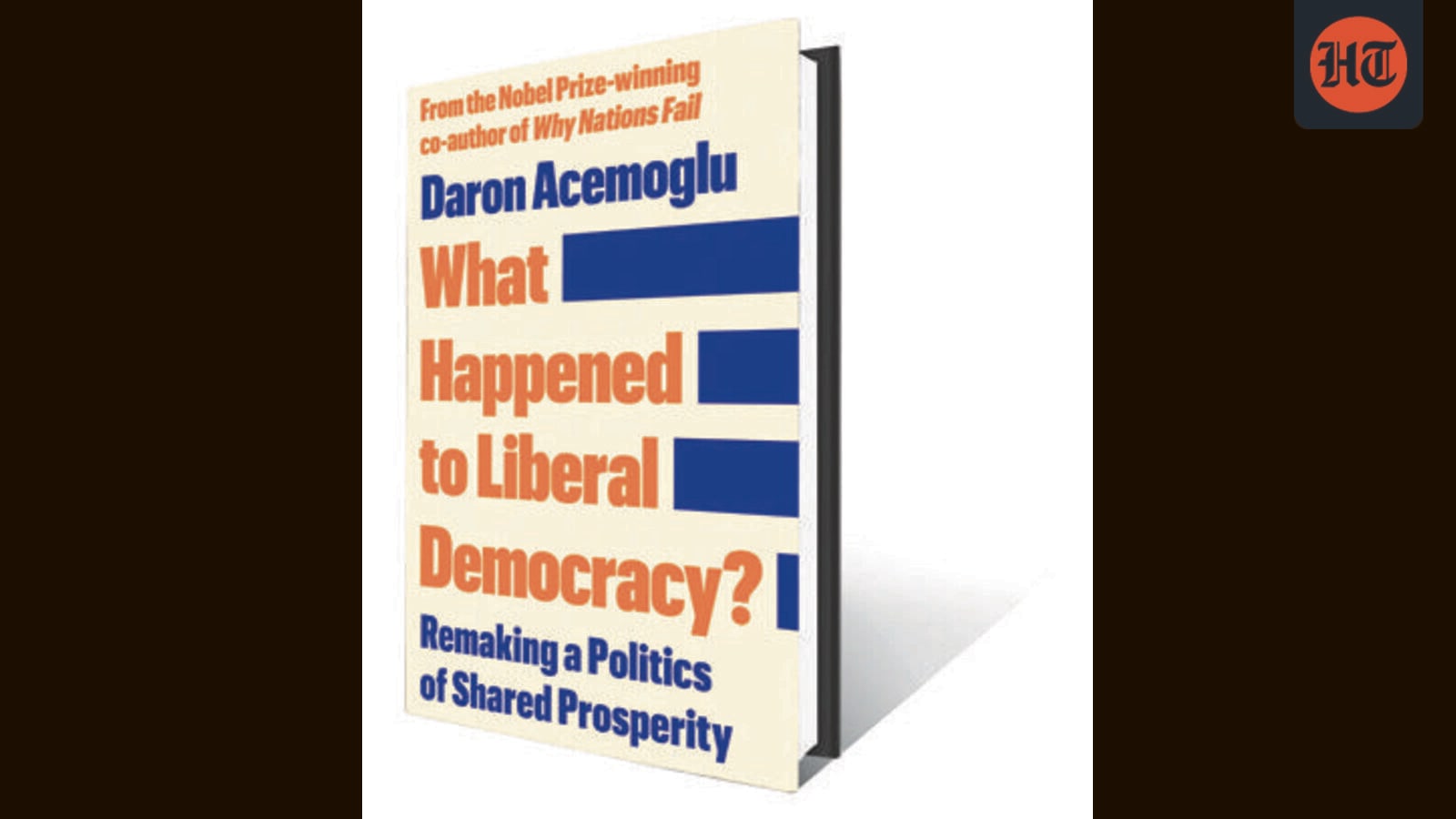
Nobel laureate Daron Acemoglu explores the historical evolution of liberal democracy and its shifting relationship with education. The analysis highlights how early liberal thinkers feared the 'uneducated majority' while failing to foresee the rise of an educated elite.
The Intellectual Roots of Liberal Skepticism
In his latest work, Nobel-winning economist Daron Acemoglu examines the foundational tensions within liberal democracy, specifically focusing on the historical skepticism early thinkers held toward the general populace. Figures such as John Stuart Mill, Voltaire, and Johann Gottlieb Fichte frequently expressed concerns regarding the 'tyranny of the uneducated majority.' For these philosophers, the stability of a democratic state was inextricably linked to the intellectual capacity of its citizenry, leading to arguments that favored giving greater political influence to the educated classes.
The Failure of Foresight
Acemoglu highlights a critical irony in the evolution of liberal thought: while these founding thinkers were deeply preoccupied with the potential dangers posed by an uneducated electorate, they remained largely blind to a different, emerging power dynamic. They could scarcely conceive of a reality where the educated elite would consolidate power so effectively that they would dominate the commanding heights of government, business, and civil society. This historical oversight serves as a lens through which we can view modern political divides.
Education as a Tool of Social Engineering
Central to Acemoglu’s inquiry is the role of education as a mechanism for social engineering. By shifting the focus from mere democratic participation to the credentialing of the ruling class, liberal democracy has inadvertently created a system where political and economic influence is concentrated among those with specific educational backgrounds. This shift has profound implications for the working classes, who may perceive the current democratic structure as an exclusionary system rather than a representative one.
The Shift in Power Dynamics
Historically, the primary concern of liberalism was the constraint of absolute power—specifically that of monarchs, authoritarian leaders, and ultra-wealthy industrialists. However, as Acemoglu suggests, the contemporary struggle is less about constraining singular autocrats and more about addressing the systemic influence of a technocratic elite. The transition from fighting against the 'tyranny of the majority' to navigating the 'rule of the experts' marks a fundamental change in the health and function of liberal institutions.
Future Trends and Democratic Stability
Looking ahead, the tension between the educated elite and the broader public is likely to remain a defining feature of political discourse. If liberal democracy is to regain its footing, it must address the alienation of the working class who feel marginalized by these shifts. Acemoglu’s analysis suggests that without a reconciliation between the governing elite and the populace, the foundational promises of liberalism—equality and inclusive representation—will continue to face significant strain.
Conclusion
Ultimately, Daron Acemoglu’s work challenges us to re-examine the structural flaws inherent in our democratic systems. By tracing the evolution of liberal thought from the fears of the 18th and 19th centuries to the complexities of the 21st, we gain a clearer understanding of why contemporary democracy feels so fractured. Addressing these imbalances requires a sober look at how education and power have intertwined to reshape our modern political landscape.
Verification Required?