Man who used homemade radar as teen helps uncover 600 lost graves in Australia
Source Entity
TOI WORLD DESK
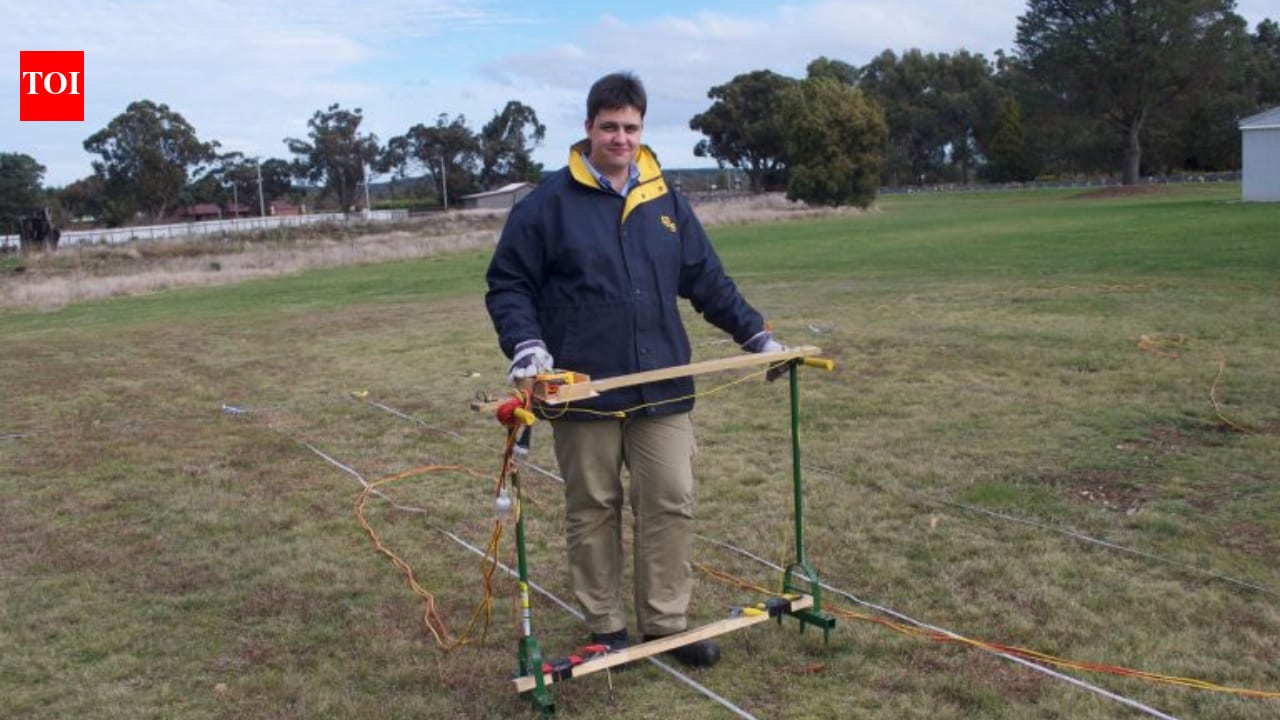
Dave Hunter, known as 'Dave the Grave Hunter,' has utilized ground-penetrating radar to locate 658 unmarked graves in regional New South Wales. This project, commissioned by the Central Darling Shire Council, highlights the importance of preserving historical burial sites through non-invasive technology.
The Evolution of ‘Dave the Grave Hunter’
The story of Dave Hunter, affectionately dubbed 'Dave the Grave Hunter,' is a remarkable intersection of childhood curiosity and professional precision. As a teenager, Hunter constructed a rudimentary radar device to locate buried livestock on his grandfather’s farm. This early experimentation with electromagnetic detection laid the groundwork for his future career, proving that niche technical skills can evolve into essential public services. Today, his company, Hunter Geophysics, stands at the forefront of non-invasive archaeological surveying.
Utilizing Ground-Penetrating Radar
In July 2025, Hunter was contracted by the Central Darling Shire Council to investigate the Menindee and White Cliffs cemeteries in far-west New South Wales. By employing ground-penetrating radar (GPR), Hunter was able to map the subsurface of these historical sites without disturbing the ground. This technology is critical in modern archaeology and site management, as it allows for the identification of burial anomalies while maintaining the physical integrity of the existing cemetery landscape.
Uncovering 658 Unmarked Graves
The successful identification of 658 previously unmarked graves represents a significant achievement in regional heritage management. Many of these sites had been forgotten over time, leaving local councils and families without closure regarding the final resting places of their predecessors. By accurately mapping these locations, Hunter has provided the council with the necessary data to properly recognize and memorialize these individuals, ensuring they are no longer lost to history.
Community Impact and Preservation
The implications of this discovery extend beyond simple surveying; local councils are now actively working to safeguard these findings. There is a strong movement to attach stories and identities to each grave, transforming anonymous plots into historical markers. This effort preserves the cultural fabric of rural Australian communities and acknowledges the contributions of those who were previously overlooked.
Future Trends in Cemetery Management
Following the success of this project, there is a growing interest in applying similar techniques to other areas grappling with identical predicaments. Many regional cemeteries across Australia face the issue of lost records and unmarked burials due to the passage of time and environmental factors. Hunter’s work demonstrates that accessible, non-invasive technology can be a scalable solution for local governments aiming to restore dignity to historical sites and manage public lands more effectively.