Deepam row: Members of Hindu outfits protest, clash with cops as lamp not lit at 'Deepathoon'
Source Entity
ROHITASHWA RANJAN
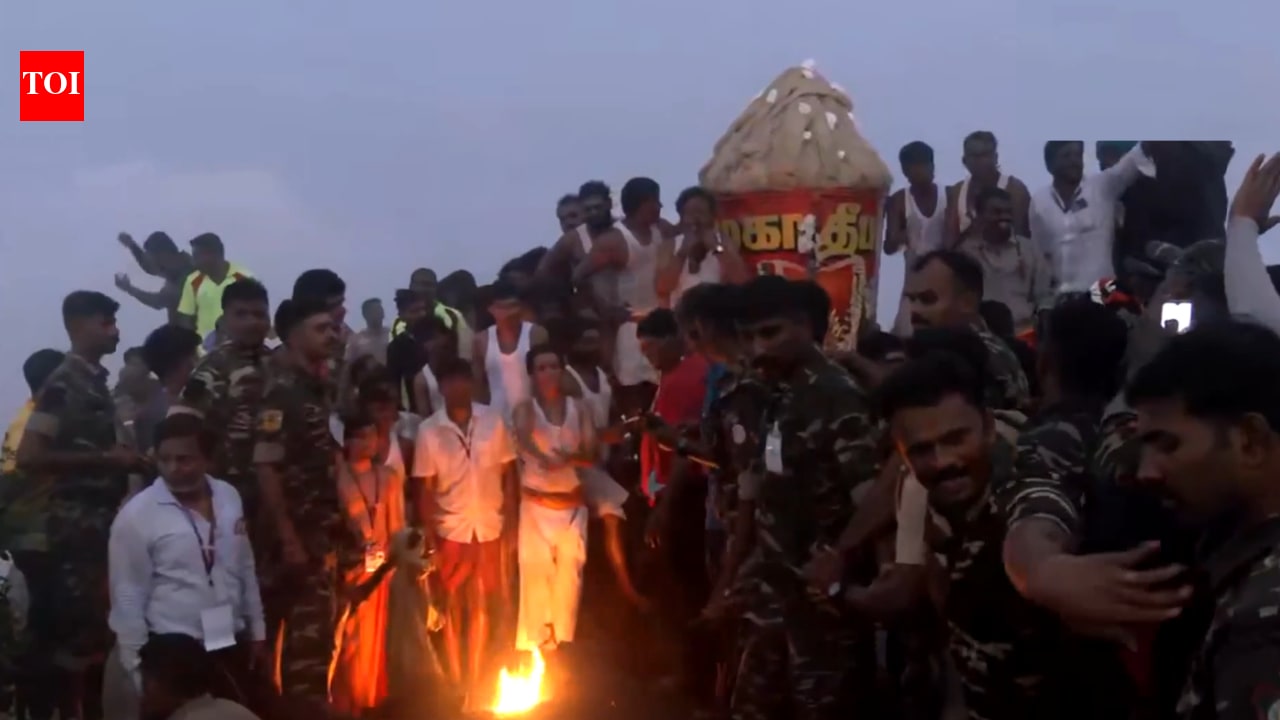
Members of various Hindu organizations staged protests and clashed with police after a traditional lamp remained unlit at a 'Deepathoon' event. The incident highlights rising tensions regarding the observance of religious customs in public spaces.
Tensions Erupt Over Unlit Lamp at Deepathoon
Recent reports indicate a significant confrontation between members of various Hindu outfits and local law enforcement during an event known as 'Deepathoon.' The core of the dispute centers on the failure to light a traditional lamp, an act that holds deep cultural and religious significance within the community. The resulting clash underscores the volatile intersection of public event management and religious sentiment in contemporary India.
The Significance of the Deepam
In Hindu tradition, the lighting of a 'Deepam' or lamp is not merely a ceremonial gesture but a symbolic invocation of divinity, knowledge, and the removal of darkness. When such a ritual is omitted or neglected at a public event, it is often perceived by devotees not as a mere oversight, but as an affront to their cultural heritage. This specific incident at the 'Deepathoon' event became a flashpoint because the participants viewed the unlit lamp as a deliberate disregard for the sanctity of the occasion.
Escalation and Law Enforcement Response
As the situation unfolded, the initial disappointment among attendees rapidly transformed into organized protest. The interaction between the protesters and the police force turned physical, leading to clashes that disrupted the event's proceedings. Such confrontations are often symptomatic of a communication gap between event organizers, who may be focused on logistical execution, and the public, who expect strict adherence to traditional protocols.
Broader Socio-Political Implications
This incident is reflective of a broader trend where religious identity and public expression are increasingly scrutinized. In recent years, public events in India have faced heightened pressure to balance secular administrative requirements with the expectations of religious groups. The clash at the Deepathoon event serves as a reminder that the failure to respect localized customs can quickly mobilize groups, leading to civil unrest and the necessity of police intervention.
Historical Context and Future Trends
Historically, the preservation of ritualistic integrity has been a cornerstone of community identity. As society becomes more digitized and public spaces more contested, the demand for adherence to traditional customs in public forums is likely to grow. Future events may require more robust coordination between organizers and local community leaders to ensure that ritualistic expectations are met, thereby preventing the escalation of minor administrative failures into significant public order issues.
Conclusion
The 'Deepam row' at the Deepathoon event highlights the sensitivity surrounding religious symbols in public spaces. While the immediate conflict was resolved through police intervention, the underlying dissatisfaction remains a point of concern. Moving forward, organizers must prioritize the cultural nuances of their audience to maintain social harmony and ensure that events remain celebratory rather than confrontational.