'Customary practices': TN temple clarifies why deepam was lit at usual spot
Source Entity
ROHITASHWA RANJAN
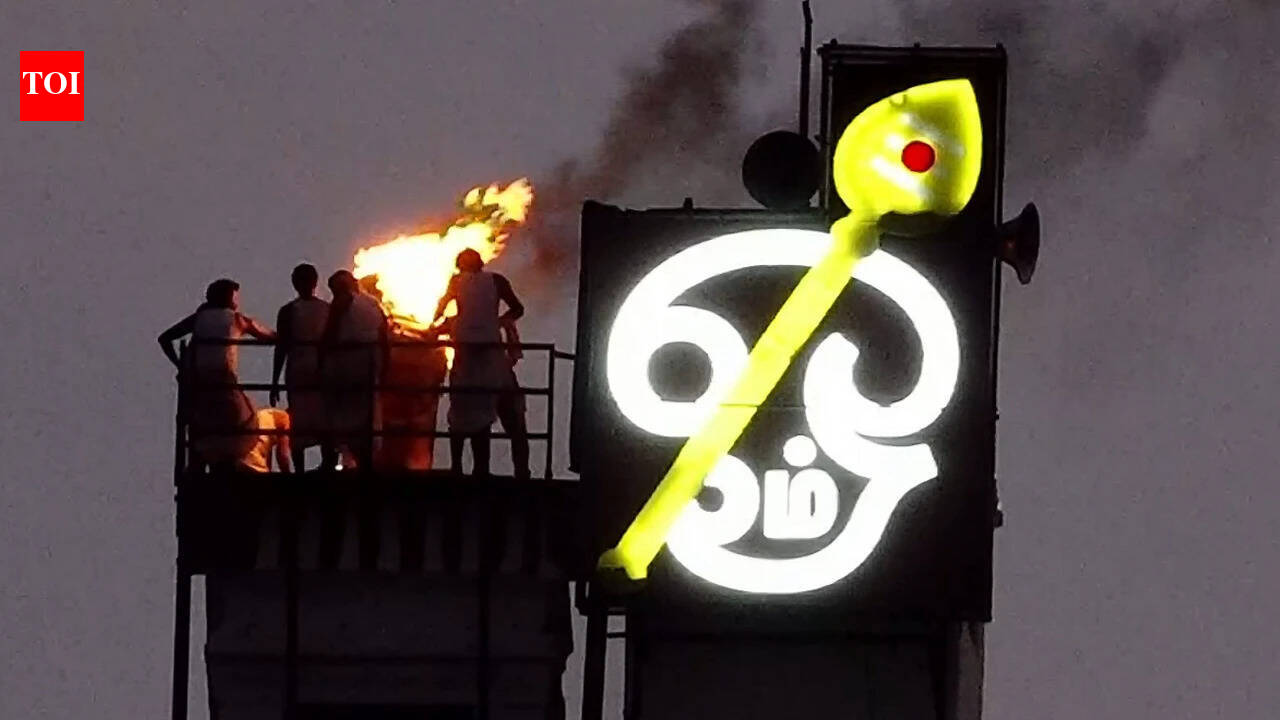
The Karthigai Deepam festival saw a massive celebration at Tiruvannamalai's Arunachaleswarar Temple. Meanwhile, the Thirupparankundram temple faced controversy as authorities opted to light the lamp at the traditional spot despite a Supreme Court order.
The Significance of Karthigai Deepam: A Tale of Two Temples
The Karthigai Deepam festival, a profound cultural and religious event, recently dominated the headlines in Tamil Nadu, manifesting in two distinct ways at the state’s prominent hill temples. In Tiruvannamalai, the Arunachaleswarar Temple served as the epicenter of a massive, peaceful gathering. Thousands of devotees filled the town, chanting 'Arunachaleshwara' as the 'Maha Deepam' was lit atop the Arunachala Hill, marking the culmination of a festival that began on November 15 with traditional flag-hoisting ceremonies.
Tradition vs. Legal Mandates in Thirupparankundram
Contrasting this orderly celebration, the Thirupparankundram temple became the site of a tense legal and political standoff. Despite a Supreme Court directive that permitted the lighting of the lamp at a newly identified 'deepathoon' as a limited, one-time arrangement, the temple authorities chose to uphold the traditional spot. This decision triggered protests by BJP and various Hindu outfits at the foothills, while political allies of the ruling government, such as the VCK and MDMK, supported the adherence to established customs.
The Role of 'Agama' Rules and Administrative Compliance
At the heart of the Thirupparankundram controversy lies the concept of 'Agama' rules, which temple authorities cited as the governing framework for their rituals. The administration, represented by Madurai Collector Nishant Krishna, had initially provided an undertaking to the Madurai Bench of the Madras High Court to comply with the Supreme Court’s order. The subsequent failure to execute this mandate highlights the deep-seated friction between modern judicial intervention and age-old religious protocols in temple administration.
Broader Implications for Temple Management
These events underscore the growing complexity of managing ancient religious sites in modern India. The state government, represented by officials like Minister S. Ramesh and District Collector Vandhana Garg in Tiruvannamalai, remains responsible for balancing the security of massive crowds with the preservation of religious sanctity. The divergence in how these two temples handled their respective rituals suggests that 'tradition' is not merely a static concept but a dynamic, often contested, element of public life.
Future Trends in Religious Governance
Looking forward, the tensions observed in Thirupparankundram are likely to recur as courts increasingly weigh in on the internal management of religious institutions. The push-and-pull between judicial oversight and the autonomy of temple traditions suggests that future festivals will require more robust mediation frameworks. As public interest in these rituals grows, the ability of state administrations to navigate these legal and cultural minefields will become a critical metric for maintaining social order and religious harmony in the region.
Multiple Citing Sources