Errors in mapping: Deepanjana Pal writes on The Odyssey
Source Entity
Latest News: Today's Latest News Headlines from India & World | Hindustan Times | Hindustan Times
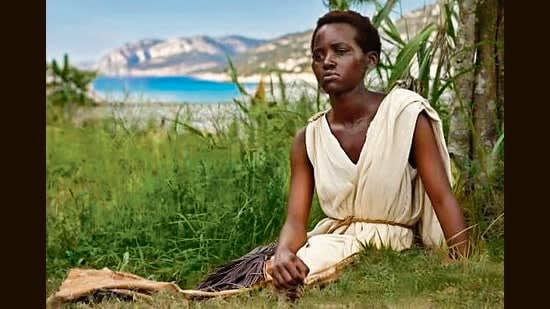
Deepanjana Pal analyzes Christopher Nolan's adaptation of The Odyssey, noting a shift in character depth compared to the original epic. The casting of Lupita Nyong'o as Helen of Troy sparked controversy but is praised for its artistic merit despite the film's portrayal of the character.
A Modern Reimagining of Ancient Epic
Deepanjana Pal’s recent critique of Christopher Nolan’s The Odyssey offers a compelling examination of how classic narratives are translated for contemporary audiences. The film, which opens with a performance by Travis Scott as the bard, attempts to bridge the gap between ancient Greek mythology and modern aesthetic sensibilities. By summarizing the Iliad through the lens of a rap performance, Nolan establishes a rhythmic, high-energy entry point into the sequel, The Odyssey, setting a tone that is both ambitious and stylistically distinct.
The Portrayal of Helen of Troy
Central to the discourse is the portrayal of Helen of Troy, played by Lupita Nyong’o. Pal argues that while Nyong’o delivers a performance that does not falter, the character itself suffers from a lack of the inherent strength found in Homer’s original text. In this modern retelling, Helen is depicted as fear-struck and apologetic, a stark departure from the complex, often formidable figure of the ancient epic. This creative choice raises questions about why modern adaptations sometimes dilute the agency of historical female figures.
Navigating the Digital Backlash
The casting of Lupita Nyong’o as Helen of Troy served as a lightning rod for controversy, particularly among conservative internet factions. The backlash, characterized by online trolling, underscores a broader cultural tension regarding the casting of Black actors in historically Eurocentric roles. Pal notes that these reactions were rooted in narrow-minded resistance to diversity, ignoring the artistic choice to prioritize talent and narrative relevance over antiquated casting tropes.
The Bard and the Narrative Framework
Travis Scott’s role as the bard is a pivotal narrative device, acting as a bridge between the Iliad and the Odyssey. By condensing the Iliad into a series of punchy, rhythmic phrases—“A face, a fleet, a war, a man, a thought, a trick”—Nolan provides the audience with a necessary roadmap. This stylistic choice emphasizes the oral tradition of epic poetry, acknowledging the power of the storyteller in shaping how we perceive historical and mythological events.
The Evolution of Epic Storytelling
Ultimately, Pal’s critique highlights a fundamental challenge in adapting ancient epics: the tension between honoring the original source material and crafting a narrative that resonates with modern sensibilities. While the casting of Nyong’o is lauded as an inspired choice, the film’s decision to soften the character of Helen suggests that modern storytellers may still struggle to reconcile ancient archetypes with contemporary values. This analysis invites viewers to consider the balance between legacy and innovation in cinema.
Conclusion
Christopher Nolan’s The Odyssey serves as a case study for the complexities of modern adaptation. By blending the ancient with the contemporary, the film invites both acclaim and criticism. Whether through the lens of character development or the politics of casting, Pal’s reflection reminds us that the stories we choose to tell—and how we choose to tell them—are deeply reflective of the world we inhabit today.
Verification Required?