In pictures: Smog blankets Indian cities after Deepavali as firecrackers push air quality to ‘severe’
Source Entity
India Latest News: Top National Headlines Today & Breaking News | The Hindu
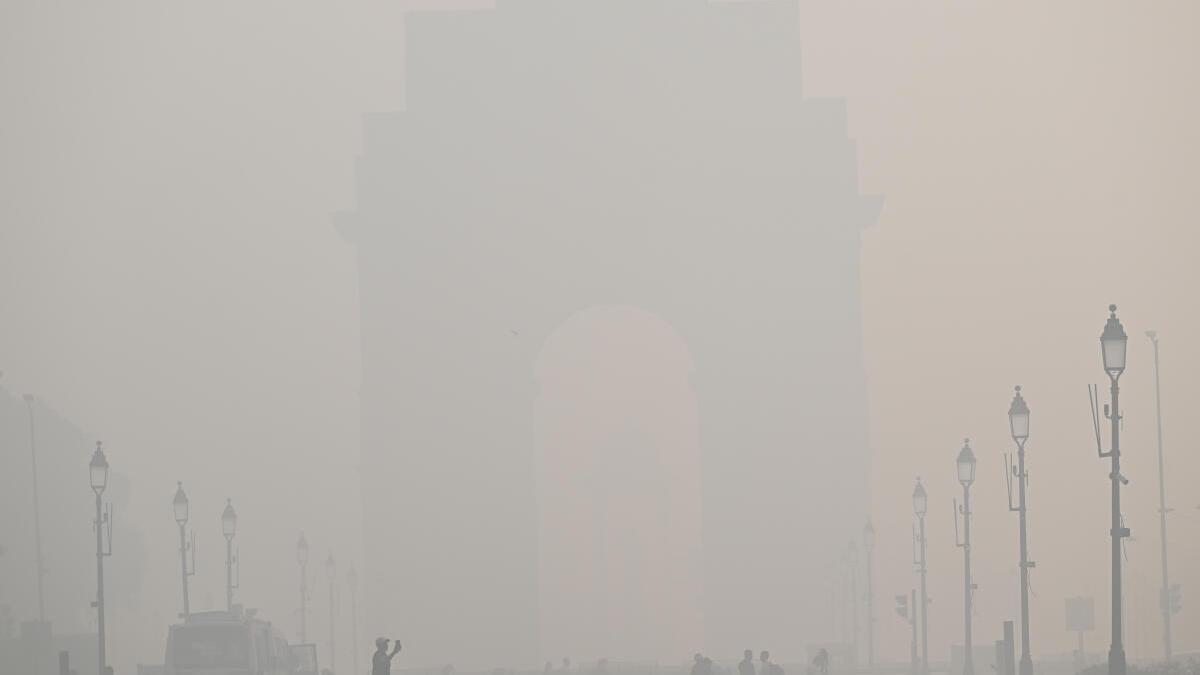
Delhi's air quality has plummeted to an overall AQI of 383 on Diwali morning, with nearly half of the city's monitoring stations recording 'severe' pollution levels. The toxic haze is largely attributed to firecracker usage, with experts warning that conditions are expected to remain critical through November 9.
Delhi's Annual Battle with Toxic Air
As Delhi celebrates the festival of Diwali, the national capital has once again found itself enveloped in a thick, toxic blanket of smog. Data provided by the Central Pollution Control Board (CPCB) confirms that the overall Air Quality Index (AQI) reached 383 on the morning of November 8. This reading places the city precariously close to the 'severe' category, which begins at an AQI of 401, signaling a major environmental and public health crisis for millions of residents.
The Geography of Pollution
The distribution of pollutants across the city reveals a widespread crisis rather than localized incidents. With 54 monitoring stations active across the capital, the severity of the air quality is stark: 24 of these stations have already crossed into the 'severe' classification. Jahangirpuri leads the list with a critical AQI of 450, followed closely by Punjabi Bagh at 449, R K Puram at 448, Bawana at 446, and IIT Delhi at 445. Even areas like India Gate, which remained in the 'very poor' category, recorded an AQI of 398, illustrating that no part of the city is currently spared from the hazardous atmospheric conditions.
The Impact of Festive Traditions
The timing of this spike is directly linked to the widespread use of firecrackers on the eve of Diwali. Despite various regulatory warnings and awareness campaigns, the combustion of firecrackers has significantly contributed to the rapid deterioration of air quality. This human-made pollution compounds existing seasonal factors, turning the festive period into a period of extreme respiratory risk for the city's population, including vulnerable groups such as children, the elderly, and those with pre-existing health conditions.
Analyzing the Air Quality Trend
Prior to the current spike, Delhi had seen marginal fluctuations in air quality, with the AQI moving from 382 on Friday to 369 on Saturday. While this slight improvement offered a brief respite, it failed to provide a sufficient buffer against the massive influx of pollutants caused by festive activities. The failure to maintain a downward trend underscores the difficulty of managing air quality during the winter months, where stagnant meteorological conditions trap particulate matter close to the ground.
Future Outlook and Expert Projections
Looking ahead, the outlook remains bleak. According to the Air Quality Early Warning System (EWS) for Delhi, the city is expected to remain in the 'severe' category through November 8 and 9. This forecast suggests that the current smog layer will persist, potentially impacting visibility and health for several days post-celebrations. The data clearly indicates that without significant intervention or a change in environmental conditions, the population will continue to struggle with hazardous air quality levels that far exceed safe international standards.
Multiple Citing Sources
Verification Required?