NEET leak protest: Vandalism and arson reported in Bihar; Tejashwi alleges police fired AK-47s at students
Source Entity
Himanshu Harsh
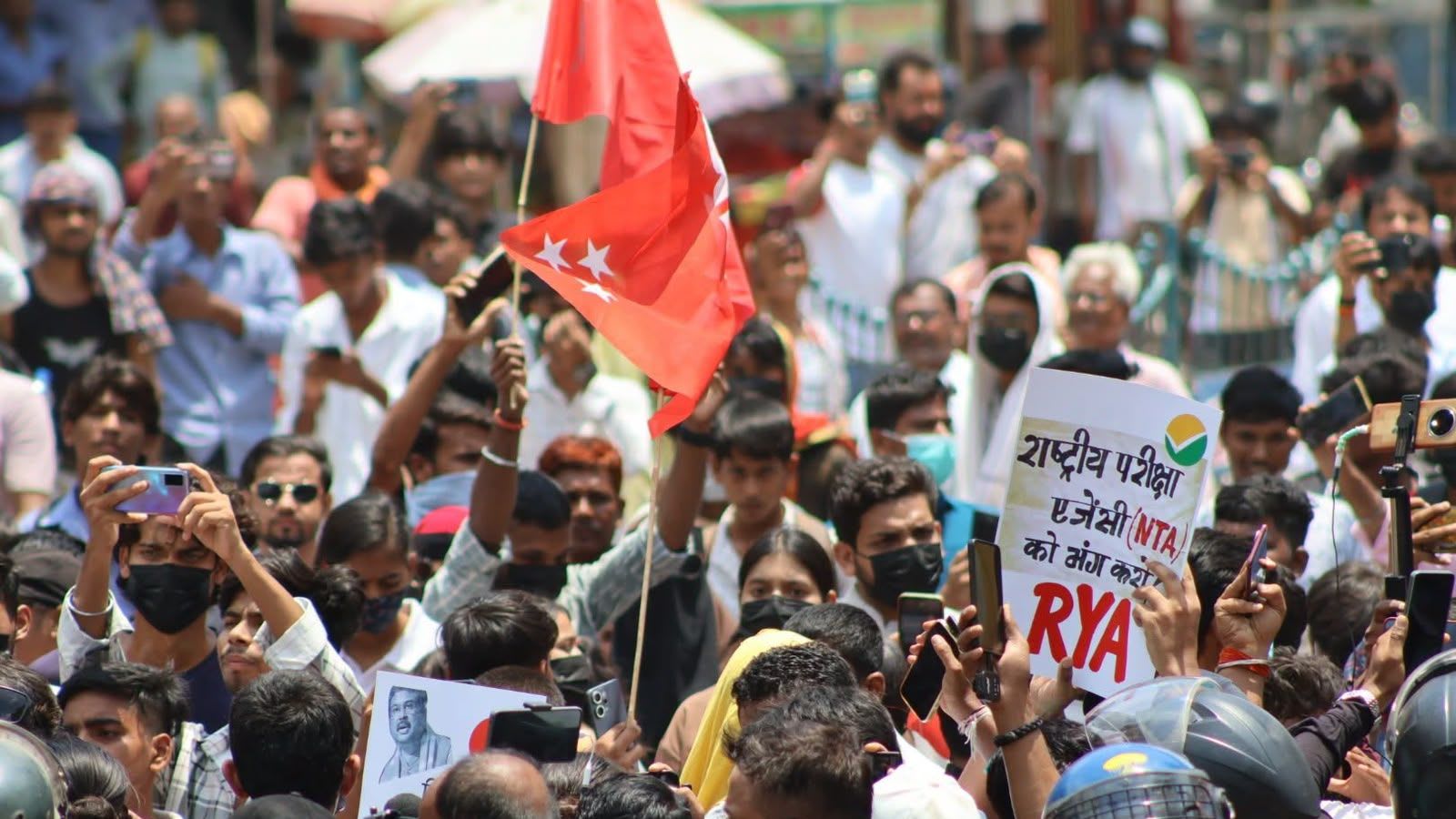
The Delhi High Court has dismissed a PIL seeking an NIA investigation into the Cockroach Janta Party's 'Chalo Sansad' protest. The bench ruled that law enforcement authorities are already empowered to handle the incident, leading the petitioner to withdraw the plea.
Delhi High Court Dismisses Plea for NIA Probe into CJP Protest
On July 24, 2026, the Delhi High Court issued a significant ruling regarding the 'Chalo Sansad' march organized by the Cockroach Janta Party (CJP). The march, which aimed to protest the NEET-UG paper leak and related systemic issues, saw significant unrest and allegations of violence. The court, presided over by Chief Justice D. K. Upadhyaya and Justice Tejas Karia, ultimately refused to entertain a Public Interest Litigation (PIL) that sought to transfer the investigation of these events to the National Investigation Agency (NIA) or another specialized agency.
Judicial Restraint and Institutional Jurisdiction
The court’s decision was rooted in the principle of judicial restraint. The Bench clearly articulated that the determination of whether a case warrants an investigation by the NIA—a specialized counter-terrorism body—is a prerogative of the Central government, not the judiciary. By emphasizing that the authorities were already aware of the alleged vandalism, the court signaled that the existing legal framework is sufficient to address the situation. This underscores the judiciary's role in maintaining the separation of powers, ensuring that investigative mandates remain within the executive domain unless specific constitutional mandates are breached.
Contextualizing the 'Chalo Sansad' March
The protest, which took place on July 20, was a flashpoint for tensions surrounding the NEET-UG examination controversy. The march from Jantar Mantar to Parliament House led to chaotic scenes, including reports of police lathi charges and counter-allegations of vandalism by protesters. The legal proceedings surrounding this event have been multifaceted; while this specific PIL sought a high-level NIA probe, the court has simultaneously been addressing separate petitions concerning alleged police excesses during the demonstrations.
The Role of Existing Law Enforcement
The Delhi High Court’s stance suggests a preference for standard investigative procedures over the escalation to federal terror-investigation agencies. By noting that the incidents were already under the notice of local authorities, the court implies that the Delhi Police and other relevant state entities are expected to fulfill their statutory obligations. This approach ensures that protests, even those involving significant public disorder, are handled through established criminal justice channels rather than being automatically classified under the jurisdiction of specialized anti-terror agencies.
Broader Implications for Student Agitation
The dismissal of the PIL serves as a critical indicator of how the judiciary handles politically charged student movements. By declining to intervene in the investigative path, the court reinforces the necessity for the state to balance public order with the right to protest. The ongoing scrutiny of both the vandalism and the alleged police conduct highlights the complexity of managing large-scale demonstrations in the capital. As the court continues to oversee related matters, such as the potential formation of a Special Investigation Team (SIT), the legal trajectory will likely focus on accountability for both protesters and law enforcement.
Conclusion
In conclusion, the withdrawal of the PIL following the court’s observations marks a pivotal moment in the legal aftermath of the July 20 protests. The outcome reaffirms the court’s position that the executive branch must take the lead in investigative decisions. As the situation evolves, the focus remains on whether local law enforcement can address the grievances and the alleged violence in a manner that upholds the rule of law while respecting the democratic right to assembly.
Multiple Citing Sources