Delhi HC to hear petition seeking NIA probe into CJP protest violence: ‘So-called student agitation…’
Source Entity
Latest News: Todays Latest News Headlines from India & World | Hindustan Times | Hindustan Times
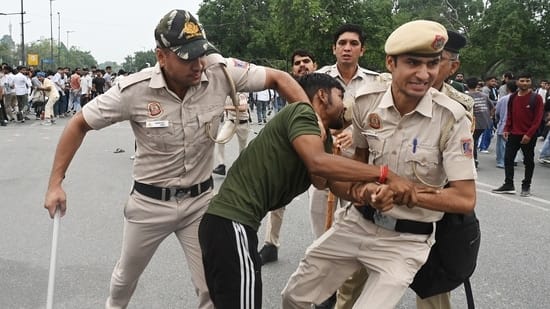
The Delhi High Court has dismissed petitions seeking an NIA or CBI probe into the July 20 'Chalo Sansad' protest march organized by the Cockroach Janata Party. While the court previously expressed concern over the violence and police conduct, it ultimately declined to intervene in the investigation.
Judicial Scrutiny of the July 20 Protest Violence
The Delhi High Court has recently navigated a complex legal landscape regarding the July 20 'Chalo Sansad' protest march organized by the Cockroach Janata Party (CJP). The protest, which began at Jantar Mantar and aimed to reach Parliament House, was centered on grievances surrounding the alleged NEET examination paper leak. The ensuing unrest, characterized by reports of police lathi charges and violent clashes, prompted various legal petitions seeking an independent investigation by the National Investigation Agency (NIA) or the Central Bureau of Investigation (CBI).
The Legal Tug-of-War
The judicial response to these petitions was multifaceted. Initially, the court acknowledged the gravity of the situation, noting that the incident at Jantar Mantar was not an 'isolated' event, and subsequently issued notices to the Centre and the Delhi Police. These notices sought responses regarding allegations of police excesses during the demonstrations. This judicial oversight highlighted a growing concern regarding the management of public order and the rights of demonstrators in the national capital.
Dismissal of External Agency Probes
Despite the initial engagement with the petitions, the Delhi High Court eventually reached a decisive conclusion. The bench refused to entertain the Public Interest Litigations (PILs) that sought to transfer the investigation to central agencies like the NIA or CBI. The court reasoned that local authorities are already aware of the incident and possess the mandate to take necessary action if required. Consequently, the plea for an NIA probe was dismissed as withdrawn, signaling the court's preference for existing institutional mechanisms over federal agency intervention.
Contextualizing the NEET Fallout
The protest march serves as a significant inflection point in the ongoing fallout from the NEET examination controversies. The CJP has maintained a firm stance in its negotiations with the Central government, with the resignation of the Union Education Minister cited as a non-negotiable demand. This political friction underscores the broader societal tension regarding educational integrity and the accountability of government officials in the wake of examination irregularities.
Future Implications and Institutional Stance
The court's decision to dismiss the petitions reflects a judicial philosophy that favors administrative autonomy in law enforcement, provided that authorities act within the bounds of the law. By declining to appoint an external investigative body, the court has placed the onus back on the Delhi Police and the administrative machinery to resolve the aftermath of the July 20 violence. As the CJP continues its dialogue with the Centre, the resolution of these protests will likely hinge on the government's ability to address the core demands of the students while managing the volatile political climate created by the NEET paper leak allegations.
Verification Required?