Jantar Mantar: From astronomical observatory to landmark protest site
Source Entity
India Latest News: Top National Headlines Today & Breaking News | The Hindu
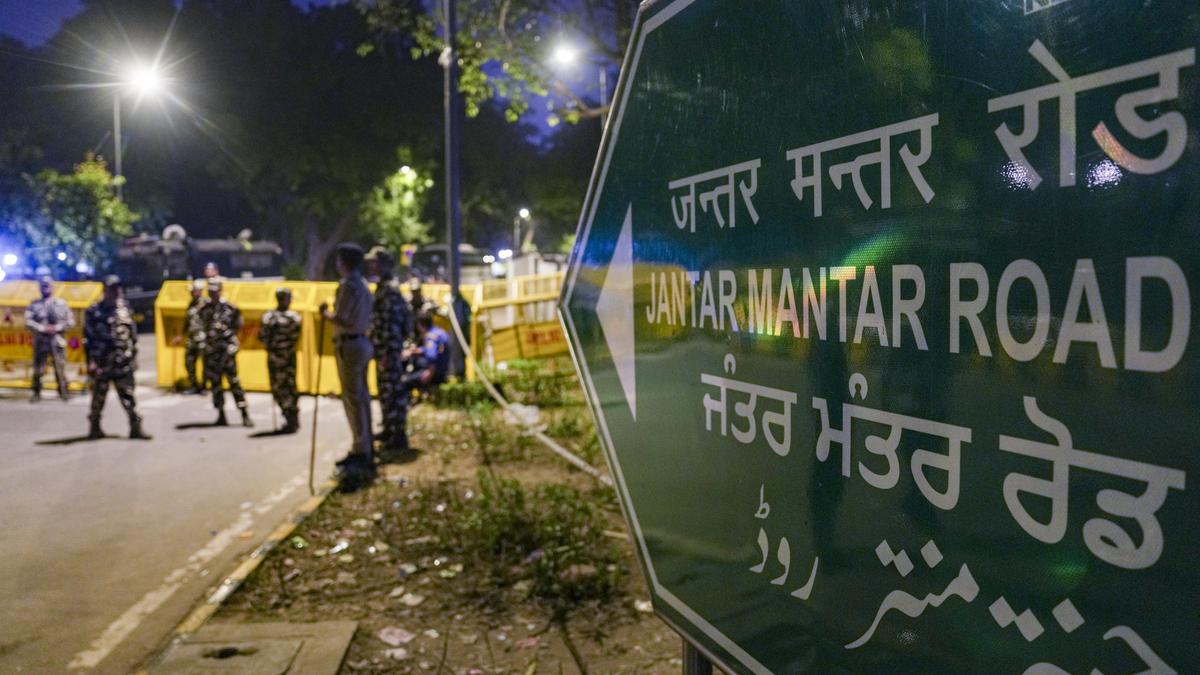
The Delhi High Court is reviewing a challenge against the closure of Jantar Mantar as a protest site. The MHA has officially de-notified the location, designating Ramlila Ground, Burari Ground, and CBD Ground as replacements.
The Closure of Jantar Mantar: A Shift in Delhi’s Protest Landscape
On October 12, 2026, a significant shift occurred in the administrative management of public dissent in India's capital. The Ministry of Home Affairs (MHA), acting upon recommendations from a specially constituted committee, officially de-notified Jantar Mantar as a designated site for protests and demonstrations. In its place, the authorities have designated three new venues: the Ramlila Ground in Central Delhi, the Burari Ground in North Delhi, and the CBD Ground in East Delhi. This decision marks the end of an era for a site that has long served as the symbolic heartbeat of civil society activism in New Delhi.
Legal Challenges and Judicial Oversight
The transition has not been without immediate legal pushback. On the day of the announcement, a lawyer moved the Delhi High Court, seeking an urgent hearing to challenge the closure. The petitioner argued that the restriction effectively quells peaceful protests by failing to provide a suitable, accessible alternative. A Bench comprising Acting Chief Justice Nitin Wasudeo Sambre and Justice Sanjay Sharma declined an immediate Monday hearing, noting that the Supreme Court is already seized of the broader matter regarding protest regulations. The High Court has scheduled the hearing for October 13, 2026, signaling a tense judicial review of the executive order.
Concerns Over Security and Civil Liberties
Beyond the logistical change of venue, the court is also set to address allegations of misconduct at recent protests. A separate petition to be heard on October 13 highlights claims that "outsiders" infiltrated a weekend demonstration at Jantar Mantar, allegedly harassing participants. This intersection of venue management and security concerns underscores the complexity of regulating public assembly in a high-security urban environment. Critics suggest that the relocation to more peripheral grounds, such as Burari, may dilute the impact of demonstrations by distancing them from the centers of power.
The Role of Digital Activism
Interestingly, the timing of this policy shift follows increased activity from groups like the Cockroach Janta Party (CJP), a social media entity that evolved into a pressure group. The emergence of such groups suggests that the methods of mobilization are changing, even as the physical spaces for dissent are being constricted. The government’s reliance on a committee to select new sites reflects an attempt to formalize and perhaps contain protest activities within designated zones, balancing public order with the constitutional right to assemble.
Broader Implications for Dissent
The move away from Jantar Mantar raises fundamental questions about the nature of democracy in a modern metropolitan setting. Historically, Jantar Mantar’s proximity to Parliament and government ministries made it an ideal location for protesters to ensure their voices were heard by policymakers. By shifting these activities to sites like the CBD Ground or Burari, the authorities are fundamentally altering the visibility of civil grievances. Whether these new sites will prove effective for demonstrators or merely serve to marginalize dissent remains a critical point of contention that will likely dominate legal and public discourse in the coming months.
Future Trends and Judicial Precedent
As the Delhi High Court and Supreme Court continue to deliberate, the outcome will likely set a lasting precedent for how Indian cities balance urban planning with the fundamental right to protest. The upcoming hearings will be instrumental in determining if the government’s "designated site" policy is viewed as a reasonable restriction in the interest of public order or an overreach that infringes upon the democratic process. The legal community and civil society will be watching closely to see if the judiciary requires the state to ensure that new venues are as accessible and impactful as the one they are replacing.
Multiple Citing Sources
Verification Required?