'Ready to contest on ballot paper': Himanta lobs dare at Cong but with a big rider
Source Entity
TRISHA MAHAJAN
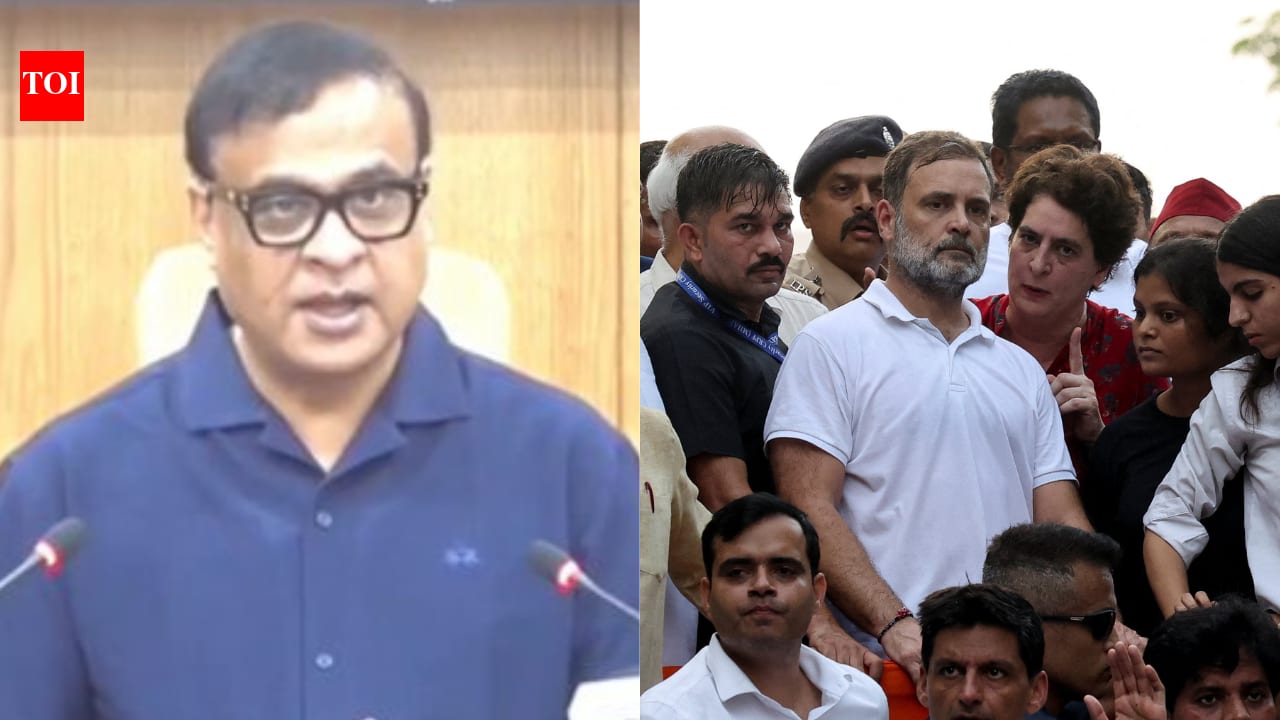
Assam Chief Minister Himanta Biswa Sarma has challenged the Congress party to return to ballot paper voting. However, he conditioned this demand on the resignation of Congress-led governments in Kerala, Karnataka, and Telangana.
The Ballot Paper Debate: A High-Stakes Political Maneuver
Assam Chief Minister Himanta Biswa Sarma has ignited a fresh political firestorm by challenging the Indian National Congress to abandon Electronic Voting Machines (EVMs) in favor of traditional ballot papers. This demand, while framed as a call for electoral transparency, serves as a strategic counter-offensive against ongoing criticisms from the opposition regarding the integrity of the current digital voting infrastructure. By centering the debate on the mechanics of voting, Sarma is attempting to shift the narrative from technical skepticism to a broader test of political consistency.
The Conditional Ultimatum
The core of Sarma’s challenge is not merely a theoretical preference for paper ballots but a highly specific political ultimatum. He has explicitly stated that for the Congress party to prove its sincerity regarding the demand for ballot papers, it must first dissolve its own state administrations in Kerala, Karnataka, and Telangana. This "big rider" functions as a litmus test, aimed at exposing what the BJP perceives as hypocrisy—where the opposition questions the legitimacy of the system only when they lose, while accepting the results in states where they maintain power.
Electoral Integrity and Political Strategy
Historically, the debate over ballot papers versus EVMs has been a recurring theme in Indian electoral discourse. While the Election Commission of India (ECI) has consistently maintained the robustness and security of EVMs, political parties often invoke the "ballot paper" argument as a rallying cry during election cycles. Sarma’s intervention is significant because it links the national discourse on electoral reform to the stability of regional Congress-led governments, effectively raising the stakes for the opposition leadership.
Analyzing the Regional Impact
By targeting Kerala, Karnataka, and Telangana, Sarma is focusing on key strongholds where the Congress party currently holds executive power. These states represent critical hubs of political influence for the opposition. By demanding the resignation of these governments, Sarma is not only questioning the electoral mandate through which they were elected but is also challenging the Congress party to put its own political future on the line for a cause it frequently champions on the national stage.
Broader Implications for Indian Democracy
This exchange highlights the deep-seated polarization regarding the technical aspects of the Indian democratic process. As the discourse evolves, it is likely that political parties will continue to leverage electoral mechanics to score points. The demand for a return to ballot papers is often seen as a symbolic rejection of modern technology, and Sarma’s counter-demand serves to highlight the practical impossibility of such a shift without significant political upheaval at the state level.
Conclusion: A Strategic Standoff
Ultimately, Himanta Biswa Sarma’s dare is a calculated move designed to force the Congress party into a defensive position. By attaching the resignation of state governments to the ballot paper issue, he has effectively neutralized the opposition’s narrative, turning the debate into a question of political credibility. As the political climate remains intense, this standoff serves as a reminder of how electoral technicalities are inextricably linked to the broader power struggles defining contemporary Indian politics.