Delhi introduces single-machine: ‘Spray, Injection, Patching’ method to repair potholes under 5 minutes
Source Entity
Gayathri Mani
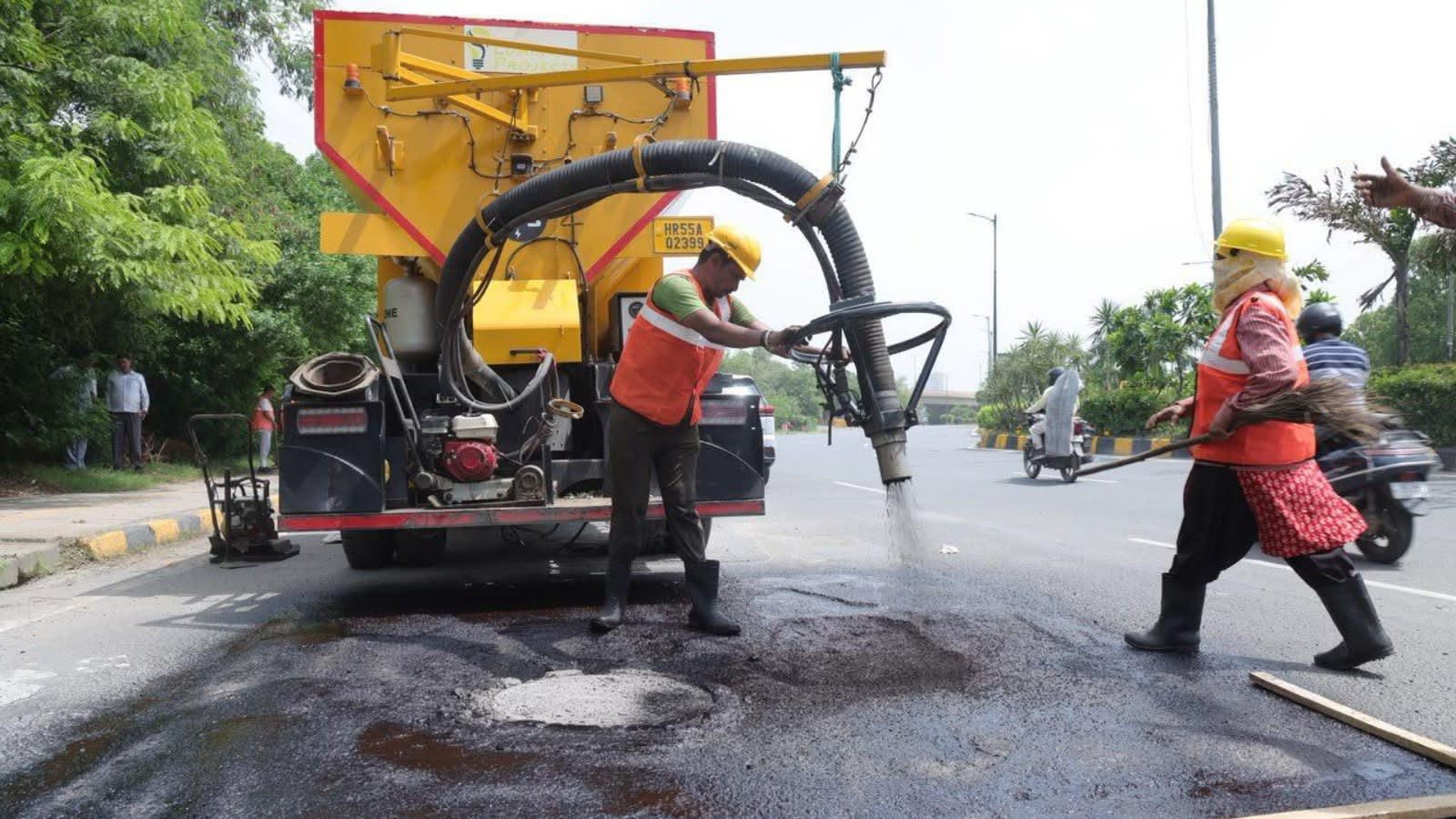
The Delhi government has introduced a new 'Spray, Injection, Patching' single-machine technology capable of repairing potholes, edge breaks, and utility cuts in under five minutes, significantly reducing road repair time and traffic disruption.
Revolutionizing Urban Infrastructure: Delhi's Rapid Pothole Repair Initiative
In a significant move to combat the perennial issue of road degradation, the Delhi government has introduced a cutting-edge 'Spray, Injection, Patching' method. This technological intervention utilizes a specialized single machine designed to address potholes, edge breaks, utility cuts, and wide cracks in under five minutes. By streamlining the repair process into a single mechanical operation, the city aims to mitigate the risks associated with road hazards while drastically reducing the downtime typically required for asphalt maintenance.
Technical Evolution: From Traditional Patching to Integrated Systems
Historically, pothole repair in major Indian metros has relied on manual labor and traditional 'cold-mix' or 'hot-mix' asphalt patching. These methods often involve multiple stages—cleaning the hole, filling it, and compacting it—which can take hours to set and often result in uneven surfaces that fail shortly after the first monsoon. The new 'Spray, Injection, Patching' technology represents a paradigm shift by integrating these steps into one machine. This integrated approach likely utilizes high-pressure injection and rapid-setting materials to ensure a seamless bond with the existing road surface, providing a more durable and structurally sound repair than manual filling.
Impact on Urban Mobility and Public Safety
One of the most critical aspects of this deployment is the 'under five minutes' turnaround time. In a city like Delhi, where traffic congestion is a primary economic and psychological stressor, traditional roadwork often leads to massive bottlenecks and secondary accidents. By reducing the repair window to minutes, the government can perform 'surgical' maintenance without necessitating long-term lane closures. Furthermore, the ability to quickly address 'edge breaks' and 'utility cuts'—which are often overlooked until they become major potholes—prevents the exponential degradation of the road network, thereby enhancing overall commuter safety.
Addressing Diverse Road Failures
The versatility of the machine is a key highlight of the announcement. Unlike standard patchers that only handle circular holes, this technology is specifically cited for its effectiveness against utility cuts and wide cracks. Utility cuts are particularly problematic in Delhi, where frequent digging for fiber optics or water pipes leaves scarred road surfaces that are prone to water seepage. By using a specialized injection method, the machine can seal these linear gaps more effectively, preventing water from penetrating the sub-base of the road, which is the root cause of most structural road failures in tropical climates.
Broader Implications for Smart City Governance
This initiative reflects a broader trend toward the 'technocratization' of urban governance in India. By shifting from labor-intensive, low-efficiency methods to machine-driven precision, the Delhi government is attempting to institutionalize a more proactive maintenance cycle. If successful, this model could serve as a blueprint for other municipal corporations across India struggling with monsoon-related road damage. The transition toward such technology suggests a future where road maintenance is data-driven and rapid, moving away from the seasonal 'patch-and-pray' approach toward a more sustainable infrastructure lifecycle.
Conclusion and Future Outlook
While the introduction of the 'Spray, Injection, Patching' machine is a promising leap forward, its long-term success will depend on the scale of deployment and the quality of the materials used in the injection process. If the government can maintain a fleet of these machines across all districts, Delhi could see a marked decrease in road-related accidents and traffic delays. This move signals a critical understanding that in a modern mega-city, the speed of repair is just as important as the quality of the repair itself, marking a new chapter in Delhi's approach to urban resilience.