Another rainy day, same story: Delhi sees huge waterlogging; schools, shops hit
Source Entity
Sophiya Mathew, Mishal Mussaddique
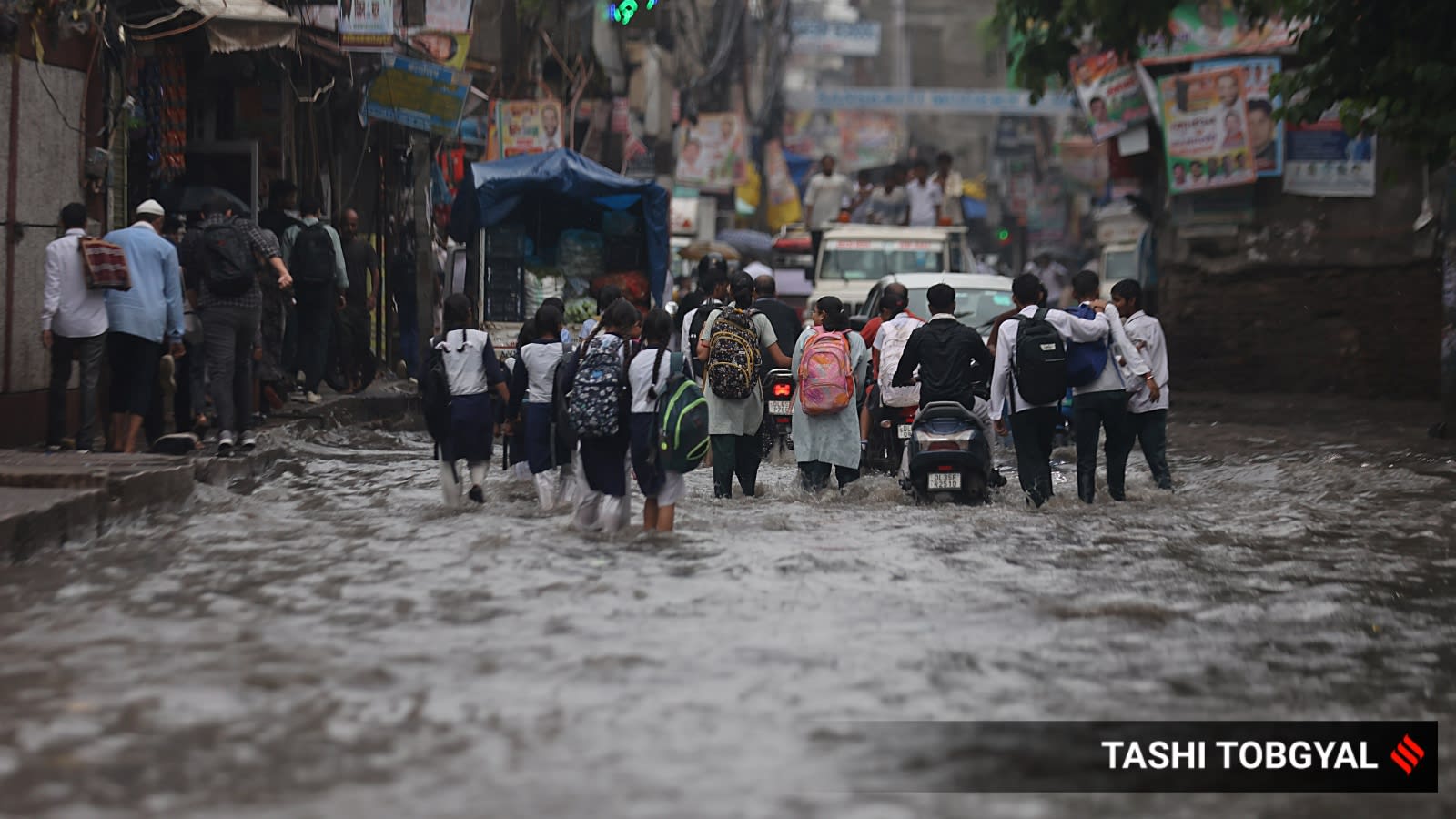
Delhi-NCR faces severe disruption following back-to-back days of heavy rainfall, forcing schools to close and offices to shift to remote work. Widespread waterlogging has reignited public criticism regarding the adequacy of civic infrastructure and urban drainage management.
The Crisis of Urban Resilience in Delhi-NCR
Recent heavy rainfall across the Delhi-National Capital Region (NCR) has once again exposed the fragile state of urban infrastructure in one of India’s most significant economic hubs. Following consecutive days of intense precipitation, the region has been paralyzed by widespread waterlogging, forcing authorities to pivot toward remote work for corporate offices and online learning for schools. This reactive measure underscores a recurring inability to manage extreme weather events that have become increasingly common in the region.
The Human and Educational Cost
The impact on the education sector has been particularly distressing. In areas like Sangam Vihar, scenes of schoolgirls navigating waist-deep murky water to reach their destinations highlight the severe safety risks posed by poor drainage. At the Municipal Corporation of Delhi (MCD) primary school in Deoli, the situation forced an abrupt cancellation of classes for 800 students. When infrastructure fails to keep pace with weather patterns, it is the most vulnerable populations—and specifically children—who bear the immediate brunt of the disruption.
Infrastructure Under Fire
The frustration expressed by local residents and business leaders is palpable. Dr. Shivin Chaudhary, a Gurgaon-based founder, recently gained attention for documenting the flooding outside his home, sarcastically labeling it the "Venice experience." His critique touches on a deeper systemic issue: the disconnect between the taxes paid by residents and the quality of civic services received. When basic mobility is compromised after merely an hour of rain, it raises legitimate questions about the efficiency of current urban planning and the maintenance of drainage systems.
Economic Implications and Migration
For a hub like Gurgaon, which hosts numerous multinational corporations and startups, the constant threat of urban flooding is more than just an inconvenience—it is a business risk. The sentiment expressed by local entrepreneurs regarding the potential for relocating operations abroad reflects a growing frustration with the "cost of living" in a city where time is lost to gridlocked, waterlogged roads. If the basic operating environment remains unstable, the region risks losing the human capital that drives its economic growth.
A Pattern of Recurrence
Perhaps the most concerning aspect of this event is that it is not an isolated incident. Residents across Delhi-NCR faced similar flooding conditions just weeks earlier, suggesting that current efforts by civic agencies—primarily focused on reactive drainage clearing and urgent road restoration—are insufficient to address the scale of the problem. Without a long-term, structural overhaul of the city’s drainage network, the region appears trapped in a cycle of recurring crises that hinder daily life and economic productivity alike.
Looking Toward Sustainable Urbanism
Moving forward, the Delhi-NCR region requires a paradigm shift from emergency management to proactive climate-resilient infrastructure. The current reliance on shifting to online modes of work and education serves as a temporary stopgap but does not solve the underlying engineering failures. To remain a competitive and livable urban center, civic authorities must prioritize sustainable drainage solutions and integrated urban planning that can withstand the increasing volatility of seasonal monsoons.