Government cracks down on Cockroach Janta Party protest in Delhi, net snapped
Source Entity
India Latest News: Top National Headlines Today & Breaking News | The Hindu
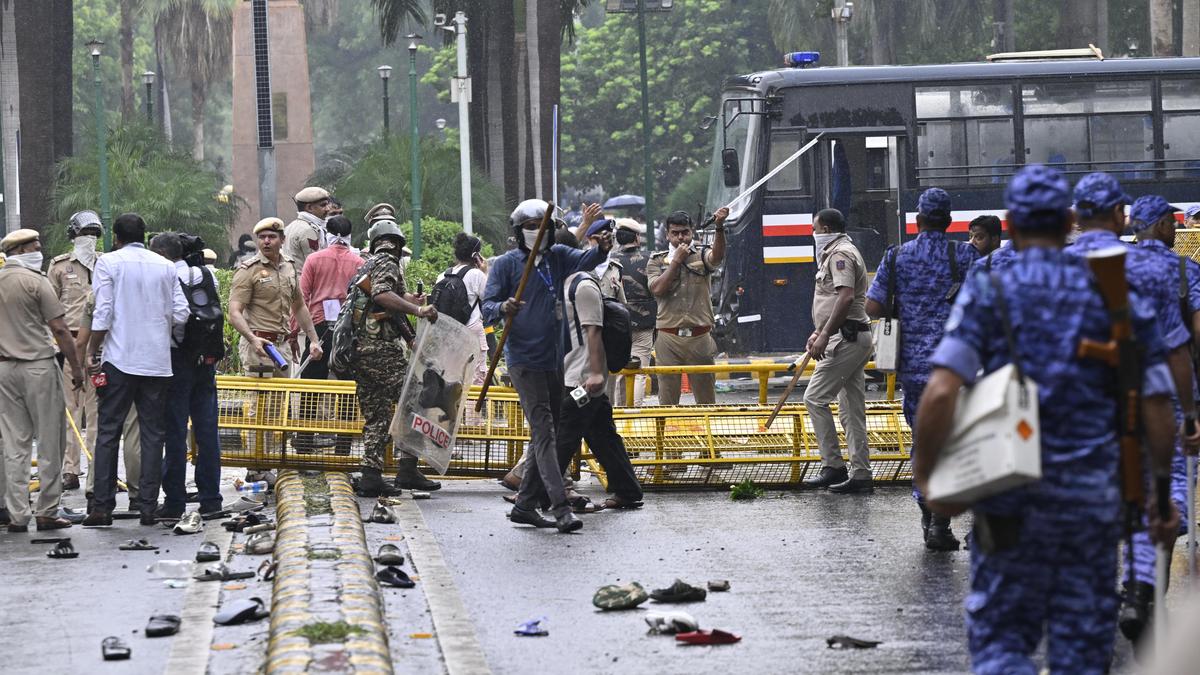
A CJP-led protest march in Delhi demanding the resignation of Education Minister Dharmendra Pradhan descended into violence, resulting in injuries to over 118 police personnel and numerous protesters. Sonam Wangchuk was removed from the site by authorities and shifted to Safdarjung Hospital amid the chaos.
The Delhi Protests: A Volatile Clash at the Capital’s Heart
The recent demonstrations in New Delhi, spearheaded by the CJP (Climate and Justice Protest) movement, culminated in a chaotic confrontation on Parliament Street. What began as a march demanding the resignation of Education Minister Dharmendra Pradhan quickly devolved into a high-stakes standoff between thousands of protesters and law enforcement. The atmosphere, described as thick with the scent of teargas and the sound of sirens, forced demonstrators to seek emergency refuge in nearby cultural landmarks, specifically the Gurdwara Bangla Sahib.
The Anatomy of the Conflict
According to reports, the escalation occurred when authorities attempted to enforce prohibitory orders. The Delhi Police have characterized the event as a large-scale breakdown of public order, alleging that protesters engaged in aggressive behavior, including the hurling of stones and the vandalism of government property. The police statement highlights a significant toll, reporting that over 118 personnel, including senior officers, sustained injuries during the scuffle. Simultaneously, reports indicate that approximately 60 protesters were injured, underscoring the severity of the physical confrontation.
The Role of Sonam Wangchuk
Central to the narrative of these protests is the involvement of activist Sonam Wangchuk, who has become a focal point for the demonstrators. During the height of the unrest, Wangchuk was removed from the protest site by the Delhi Police and subsequently shifted to Safdarjung Hospital. This development has further fueled the emotional intensity of the movement, with supporters viewing the administrative actions as an affront to their cause and their leadership.
Historical Context and Public Safety
Protests in the heart of Delhi, particularly near the Parliament precinct, often face strict regulatory scrutiny due to the sensitive nature of the area. The use of lathi-charges and teargas by police is a standard, albeit controversial, mechanism for crowd control when prohibitory orders are violated. This event follows a pattern of recent civil unrest where the intersection of political demands—in this case, the call for a cabinet minister's resignation—and the state’s duty to maintain public order creates a dangerous friction point.
Implications for Future Policy
This incident signals a growing polarization in the dialogue between civil society groups and the central government. By targeting the education ministry, protesters are signaling deep-seated grievances regarding current policy frameworks. However, the transition from peaceful advocacy to the destruction of public property and injury to law enforcement officers creates a complex legal and political environment that may lead to stricter future permit requirements for demonstrations in the capital.
Concluding Outlook
As the situation stabilizes, the focus will likely shift to the legal aftermath of the 70 detentions reported by the police and the medical recovery of those hospitalized. The events at Parliament Street serve as a stark reminder of the volatility inherent in large-scale public demonstrations. Moving forward, the effectiveness of the CJP's message will depend on its ability to navigate the legal consequences of this march while addressing the grievances that brought thousands to the streets in the first place.
Multiple Citing Sources
Verification Required?