Keep calm, your angry face is their ‘content’: Delhi Police dos and don’ts post-Jantar Mantar
Source Entity
Mahender Singh Manral
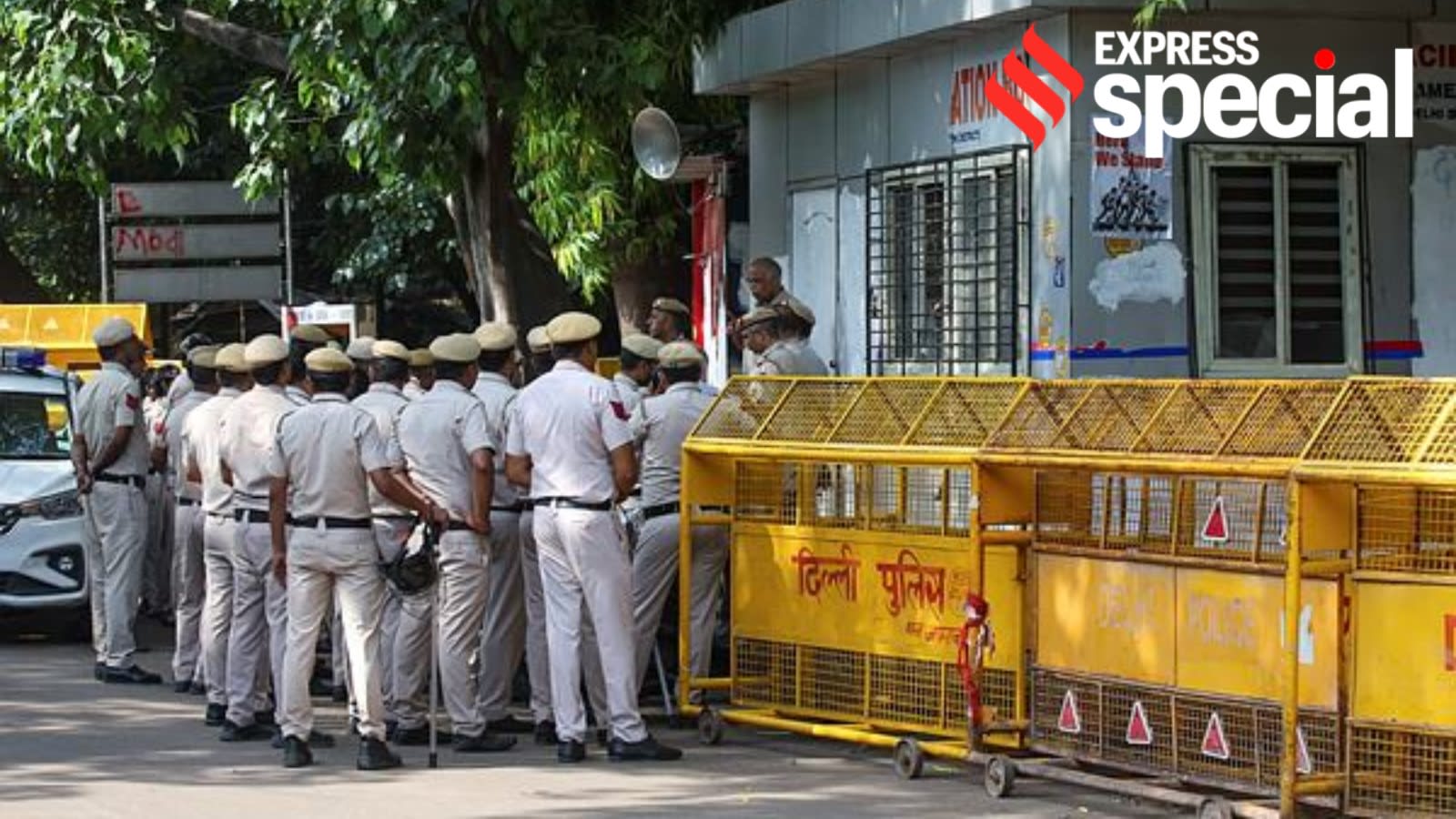
The Delhi Police has issued new conduct guidelines for personnel handling protests at Jantar Mantar. Officers are advised to remain silent and professional to avoid being baited into viral content by agitators.
Navigating the Optics of Public Order
The Delhi Police has issued a strategic set of directives for its personnel stationed at Jantar Mantar, a site synonymous with political agitation and public protest in India's capital. These guidelines emerge as a response to the evolving nature of protests, where the intersection of physical presence and digital amplification has fundamentally changed the dynamics of law enforcement interactions. The core of this instruction is a recognition that in the age of omnipresent smartphones, the behavior of an officer is no longer just a matter of crowd control; it is potential digital content.
The 'Villain' Narrative and Digital Provocation
Central to the new directives is the astute observation that protesters often employ performative tactics—such as crying, falling at the feet of officers, or making personal appeals regarding salary or family backgrounds—to elicit an emotional reaction. The police advisory explicitly warns personnel: "Your angry face is their content." This highlights a sophisticated understanding of modern protest culture, where agitators may intentionally attempt to provoke a negative response from the police to create a viral video that paints the state machinery as the antagonist. By advising officers to "refuse that role," the department is attempting to neutralize the power of such theatrics.
Strategic Silence as a Shield
To counter these tactics, the Delhi Police has mandated a policy of strategic silence and minimal engagement. Rather than entering into debates or responding to emotionally charged questions, personnel are instructed to rely on a single, neutral line: "Please cooperate, we are doing our duty." This approach serves to de-escalate potential confrontations while ensuring that officers do not inadvertently provide the "content" that agitators seek to capture. By removing the element of human reaction, the police hope to maintain a professional distance that protects both the officer's image and the department's institutional integrity.
The Evolution of Crowd Control
This shift in policy reflects the broader challenges faced by law enforcement in an era of social media. Historically, police-protester interactions were local and ephemeral. Today, a single interaction at Jantar Mantar can be broadcast globally within minutes, often stripped of context. The Delhi Police's acknowledgment that they are "always on camera" represents a significant pivot toward media-conscious policing. This is not merely about enforcing the law; it is about managing a narrative in an environment where the camera lens is as much a weapon as it is a recording device.
Institutional Implications and Future Trends
As the capital continues to be a hub for diverse and frequent protests, the ability of police to remain stoic and non-reactive will likely become a critical skill set in training programs. The move away from argumentative engagement suggests that the future of public order maintenance in India will rely heavily on emotional intelligence and the ability to distinguish between genuine grievances and orchestrated provocations. As these guidelines are implemented, the impact on protest dynamics at Jantar Mantar will be closely watched, potentially setting a precedent for how law enforcement agencies across the country manage the interplay between their duties and the digital spotlight.