Sonam Bajwa speaks out on Delhi Police lathi charging students at CJP protest: ‘Dil sach mein toot gaya’
Source Entity
Latest News: Today's Latest News Headlines from India & World | Hindustan Times | Hindustan Times
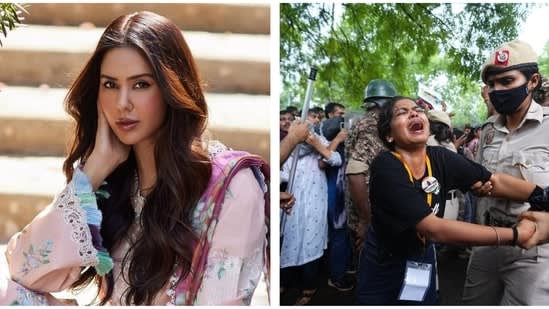
A protest march in Delhi led by the CJP demanding the resignation of Education Minister Dharmendra Pradhan descended into violence, resulting in over 118 police injuries and multiple arrests. Protesters sought refuge in Gurdwara Bangla Sahib as tensions escalated between demonstrators and law enforcement.
Turmoil in the Capital: The CJP Parliament March
The recent protest march in the heart of Delhi, organized by the CJP to demand the resignation of Education Minister Dharmendra Pradhan, has resulted in a significant breakdown of public order. What began as a demonstration of dissent transformed into a chaotic scene defined by the sounds of ambulance sirens, the sting of teargas, and the physical clash between protesters and law enforcement. The event highlights the growing intensity of political demonstrations in the capital and the subsequent challenges faced by authorities in managing large-scale civil unrest.
The Human Cost of the Clash
As the situation on Parliament Street deteriorated, the human impact became starkly evident. Protesters were seen fleeing the chaos, seeking sanctuary within the gates of Gurdwara Bangla Sahib to escape the police lathi-charge. Reports from the ground describe scenes of distress, with demonstrators clutching damp handkerchiefs to mitigate the effects of teargas. The emotional weight of the confrontation was underscored by the accounts of families, with reports of mothers lamenting the injuries sustained by their sons during the ordeal, characterizing the event as an attack on the country's youth.
Police Perspective and Allegations of Violence
According to official statements from the Delhi Police, the escalation of violence was not one-sided. The authorities reported that more than 118 police personnel, including senior officers, sustained injuries during the scuffle. The police narrative asserts that protesters engaged in aggressive behavior, including the hurling of stones and the vandalism of both public and government property. Furthermore, the police claim that the crowd ignored lawful directives and violated prohibitory orders, prompting the use of force to maintain order and protect public infrastructure.
The Role of Sonam Wangchuk
Central to the mobilization was the presence of activist Sonam Wangchuk, who became a focal point for the marchers' demands. As the protest site became increasingly untenable, reports confirmed that the Delhi Police moved to shift Sonam Wangchuk to Safdarjung Hospital. This development added a layer of complexity to the day's events, as the removal of a key figure often serves to both de-escalate immediate physical confrontations while simultaneously fueling further political discourse regarding the treatment of activists and the right to protest.
Broader Implications for Civil Discourse
This event serves as a microcosm of the current state of political advocacy in India, where the friction between administrative authority and civil dissent is becoming increasingly pronounced. The sheer scale of injuries on both sides—with approximately 60 protesters also reported injured—suggests a failure in the communication and containment strategies typically employed during such marches. The use of religious sites like Gurdwara Bangla Sahib as places of refuge highlights the desperation of the participants when faced with heavy-handed crowd control measures.
Future Trends and Conclusion
Looking ahead, the fallout from this march is likely to trigger further debates regarding the accountability of public officials, such as the Education Minister, and the limits of the right to assemble in sensitive zones like Parliament Street. The high number of police casualties and the resulting detentions of nearly 70 protesters will likely lead to protracted legal and political battles. As the capital continues to navigate these turbulent waters, the necessity for a more nuanced approach to managing civil unrest—one that balances the constitutional right to protest with the necessity of maintaining public safety—remains a critical imperative for the administration.
Multiple Citing Sources
Verification Required?