Music streamer Deezer says more than 50% of daily uploads are AI-generated
Source Entity
Ivan Mehta
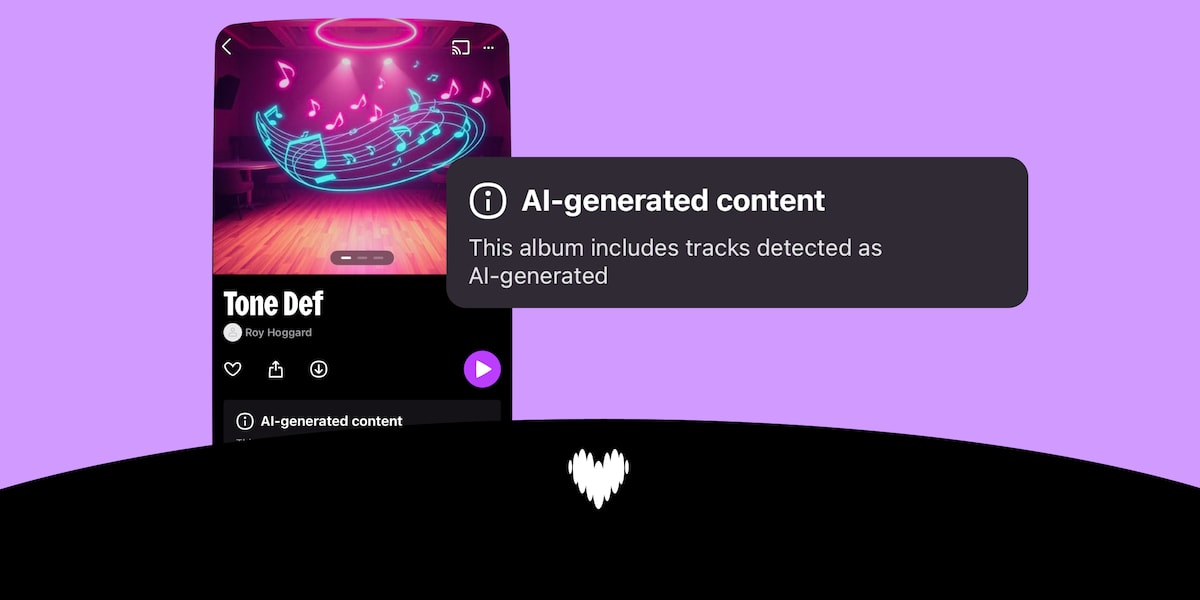
Deezer reports that over 50% of daily music uploads are now AI-generated, reaching peaks of 90,000 tracks per day in June 2026. This surge highlights the industry's struggle to manage the influx of synthetic content through varied platform policies.
The Surge of Synthetic Soundscapes
The landscape of the music streaming industry is undergoing a seismic shift as artificial intelligence democratizes music production at an unprecedented scale. Music streaming giant Deezer has confirmed that AI-generated tracks now account for more than 50% of daily uploads on its platform. This milestone, underscored by the revelation that over 90,000 AI-produced tracks were uploaded daily during the peak month of June 2026, signals a transformative era where the barrier to entry for content creation has been effectively dismantled by machine learning algorithms.
The Mechanics of Rapid Proliferation
Deezer has been monitoring this trend since early 2025, observing a consistent, upward trajectory in synthetic music volume. The sheer velocity at which these tracks hit the platform suggests that generative AI tools are now deeply integrated into the workflows of both hobbyists and opportunistic producers. By automating composition, arrangement, and potentially even mastering, these tools enable the mass production of music that can be uploaded instantly, flooding streaming ecosystems with content that competes directly with human-composed works for listener attention and algorithmic placement.
Divergent Industry Responses
This influx has forced a period of introspection among streaming platforms, which currently lack a unified strategy for handling synthetic audio. The market is fragmented: some entities, such as Bandcamp, have adopted a more restrictive stance by banning AI tracks entirely, while others like Tidal have implemented measures to curb the monetization of such content. Conversely, platforms like Apple Music and Spotify are experimenting with more nuanced approaches, ranging from voluntary tagging systems to internal policies that attempt to quantify the 'human element' versus synthetic reliance in the production process.
Implications for Intellectual Property and Discovery
The dominance of AI-generated content poses significant challenges for music discovery algorithms. When half of the daily uploads are machine-generated, the 'signal-to-noise' ratio for human artists becomes increasingly difficult to manage. For platforms like Deezer, the challenge is not just technical—it is existential. They must protect the integrity of their libraries while simultaneously acknowledging that generative AI is a permanent fixture in the modern creative economy.
Future Trends in Streaming
Looking ahead, we can expect a move toward more sophisticated metadata requirements. As the volume of AI music continues to grow, streaming services will likely be forced to adopt standardized labeling protocols to ensure transparency for consumers. Furthermore, the industry may see a bifurcation of the market, where 'human-made' music becomes a premium, verifiable category, while the vast ocean of AI-generated tracks becomes a commodity-driven utility, possibly requiring new royalty models that distinguish between generative outputs and traditional compositions.
Conclusion
The data from Deezer acts as a bellwether for the broader digital media sector. As generative AI continues to evolve, the distinction between curated human artistry and automated content will continue to blur. How streaming platforms navigate this influx will define the future of music distribution, compensation, and the very definition of what it means to be a modern creator in a machine-augmented world.