Hundreds take refuge at Bangla Sahib after CJP’s protest call, many detained
Source Entity
Gayathri Mani
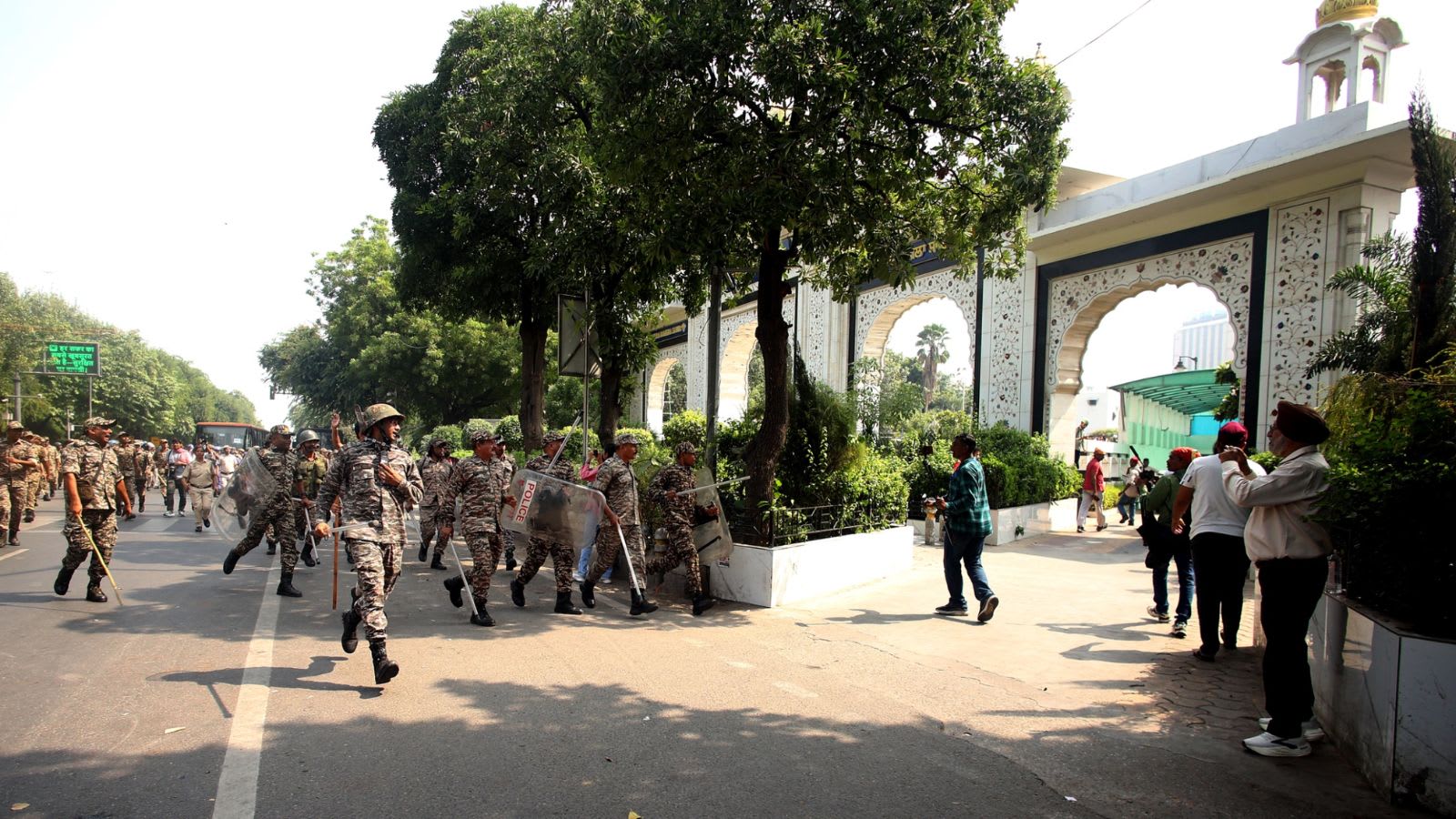
Delhi authorities have implemented widespread security measures, including the closure of 45 metro stations and road blocks, to manage a protest at Jantar Mantar. Over 400 individuals have been detained as police deploy the 'Pink Force' and body cameras to maintain order.
Delhi Security Lockdown: Analyzing the Response to the Jantar Mantar Protest
Unprecedented Security Measures
The recent protest at Jantar Mantar in New Delhi has triggered a massive security operation, characterized by the closure of 45 Delhi Metro stations and the implementation of stringent traffic diversions. Starting Friday night and extending through Saturday evening, the restriction of entry and exit gates at major transit hubs—including central nodes like Rajiv Chowk, Central Secretariat, and Mandi House—reflects a highly cautious approach by local authorities to contain the movement of demonstrators.
Tactical Deployment and 'Pink Force'
A notable component of the security strategy is the deployment of the 'Pink Force' and personnel equipped with body cameras. This move signals a deliberate effort by the Delhi Police to enhance transparency and ensure a gender-sensitive approach to crowd control. By utilizing body cameras, the authorities aim to document interactions between law enforcement and the public, which serves as both a deterrent against escalation and a mechanism for accountability during high-tension scenarios.
Detention and Crowd Management
As of the latest reports, over 400 individuals have been detained, with security forces moving swiftly to intercept early-bird protesters arriving from the National Capital Region (NCR), including Gurugram and Faridabad. The rapid nature of these detentions highlights the efficiency of the 'wide net' strategy employed by the police, which prioritized securing key arterial roads such as Janpath and Ashoka Road to isolate the protest site from the broader urban landscape.
The Logistics of Prevention
The logistics behind this lockdown are significant, involving extensive debriefing sessions for security personnel and the visible presence of specialized equipment, including tear gas munitions. By initiating traffic restrictions at 6 a.m. and maintaining a visible, armed presence, the administration has sought to minimize the footprint of the protest. The sheer scale of the Metro station closures indicates that the objective is not merely crowd management at the site, but the prevention of mass mobilization across the capital.
Broader Implications and Future Trends
This event underscores a recurring trend in how the Delhi administration handles large-scale civil unrest. The shift toward preemptive infrastructure denial—specifically the disabling of public transit—is becoming a standard operating procedure in the capital. While intended to maintain public safety and minimize traffic disruption, such measures have significant implications for the freedom of movement and the right to peaceful assembly. Moving forward, authorities will likely continue to rely on a combination of digital surveillance, such as body cameras, and physical infrastructure blockades to manage political dissent in densely populated urban centers.
Multiple Citing Sources