‘Thank you for free publicity’: Dipke on cockroach effigy being burnt in Delhi
Source Entity
PRIYANKA JAISWAL
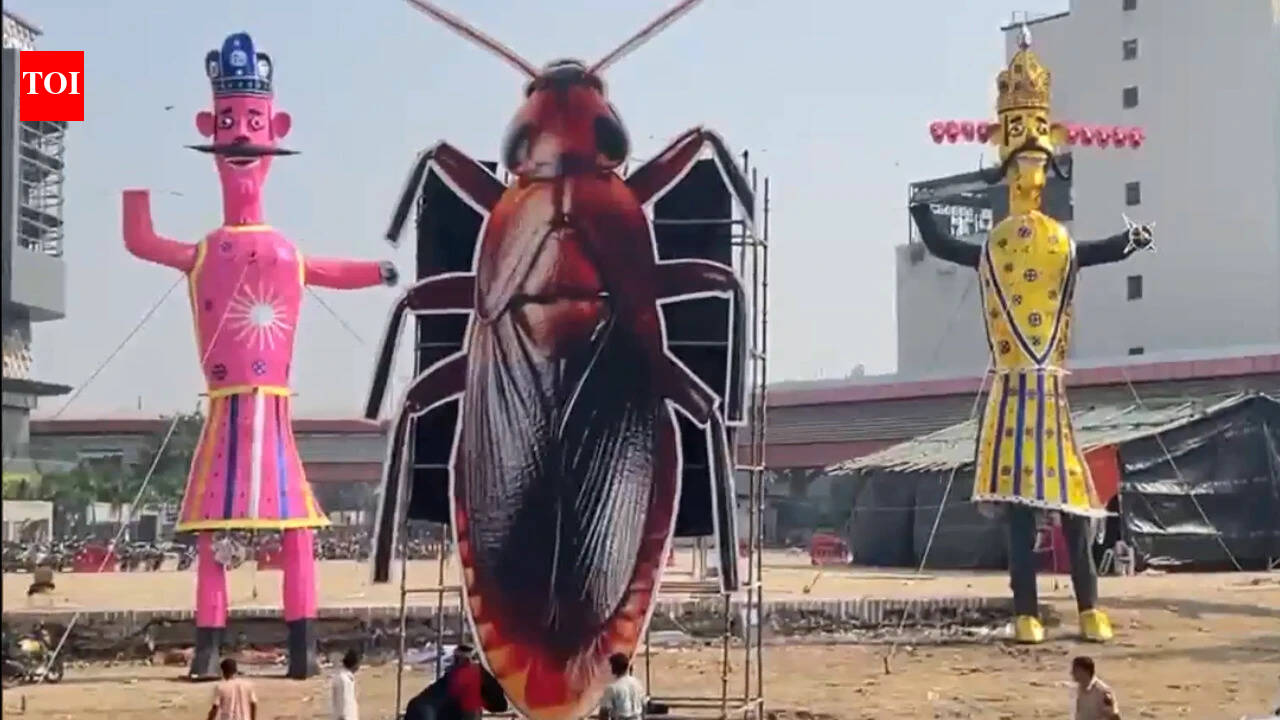
The Shree Keshav Ram Leela Committee in Delhi has sparked controversy by including a 30-foot cockroach effigy in its Dussehra celebrations. The Cockroach Janata Party (CJP) has responded to the move, labeling it as unintended 'free publicity' for their organization.
A Symbolic Clash: The Pitampura Ramlila Controversy
In a unique convergence of traditional cultural festivities and modern political satire, the Shree Keshav Ram Leela Committee in Delhi’s Pitampura area has ignited a public debate. Organizers of the annual Ramlila celebrations announced the inclusion of a 30-foot cockroach effigy, intended to be burned alongside the traditional figures of Ravan, Meghnad, and Kumbhkaran. This unconventional addition has drawn immediate attention from the Cockroach Janata Party (CJP), a satirical political entity that has found itself at the center of this unexpected spectacle.
The Committee’s Stated Intent
According to the Shree Keshav Ram Leela Committee, the giant cockroach is not meant to target any specific group but serves as a symbolic representation of filth and urban decay. Committee president and BJP MLA Ashok Goel has stated that the initiative is designed to promote cleanliness, aligning the event with the broader objectives of the 'Swachh Bharat' and 'Swachh Delhi' campaigns. By burning the effigy, the organizers aim to encourage public awareness regarding sanitation and hygiene, framing the act as a civic-minded contribution to the festive season.
The CJP Response: Turning Controversy into Capital
Abhijeet Dipke, the founder of the Cockroach Janata Party—a satirical political initiative established in May 2026—responded to the event with a sense of opportunistic irony. Upon seeing viral footage of the effigy at the Netaji Subhash Place grounds, Dipke took to social media to thank the organizers for the "free publicity." This reaction highlights the delicate intersection of performance art and political branding, where a gesture intended to mock "filth" is re-appropriated by a political movement that shares its namesake with the target of the ridicule.
Political Implications and Public Perception
While the committee maintains that the decision is devoid of political motivation, the presence of a BJP MLA in a leadership role suggests that the optics of the situation are complex. The CJP’s legal head, Ratna Singh, characterized the entire affair as a "tamasha," or drama, reflecting the skepticism surrounding whether such displays genuinely advance public health goals or merely serve as divisive theater. This incident serves as a case study in how public symbols can be co-opted, turning a message of sanitation into a point of contention between traditional organizers and emerging political groups.
Broader Context of Satirical Politics
The emergence of the CJP as a satirical force demonstrates a growing trend in Indian political discourse, where unconventional party names and platforms are used to capture media attention. By reacting to the Ramlila committee’s actions, the CJP has successfully positioned itself in the news cycle, proving that even negative publicity—or in this case, the burning of a namesake effigy—can be leveraged to build brand recognition for a fringe political movement.
Conclusion: A Reflection of Modern Urban Tensions
The burning of the 30-foot cockroach effigy in Delhi stands as a testament to the evolving nature of public events in the capital. While the organizers claim a commitment to cleanliness, the reaction from the CJP underscores the potential for such symbols to be misinterpreted or redirected. As the city continues to navigate the balance between traditional religious celebrations and the pressures of modern urban governance, this event highlights how easily cultural platforms can become stages for contemporary political narratives.