Meet 2 Delhi Teens Who Turn Classroom Fans Into Rs 140 Air Purifiers
Source Entity
NDTV News Search Records Found 1000
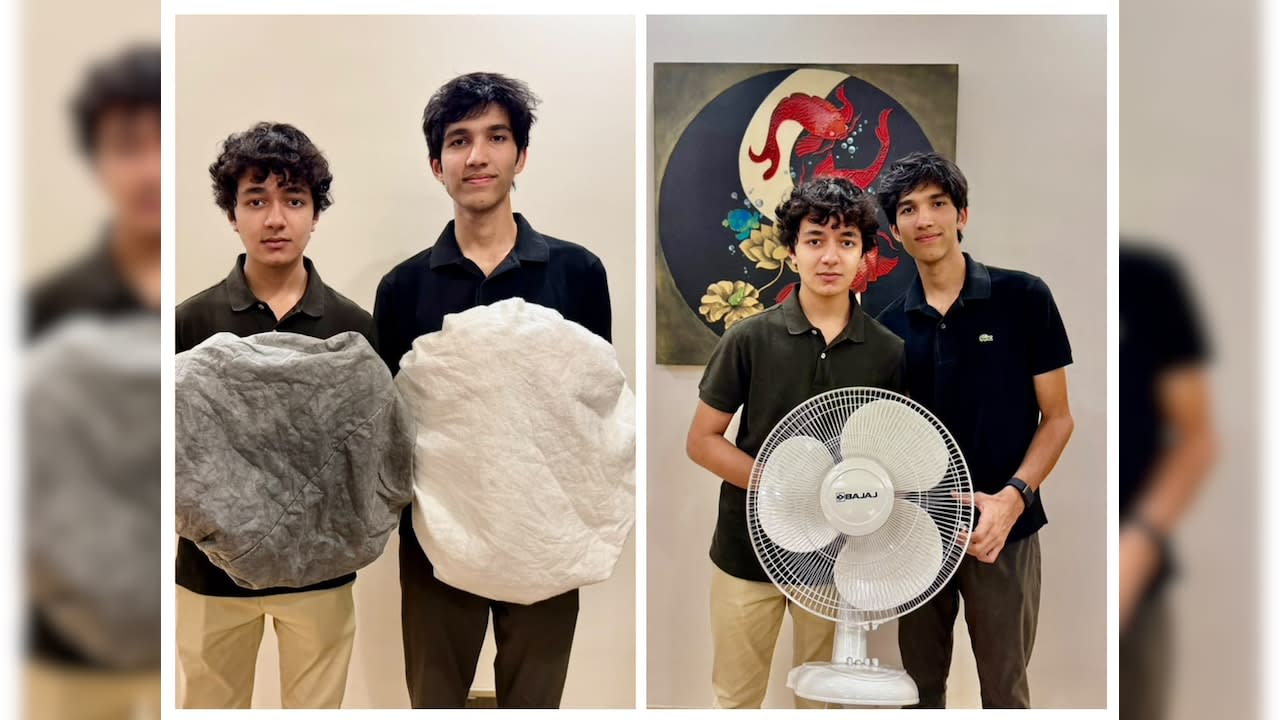
Delhi students Krish Aggarwal and Samarth Meattle have launched 'Project Vayu', an initiative that converts standard classroom fans into low-cost air purifiers. Recognized by the Diana Award, the duo aims to scale this affordable solution to schools nationwide to combat indoor air pollution.
Innovating for Clean Air: The Rise of Project Vayu
In an era where air quality has become a critical public health concern, particularly in densely populated urban centers like New Delhi, two young innovators have emerged with a pragmatic solution. Krish Aggarwal, a student at Sanskriti School, and Samarth Meattle, from Vasant Valley School, have co-founded 'Project Vayu'. Their initiative focuses on a grassroots approach to environmental health by repurposing existing classroom infrastructure to mitigate the risks of indoor air pollution.
The Mechanics of Low-Cost Filtration
The core innovation of Project Vayu lies in its simplicity and accessibility. By developing a specialized, low-cost filter that can be attached to standard ceiling fans, the students have effectively transformed ubiquitous classroom appliances into functional air purifiers. This design choice is pivotal; it bypasses the need for expensive, energy-intensive standalone purification units, which are often financially out of reach for schools operating under tight budget constraints.
Addressing Inequality in Environmental Health
At the heart of the project is a philosophy of equity. Aggarwal and Meattle have explicitly stated that a child's right to breathe clean air should not be contingent upon the financial capacity of their educational institution. By focusing on low-cost implementation, Project Vayu seeks to bridge the gap between high-end air quality solutions and the reality of under-resourced classrooms, ensuring that health-conscious technology reaches those who need it most.
Recognition and Future Scaling
The impact of their work has already begun to garner significant attention, as evidenced by their inclusion on the 2026 Diana Award Roll of Honour. This accolade serves as a testament to the efficacy of their pilot program, which was conducted last year. Having successfully demonstrated the feasibility of their model, the founders are now moving into a phase of nationwide expansion, aiming to scale their intervention across diverse school environments.
Broader Implications and Sustainability
The success of Project Vayu highlights a growing trend of youth-led innovation in environmental science. As these students transition from their pilot phase to a wider rollout, the scalability of their filter technology will be the true test of its long-term impact. If successful, this model could serve as a blueprint for other low-cost environmental interventions, proving that significant societal improvements can stem from simple, creative engineering solutions aimed at solving localized problems.
Verification Required?