Did Life Begin in an RNA World?
Source Entity
Hacker News
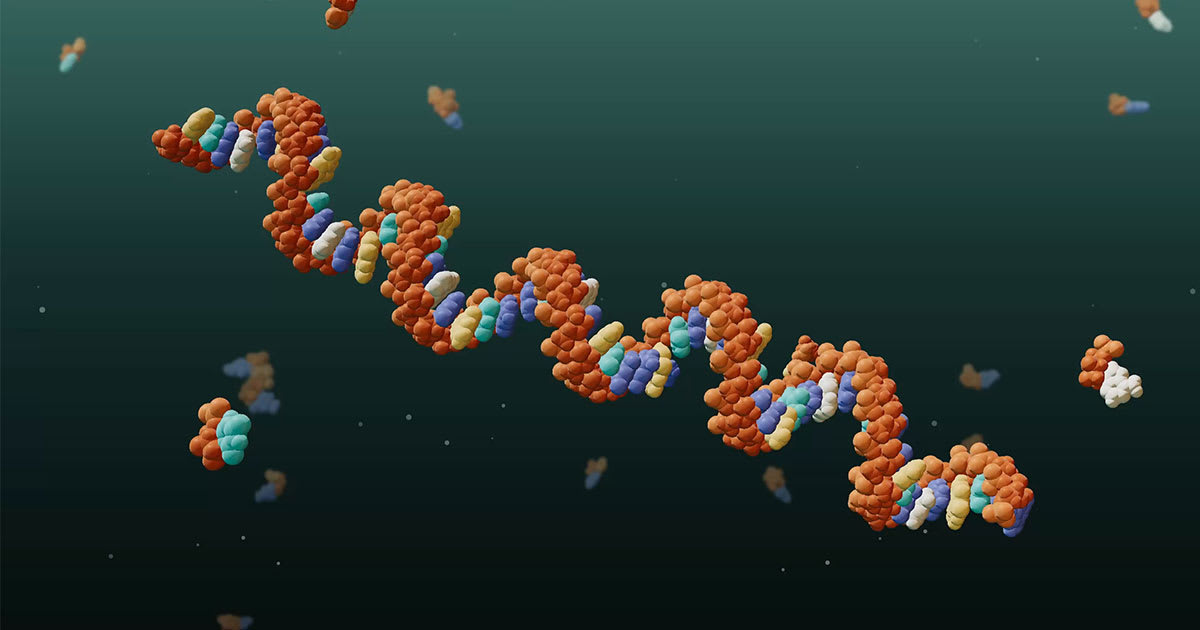
Scientists are investigating the 'RNA World' hypothesis to determine if RNA molecules were the precursors to life on Earth. This theory posits that RNA's ability to store genetic information and catalyze reactions predated the complex DNA-protein systems seen today.
The Origins of Life: Investigating the RNA World Hypothesis
The Fundamental Challenge of Abiogenesis
For centuries, the question of how life emerged on a barren Earth approximately 4 billion years ago has remained one of the most profound mysteries in science. While life currently thrives in nearly every environment on the planet—shaping our climate, atmosphere, and geology—its inception requires a leap from inert chemistry to self-replicating biological systems. The core of this challenge lies in identifying the mechanism by which the first molecules transitioned from simple chemical reactions to organized, information-carrying structures.
Self-Replication as the Catalyst for Life
Many researchers posit that self-replication, defined as the ability to reliably store and copy genetic information, is the essential prerequisite for life. Modern organisms utilize a sophisticated interplay between DNA and proteins; DNA acts as the permanent blueprint, while proteins facilitate the chemical reactions necessary for cellular function. However, the chicken-and-egg problem arises: DNA requires proteins to replicate, and proteins require DNA to be synthesized. This circular dependency suggests that the earliest life-forms likely relied on a more versatile, singular molecule.
The Case for RNA as the Primordial Molecule
This is where the 'RNA World' hypothesis gains traction. RNA (ribonucleic acid) is uniquely qualified for this role because it possesses the dual capability to store genetic information and act as a catalyst for chemical reactions. In the modern cell, RNA serves as the essential messenger that translates genetic code from DNA into the functional structure of proteins. Proponents of the RNA World theory argue that before the dominance of DNA, RNA molecules were capable of performing both the storage and the catalytic work, effectively acting as the original engines of life.
Broader Implications for Evolutionary Biology
If life indeed began in an RNA-dominated environment, it suggests that the transition to the modern DNA-RNA-protein architecture was a later evolutionary refinement. This shift would have provided a significant selective advantage, allowing for more stable information storage (DNA) and more diverse catalytic capabilities (proteins). Understanding this transition is critical not only for biology but also for our understanding of planetary habitability. If the RNA World hypothesis is correct, it suggests that the path to life may be a common chemical trajectory rather than a series of highly improbable accidents.
Future Trends in Origin-of-Life Research
As technology advances, researchers are increasingly able to simulate primordial Earth conditions in laboratories to observe how RNA-like polymers might form spontaneously. Future studies will likely focus on the environmental triggers that allowed these molecules to stabilize and aggregate. By bridging the gap between prebiotic chemistry and molecular biology, scientists hope to move closer to a definitive model of how life first gained a foothold on our planet, potentially providing a roadmap for identifying life on other worlds.