Humanity's farthest messenger: Nasa's Voyager 1 nears a one light-day milestone
Source Entity
ARYAN SINGH
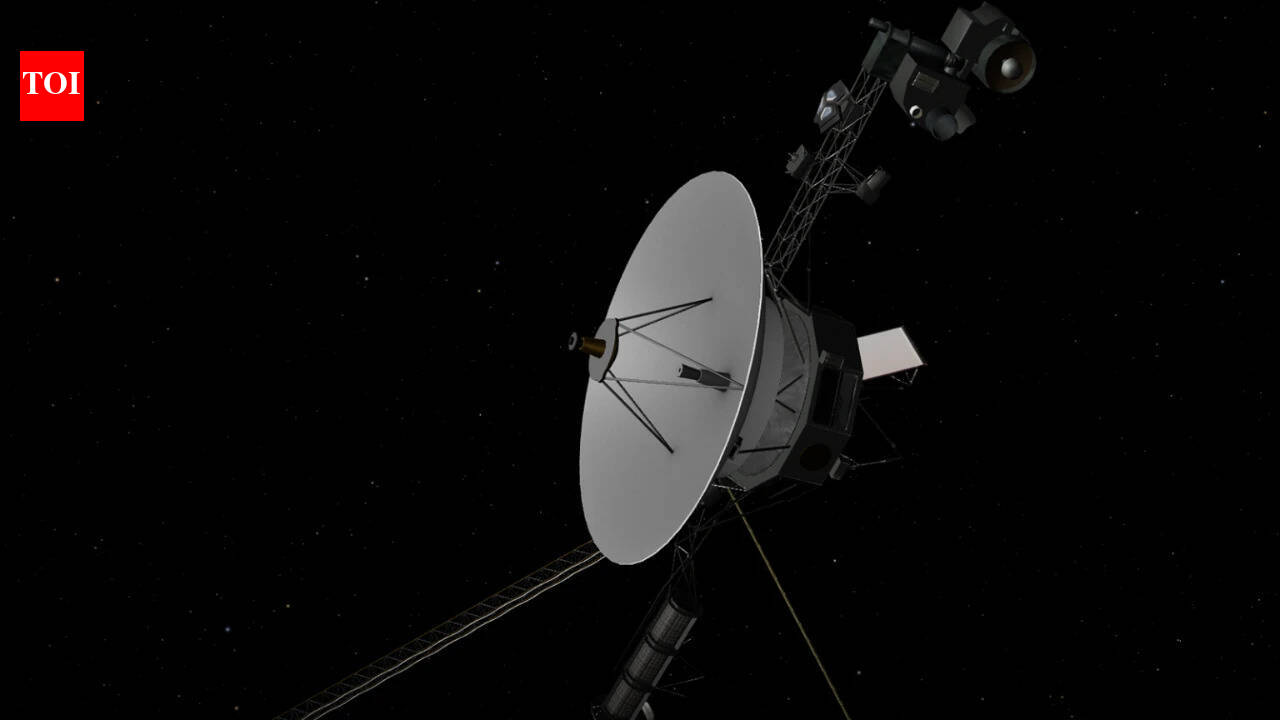
NASA's Voyager 1 spacecraft is approaching the milestone of being one light-day away from Earth. Despite nearly 49 years of travel, the probe continues to transmit critical scientific data from interstellar space.
Voyager 1: A Historic Odyssey Through the Cosmos
NASA's Voyager 1 spacecraft, a marvel of 20th-century engineering, is currently approaching a staggering milestone: a distance of one light-day from Earth. This achievement signifies that radio signals traveling at the speed of light now take 24 hours to bridge the gap between our home planet and the probe. Launched in 1977, Voyager 1 has remained active for nearly 49 years, far exceeding its original mission parameters and expectations.
The Longevity of Interstellar Exploration
The survival of Voyager 1 over nearly five decades is a testament to the robust design choices made by NASA engineers in the 1970s. While modern technology has advanced exponentially, the core hardware of Voyager 1 continues to operate in the harsh environment of interstellar space. The fact that it still transmits scientific data back to Earth is a feat of endurance, requiring complex remote troubleshooting and careful energy management as its power sources slowly degrade.
Expanding the Boundaries of Knowledge
Voyager 1's journey has fundamentally reshaped our understanding of the solar system. By traveling beyond the heliopause—the boundary where the Sun's influence ends—the spacecraft has provided the first direct measurements of the interstellar medium. This data is invaluable, offering insights into the density, temperature, and composition of space outside our immediate planetary neighborhood, essentially acting as our eyes and ears in the great unknown.
Communication Challenges at the Edge
As the distance reaches one light-day, the operational challenges for mission control become increasingly complex. The delay in communication means that any command sent from Earth requires a full day to reach the spacecraft, and the subsequent data return requires another day of transit. This creates a unique operational environment where autonomy and resilience are paramount, as real-time interaction with the spacecraft is no longer possible.
The Legacy and Future of the Voyager Mission
Looking ahead, Voyager 1 serves as a bridge between humanity and the interstellar void. While its instruments will eventually fall silent, the legacy of the mission remains secure. It has not only provided a treasure trove of scientific data but also serves as a symbol of human curiosity and our drive to explore the furthest reaches of the universe. The mission continues to push the limits of what is possible, proving that even after 49 years, our reach into the cosmos is still growing.