'We don't want a fight': Delhi traders' body writes to Rahul again over Nov 1 rally
Source Entity
PRIYANKA MUKHERJEE
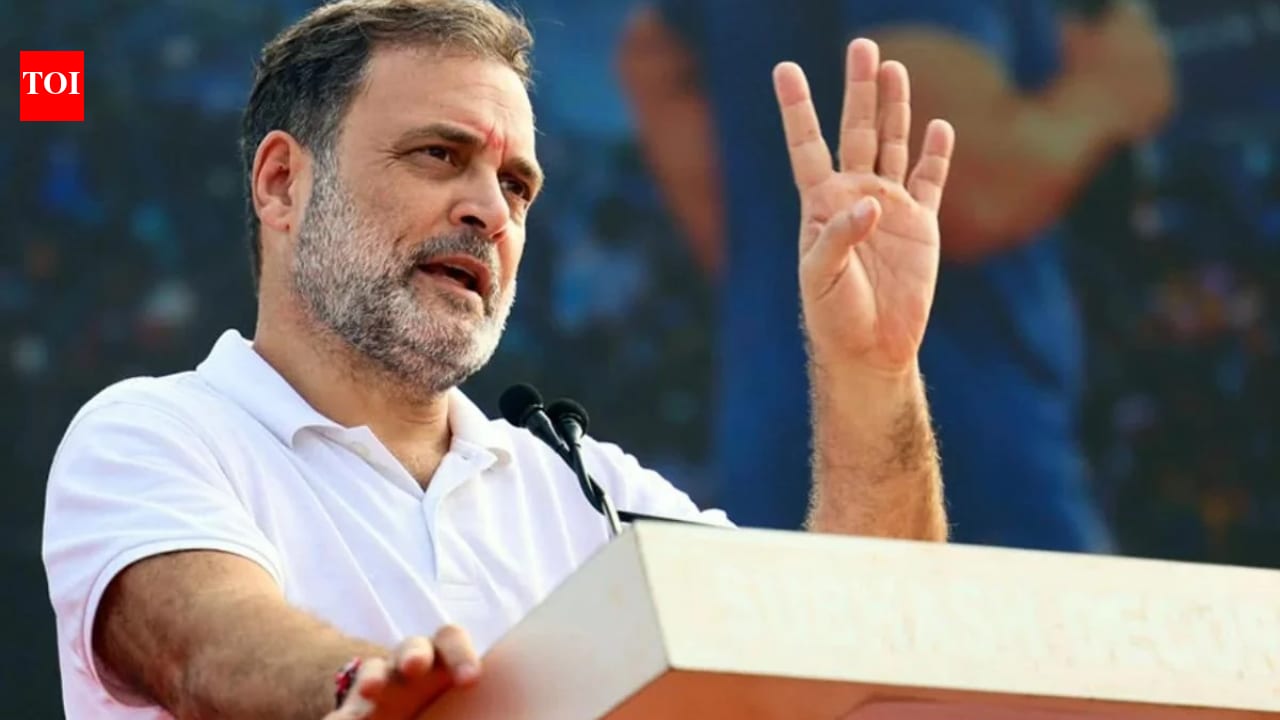
Delhi traders are urging Congress to reschedule a November 1 rally at Ramlila Maidan to avoid significant economic losses during the peak Diwali season. While the VHP has accused the Opposition of intentionally targeting Hindu festivals, Rahul Gandhi has acknowledged the traders' concerns while blaming administrative restrictions for the current business disruptions.
Economic Tensions Mount Over Proposed Delhi Rally
The political landscape in New Delhi has become increasingly fraught as the Chamber of Trade and Industry (CTI) and local business communities have issued an urgent plea to Congress leader Rahul Gandhi. The request involves the postponement of a major political rally scheduled for November 1 at the Ramlila Maidan, citing the potential for massive economic disruption during the height of the Diwali festive shopping season. Traders have projected that the gathering, which is expected to draw 10 lakh people and involve up to 20,000 vehicles, threatens the operational viability of 21 major wholesale and retail markets.
The Economic Stakes of Festive Commerce
The core of the traders' grievance lies in the sheer scale of the potential financial impact. With estimates suggesting losses could reach as high as Rs 10,000 crore, the business community is emphasizing that the timing of the rally coincides with the most critical revenue period for the retail sector. This follows recent reports of losses totaling Rs 3,000 crore linked to previous protests in October, which saw metro services suspended and key roads blocked, effectively strangling the flow of commerce in the capital.
The Vishva Hindu Parishad (VHP) Intervention
The situation has gained a sharp ideological edge with the intervention of the Vishva Hindu Parishad (VHP). VHP national spokesperson Vinod Bansal has publicly accused Congress and other Opposition parties of a calculated conspiracy to disrupt Hindu festivals, specifically highlighting that the rally date clashes with Ahoi Ashtami. The VHP argues that the refusal to move the rally demonstrates a disregard for cultural and religious sensitivities, suggesting that the Opposition would have been more accommodating had the request originated from different segments of society.
Political Rhetoric and Administrative Accountability
Rahul Gandhi’s response, characterized by the message "We hear you," highlights a complex political balancing act. While acknowledging the plight of the traders, Gandhi has pivoted the narrative toward the role of the administration. He has attributed the current economic strain to government-led restrictions, such as the suspension of metro services and the blocking of roads, rather than the act of protesting itself. This creates a dichotomy where the Opposition claims they are being hampered by state-imposed logistical hurdles, while the ruling party and affiliated organizations frame the rally as a deliberate obstacle to public and festive life.
Broader Implications and Future Trends
This standoff reflects a growing trend in urban Indian politics where the right to protest frequently collides with the rights of small and medium-sized enterprises to conduct business. As Delhi remains a central stage for national political discourse, the impact of large-scale rallies on the local economy is becoming a subject of intense scrutiny. The tension between the necessity of democratic expression and the preservation of economic stability during high-traffic religious and commercial windows is likely to necessitate more robust dialogue between political organizers and city planning authorities in the future.
Conclusion
Ultimately, the conflict over the November 1 rally serves as a microcosm of the current polarized environment in the capital. Whether the rally proceeds as planned or is rescheduled will likely hinge on the political cost of ignoring the business community versus the strategic necessity of the event. As the festive season reaches its zenith, the resolution of this conflict will be closely watched by stakeholders concerned with both the health of the local economy and the maintenance of public order.
Multiple Citing Sources