Marching through the storm: ‘Hum Auratein Aazad Hain’ echoes across Delhi University
Source Entity
TNN
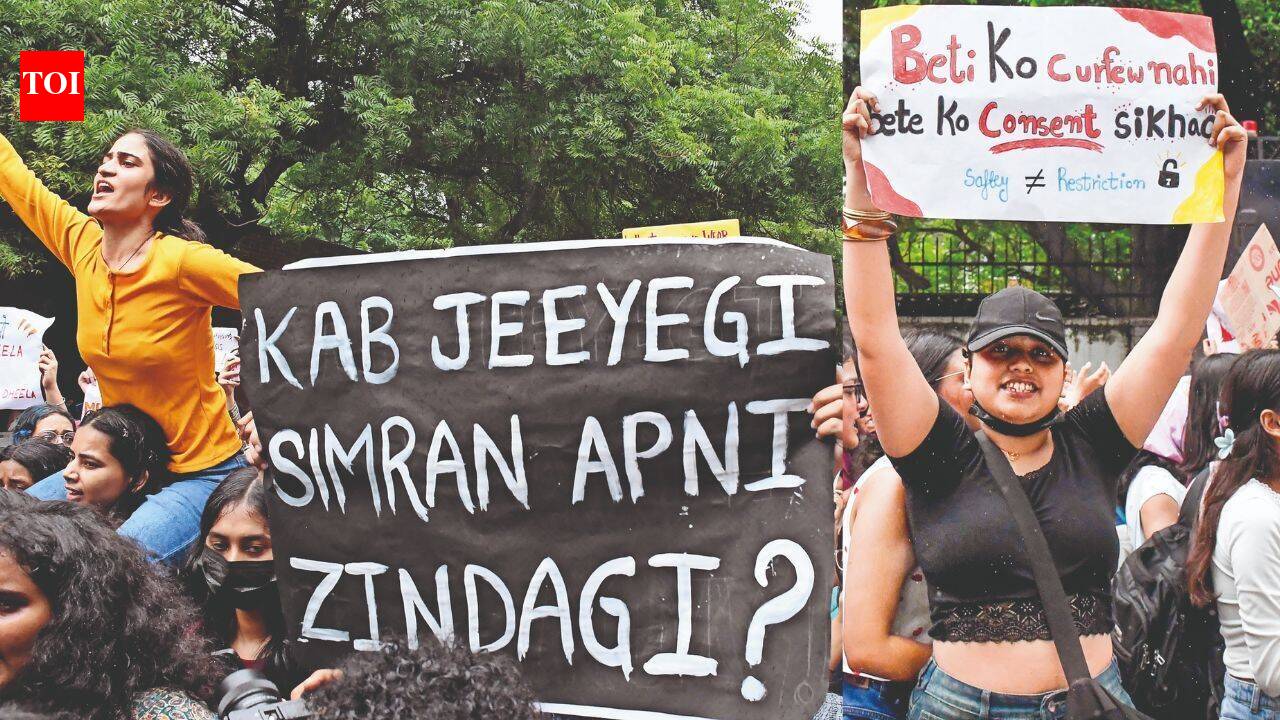
Hundreds of Delhi University students braved heavy rain to protest for women's safety under the 'Hum Auratein Aazad Hain' banner. The demonstration marks the third such event in a week, following a surge in public outcry over sexual violence incidents in Delhi and across India.
A Resilient Stand: Delhi University Students Demand Safety
On Monday, the North Campus of Delhi University became the epicenter of a powerful demonstration as hundreds of students gathered under the banner 'Hum Auratein Aazad Hain' (We Women Are Free). Despite heavy rainfall that forced participants to shield their placards and rally under umbrellas, the movement remained undeterred. This gathering served as the third, and largest, protest in a single week, signaling a deepening resolve among the student body to challenge systemic issues surrounding gender-based violence and the persistent restrictions placed on women's mobility in the name of 'safety.'
Challenging the Narrative of Curfews and Control
The core message of the protest was a categorical rejection of the notion that women must sacrifice their freedom to ensure their safety. By chanting, "Hum leke rahenge aazadi" (We will claim our freedom), the demonstrators highlighted a growing frustration with institutional responses that often prioritize curfews or restrictive measures over addressing the root causes of violence. The protesters emphasized that true safety is not achieved through isolation or self-imposed boundaries but through structural and social change that holds perpetrators accountable and fosters an environment of equality.
The Role of Intersectionality and Solidarity
The protest, which was organized exclusively for women and queer participants, reflected a shift in how student-led movements are addressing gender dynamics. By creating a space that centers marginalized voices, the organizers aimed to address the broader climate of fear that has permeated college campuses. Furthermore, the inclusion of supportive men in the movement underscored a vital point: that the burden of changing societal attitudes cannot rest solely on women. The protest highlighted the necessity for men to actively confront and dismantle the patriarchal mindsets that contribute to the normalization of sexual violence.
Historical Context and Regional Triggers
This wave of protests was ignited by the harrowing reports of a 17-year-old girl who was allegedly gang-raped at Aastha Kunj Park in South Delhi. This incident, which sparked earlier marches near Lady Shri Ram, Gargi, and Kamala Nehru colleges, served as a catalyst for a wider conversation. Protesters explicitly linked the Delhi incident to similar reports of violence from states like Punjab and Bihar, arguing that the issue of safety is a national crisis that transcends regional boundaries. The students' explicit rejection of being labeled as a generation focused only on digital trends—stating they are "not here to make reels"—highlights their commitment to tangible, real-world political advocacy.
Future Implications for Campus Activism
The intensity of these demonstrations suggests a turning point in student activism at Delhi University. As the protests grow in size and frequency, they put significant pressure on university authorities and law enforcement to implement more robust safety protocols. The movement has effectively shifted the discourse from passive complaints to active, public assertion. Moving forward, the success of this movement will likely depend on whether these demonstrations can translate into sustained policy engagement and a measurable shift in the campus culture regarding gender equality and safety.
Conclusion
The 'Hum Auratein Aazad Hain' march is more than just a reaction to a specific crime; it is a profound demand for the right to inhabit public spaces without fear. By refusing to let the rain or the scale of the challenge dampen their spirit, Delhi University students have demonstrated a level of political consciousness that demands attention. As they continue to push for structural reforms, the movement serves as a reminder that the quest for gender justice remains a central, unfinished business in the Indian socio-political landscape.
Multiple Citing Sources