Deploy local agents everywhere with LFM2.5-2.6B
Source Entity
Hugging Face - Blog
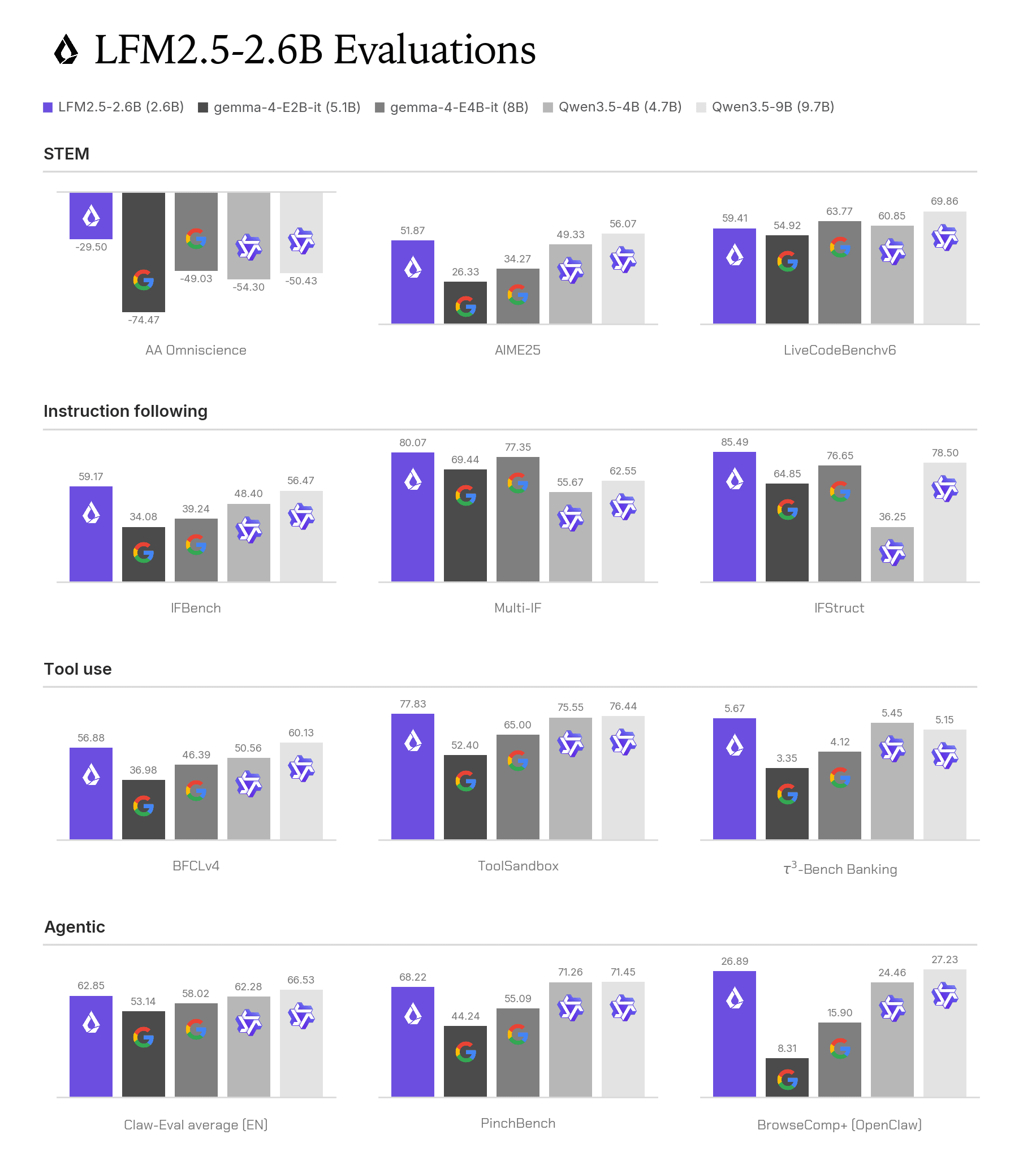
The LFM2.5-2.6B model enables high-performance, on-device agentic tasks by balancing efficiency with the capabilities of much larger models. It is optimized for tool use and multi-step workflows across diverse hardware.
The Rise of On-Device Intelligence with LFM2.5-2.6B
On August 4, 2026, the release of the LFM2.5-2.6B model marked a significant milestone in the evolution of edge computing and artificial intelligence. By focusing on a compact 2.6 billion parameter architecture, developers have successfully bridged the gap between resource-heavy cloud processing and the immediate utility of local hardware. This shift is critical for privacy-conscious users and developers who require low-latency execution without constant server connectivity.
Competitive Performance at Scale
Despite its relatively small size, LFM2.5-2.6B demonstrates performance metrics competitive with models four times its scale. This efficiency is specifically engineered for high-stakes tasks, including complex tool use, precise instruction following, and intricate multi-step agentic workflows. By achieving these benchmarks, the model challenges the traditional assumption that high-level reasoning must reside exclusively within massive, centralized data centers.
Optimization for Agentic Architectures
One of the defining features of this release is its integration with popular agentic harnesses. By training the model directly within these environments, the developers have ensured superior compatibility and reliability for autonomous workflows. This methodology—referred to as agentic reinforcement learning—aligns the model's output with the specific requirements of agent-based software, effectively reducing the friction usually found when deploying smaller models for complex, multi-step operations.
Hardware Efficiency and Accessibility
Perhaps the most impressive aspect of LFM2.5-2.6B is its performance on consumer-grade hardware. The model achieves 220 tokens per second on an Apple M5 Max and 113 tokens per second on an AMD Ryzen CPU, all while remaining under 2.5 GB of memory usage. This footprint allows for true on-device execution, enabling the deployment of capable agents on everyday laptops and smartphones without requiring specialized server hardware.
Future Trends in Edge AI
Looking forward, the success of LFM2.5-2.6B suggests a broader industry trend toward 'local-first' AI. As hardware manufacturers continue to integrate dedicated neural processing units (NPUs) into mobile and desktop devices, models that prioritize small memory footprints and high inference speeds will become the standard. This decentralization of AI capacity will likely lead to more robust, private, and responsive personal assistants that can operate independently of the cloud.
Conclusion
In summary, the LFM2.5-2.6B model represents a pivotal shift toward efficient, localized intelligence. By successfully optimizing for tool-use and multi-step reasoning within a minimal memory constraint, it paves the way for a future where sophisticated agentic capabilities are embedded directly into the devices we use every day.