Detecting LLM-Generated Texts with “Classical” Machine Learning
Source Entity
Hacker News
An exploration of using traditional 'classical' machine learning techniques, rather than deep learning, to detect text generated by Large Language Models (LLMs).
The Battle for Authenticity: Detecting LLM-Generated Content
In an era where Large Language Models (LLMs) like GPT-4 and Claude can produce human-like prose with startling fluency, the ability to distinguish between human-authored and AI-generated text has become a critical priority. The discussion surrounding "Detecting LLM-Generated Texts with ‘Classical’ Machine Learning" highlights a pivot in strategy: moving away from the computationally expensive and often opaque deep learning detectors toward more traditional, interpretable machine learning methods.
The Shift to Classical Machine Learning
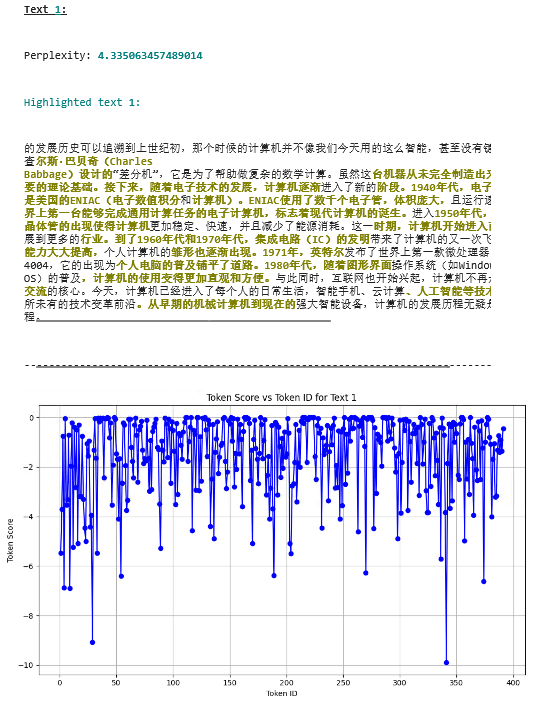
While the current AI revolution is powered by neural networks, "classical" machine learning refers to algorithms such as Support Vector Machines (SVMs), Random Forests, and Logistic Regression. Unlike deep learning models that act as "black boxes," classical ML relies on explicit feature engineering. To detect AI text, researchers focus on statistical signatures—such as perplexity (how surprised a model is by a sequence of words) and burstiness (the variation in sentence length and structure). Humans tend to write with high burstiness, whereas LLMs often produce a more uniform, rhythmic cadence that classical ML models can identify through variance analysis.
Interpretability and Computational Efficiency
One of the primary drivers for revisiting classical ML is the need for interpretability. In academic or legal settings, simply stating that a piece of text is "likely AI-generated" is often insufficient; evidence is required. Classical models allow analysts to see exactly which features (e.g., an unnatural frequency of specific transition words or a lack of rare vocabulary) triggered the classification. Furthermore, these models are significantly more lightweight, requiring far less computing power to deploy and maintain than a secondary LLM designed specifically for detection.
The Cat-and-Mouse Game of AI Detection
Despite the promise of classical methods, the landscape is a constant arms race. As LLMs are trained on more diverse datasets and fine-tuned using Reinforcement Learning from Human Feedback (RLHF), they are becoming better at mimicking human idiosyncrasies, including the "burstiness" and "perplexity" that classical detectors rely on. When an LLM is prompted to "write in a casual, human style with occasional errors," the statistical markers that classical ML looks for begin to vanish, potentially leading to an increase in false negatives.
Broader Implications for Digital Trust
The pursuit of reliable detection methods has profound implications for the future of the internet. If classical ML can provide a scalable, transparent way to verify authorship, it could help preserve the integrity of journalism, academia, and legal documentation. However, the inherent difficulty in achieving 100% accuracy means that AI detection will likely remain a supportive tool rather than a definitive judge. The reliance on statistical probability means that non-native English speakers, who may write with a more structured and predictable style, are often unfairly flagged by these systems.
Future Outlook: Hybrid Detection Systems
Looking ahead, the trend is likely to move toward hybrid systems. By combining the raw power of neural networks with the transparency of classical statistical analysis, developers can create a multi-layered verification process. We can expect to see "watermarking" integrated directly into LLM outputs, which would render detection trivial, but until that becomes a global standard, the refinement of classical ML techniques remains a vital line of defense in maintaining the boundary between human and machine creativity.