Prehistoric builders transported Devil's Arrows 11 miles
Source Entity
Jennifer Ouellette
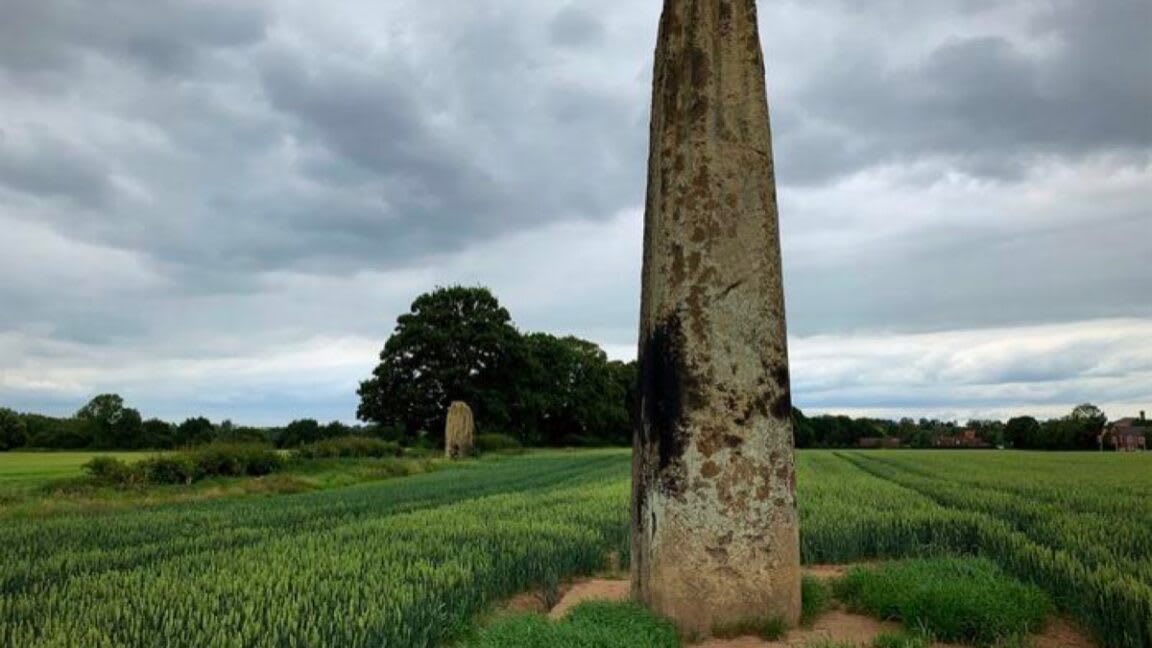
New research has confirmed that the massive stones of Britain's Devil's Arrows were transported 11 miles from Brimham Rocks by prehistoric builders. This study resolves a long-standing mystery regarding the origins of the tallest stone alignment in the UK.
Unlocking the Origins of the Devil's Arrows
For centuries, the Devil’s Arrows—Britain’s tallest surviving prehistoric stone alignment—have stood as enigmatic sentinels near Boroughbridge, North Yorkshire. While sites like Stonehenge or Avebury have dominated the narrative of British megalithic architecture, the Devil's Arrows have often remained understudied. Recent research published in the Proceedings of the Royal Society A has finally begun to bridge this gap, confirming through isotropic analysis that these massive, seven-meter-tall monuments were not a natural geological formation but were intentionally transported by human hands.
The Engineering Feat of Prehistoric Builders
The sheer scale of this undertaking is profound. Each of the stones weighs approximately 25 tonnes (55,000 pounds). The study, a collaborative effort led by Curtin University and the University of York, clarifies that these stones were moved across a distance of at least 18 kilometers (11 miles). By identifying the specific geological source as Brimham Rocks rather than the previously suspected Plumpton Rocks, researchers have provided definitive proof of the logistical prowess possessed by ancient societies in northern England.
Challenging Geological Assumptions
Historically, the presence of such large stones in lowland landscapes led some to speculate about glacial movement as the primary transport mechanism. However, the new isotopic data effectively refutes these theories, confirming that human intervention was the only viable explanation for the placement of these monoliths. This shift in understanding forces a re-evaluation of how prehistoric communities interacted with their environment, suggesting a level of organized labor and engineering capacity that matches the sophistication seen at more famous megalithic sites across Britain and Ireland.
Contextualizing British Megaliths
When placed alongside other monuments such as Calanais or Newgrange, the Devil’s Arrows represent a critical piece of the puzzle regarding prehistoric ritual and monumental construction. Dr. Jim Leary and his colleagues highlight that while southern England and Scotland have historically received the lion's share of archaeological interest, monuments in the north hold equal significance in understanding the Neolithic and Bronze Age landscapes of Britain. The ability to transport 25-tonne stones over 11 miles implies a highly structured society capable of mobilizing resources and managing complex construction projects.
Future Implications for Archaeology
This discovery marks a turning point in the study of northern British monuments. By pinpointing the source at Brimham Rocks, researchers have opened new avenues for analyzing the trade routes, social hierarchies, and symbolic motivations of the builders. Future research will likely focus on the methods of transport—potentially involving rollers, sleds, or water-based transit—and the specific cultural significance of the Brimham area as a quarry for these monumental endeavors. This study not only solves a localized mystery but also enriches our broader comprehension of the technological capabilities of ancient human civilizations.