Chidambaram says he’s proud to be a ‘dimagi Naxal’; Rijiju says PM didn’t mean Opposition leaders
Source Entity
India Latest News: Top National Headlines Today & Breaking News | The Hindu
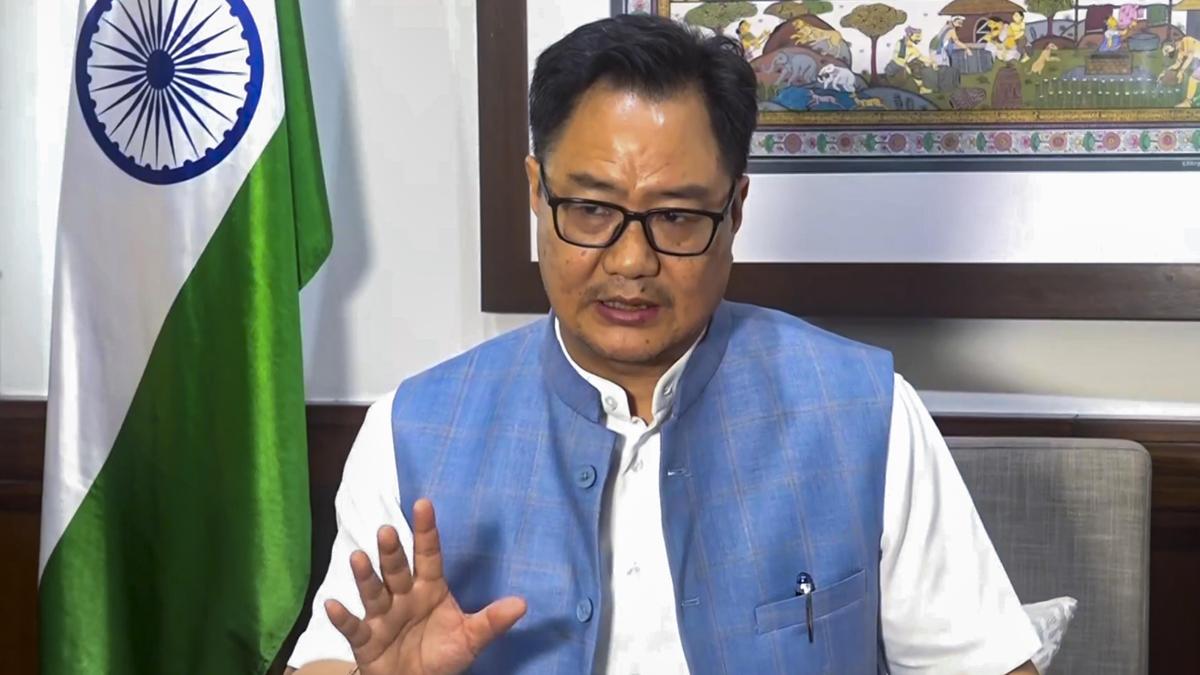
Union Minister Kiren Rijiju has clarified PM Modi’s 'dimagi Naxal' remarks, distinguishing between political opposition and those undermining national integrity. This has sparked a heated debate with Congress leader P. Chidambaram and CJP spokesperson Saurav Das, who have pushed back against the label.
The 'Dimagi Naxal' Debate: A Clash of Political Narratives
The political landscape in India has been recently punctuated by a sharp exchange of rhetoric following Prime Minister Narendra Modi’s Independence Day address. At the heart of the discourse is the term 'dimagi Naxal'—or 'intellectual Naxal'—a concept the Prime Minister invoked to warn against ideological influences he perceives as threats to the nation's integrity. While the government maintains that the term targets those undermining the Constitution, the opposition has responded with defiance and sharp critique.
Clarifying the Government’s Stance
Union Minister of Parliamentary Affairs Kiren Rijiju took to social media to provide a definitive interpretation of the Prime Minister’s remarks. Rijiju explicitly denied that the Prime Minister’s comments were directed at political opposition leaders. Instead, he delineated a specific criteria for those he categorized as 'dimagi Naxals,' which includes individuals who support Maoist ideologies, reject the Indian Constitution, advocate for separatism, or support the reinstatement of Article 370. By sharing this list, the government seeks to shift the focus from a general attack on dissent to a targeted critique of what it identifies as anti-national ideologies.
The Opposition’s Defiant Response
In a move that highlights the widening chasm between the ruling BJP and the opposition, Congress leader P. Chidambaram embraced the term, posting on X that he is "proud to be a Dimagi Naxal." This rhetorical maneuver is a clear attempt to reclaim a pejorative label and turn it into a badge of honor, effectively signaling that the opposition refuses to be intimidated by the administration's characterizations. Chidambaram's stance suggests a broader strategy within the Congress to frame the government’s language as an attempt to delegitimize democratic questioning.
Civil Society and the 'Awakening'
Beyond formal political parties, the discourse has extended to civil society. Saurav Das, spokesperson for the Cockroach Janta Party (CJP), criticized the Prime Minister's remarks, arguing that the label unfairly targets educated youth who engage in the essential democratic act of questioning government policy. Das framed this moment as an "awakening," suggesting that the current political climate is fostering a new wave of peaceful protest. He asserted that such rhetoric will ultimately fail to suppress the public's demand for accountability and transparency.
Broader Implications for Indian Democracy
This exchange underscores a fundamental tension in contemporary Indian politics: the struggle to define the boundaries of legitimate dissent versus perceived threats to national stability. The government's focus on "ideological Naxalism" reflects its emphasis on national security and constitutional adherence. Conversely, the opposition’s pushback highlights concerns over the shrinking space for critical discourse. As both sides dig in, the term 'dimagi Naxal' has become a proxy for deeper disagreements regarding the nature of nationalism and the role of the citizen in challenging the state.
Future Trends in Political Rhetoric
Looking ahead, it is likely that this linguistic battle will intensify as both the ruling party and the opposition prepare for future electoral cycles. The government is expected to continue emphasizing its security-first agenda, while the opposition will likely continue to frame such rhetoric as authoritarian. As these narratives harden, the discourse will remain deeply polarized, making the ability to bridge ideological divides increasingly difficult for the Indian electorate.
Multiple Citing Sources
Verification Required?