Oxygen depletion kills a large number of Jalebi fish in Palar river near Ambur
Source Entity
India Latest News: Top National Headlines Today & Breaking News | The Hindu
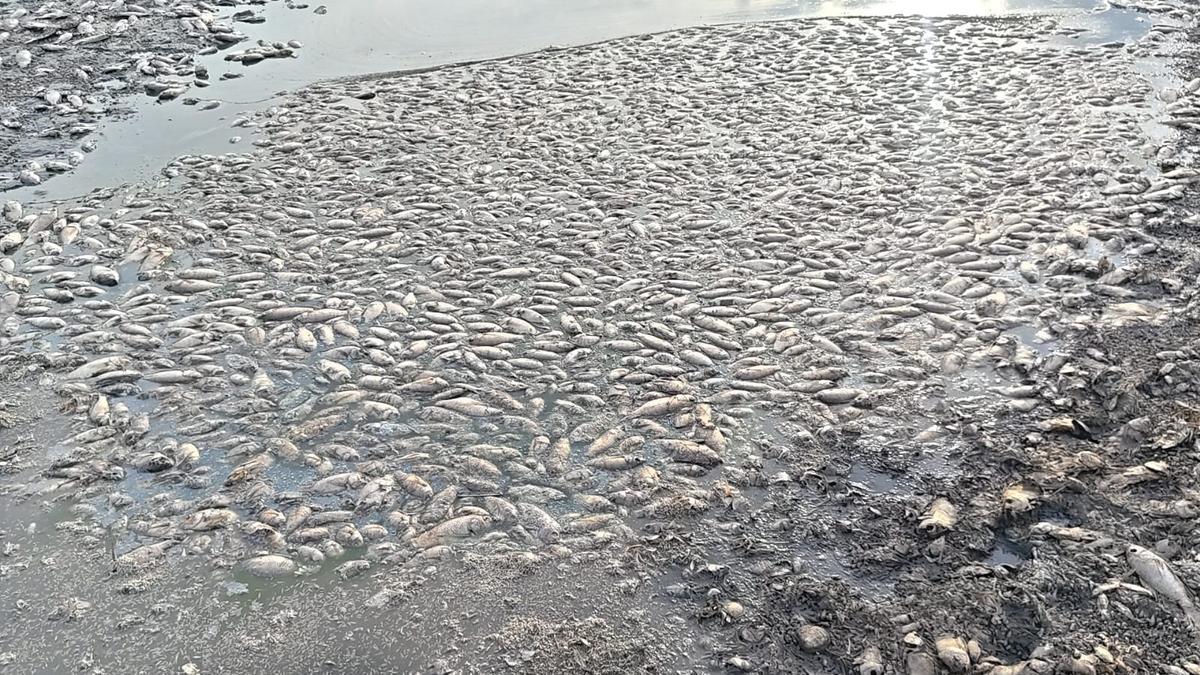
A significant number of Jalebi fish died in the Palar River near Ambur due to oxygen depletion. Local authorities and residents are calling for an investigation into the water quality of this vital irrigation and domestic source.
Environmental Crisis at Palar River: An Analysis of Fish Mortality
The Incident at Madhanur
On a recent Sunday, residents near the Madhanur village in Tirupattur witnessed a distressing environmental event as a large number of fish, primarily of the Jalebi (Tilapia) variety, were discovered dead in the Palar River. The primary cause of this mass mortality has been identified as a critical depletion of oxygen levels within the water, a phenomenon that signals significant stress on the local aquatic ecosystem. The Fisheries Department has confirmed the scale of the incident, having already removed over 150 kilograms of dead fish from the site by Thursday.
Ecological Significance of Tilapia in Local Waters
Jalebi fish, or Tilapia, are highly adaptable species commonly found in both fresh and brackish waterbodies throughout the region. Their sudden death serves as a bio-indicator of compromised water quality. Because Tilapia are generally hardy, their mass mortality suggests that the oxygen depletion in the Palar River was severe and likely caused by either sudden pollutant discharge, eutrophication, or thermal shifts that made the water uninhabitable for aquatic life.
Broader Implications for Irrigation and Consumption
Beyond the immediate loss of marine life, the incident poses a severe concern for the local human population. The tank where the fish were found is a primary water source for irrigation, supporting the agricultural livelihoods of Madhanur village. Furthermore, the proximity of civic-operated bore wells indicates that this water source is also utilized for domestic consumption. The potential contamination or degradation of this water supply presents a direct threat to public health and regional food security.
The Call for Accountability and Remediation
Local residents, including community spokesperson G. Ramesh, have voiced urgent demands for a thorough probe into the incident. The call for the tank to be cleaned is not merely an aesthetic request but a necessary step to prevent the spread of disease and to restore the ecological balance. The involvement of the panchayat and the Fisheries Department is critical to identifying the root cause—be it industrial runoff, untreated sewage, or agricultural chemical seepage—that triggered this oxygen crash.
Future Trends and Environmental Governance
This event underscores the need for continuous monitoring of water bodies that serve dual purposes for both agriculture and human consumption. As climate change and urbanization continue to put pressure on local water resources, the incident at the Palar River serves as a warning. Future environmental governance in Tirupattur must transition toward proactive water quality testing and stricter enforcement of pollution regulations to prevent similar ecological disasters from recurring in the future.
Verification Required?